
Shopping Cart
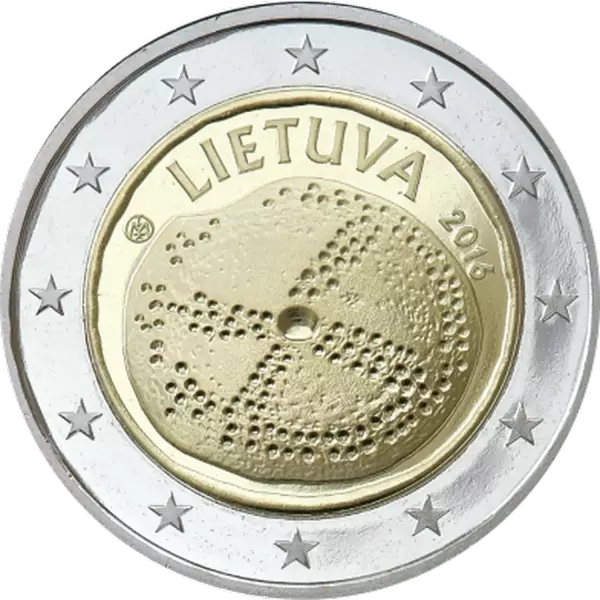
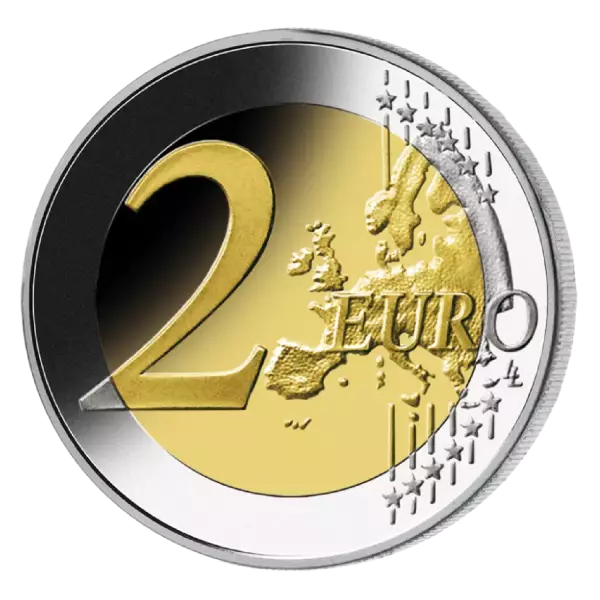


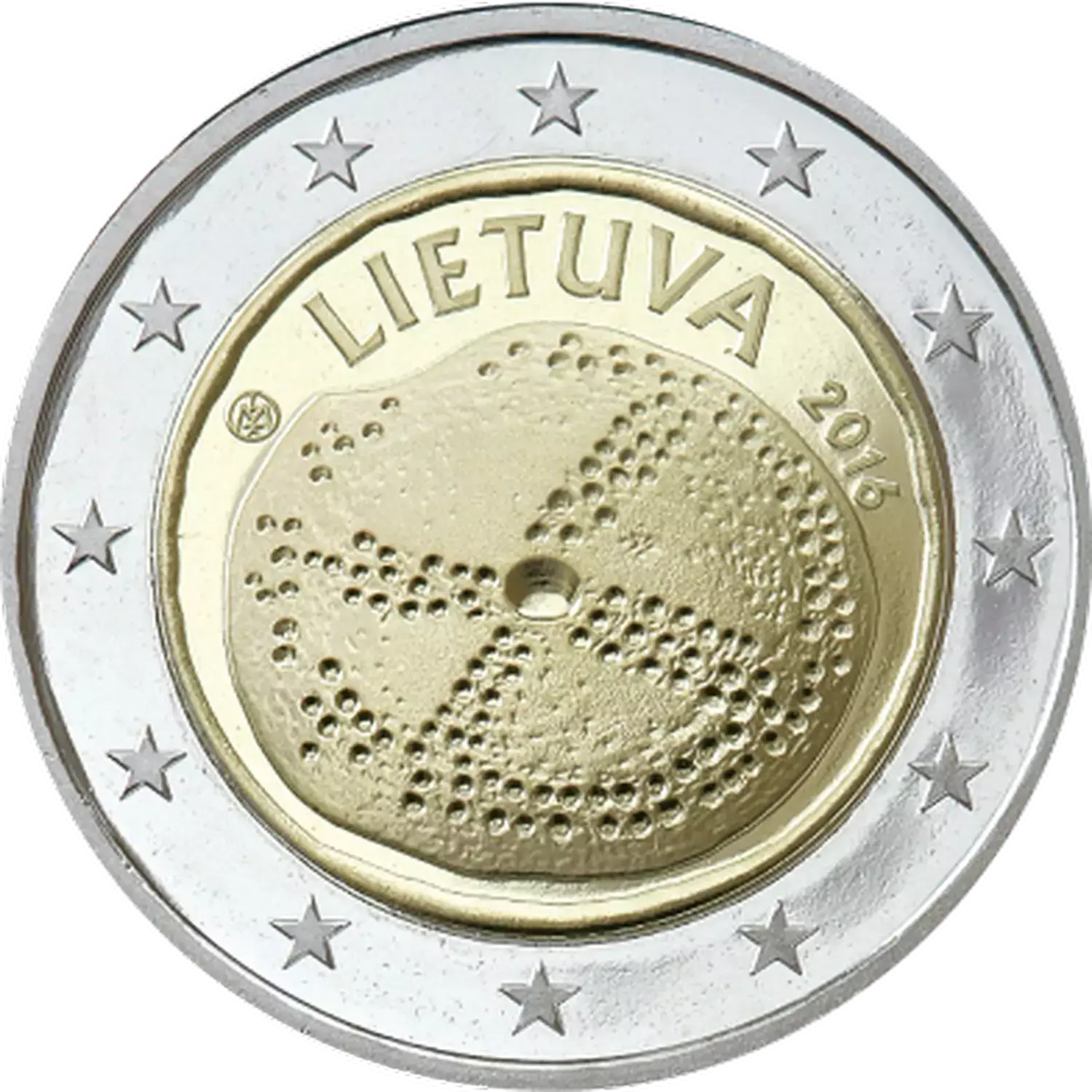
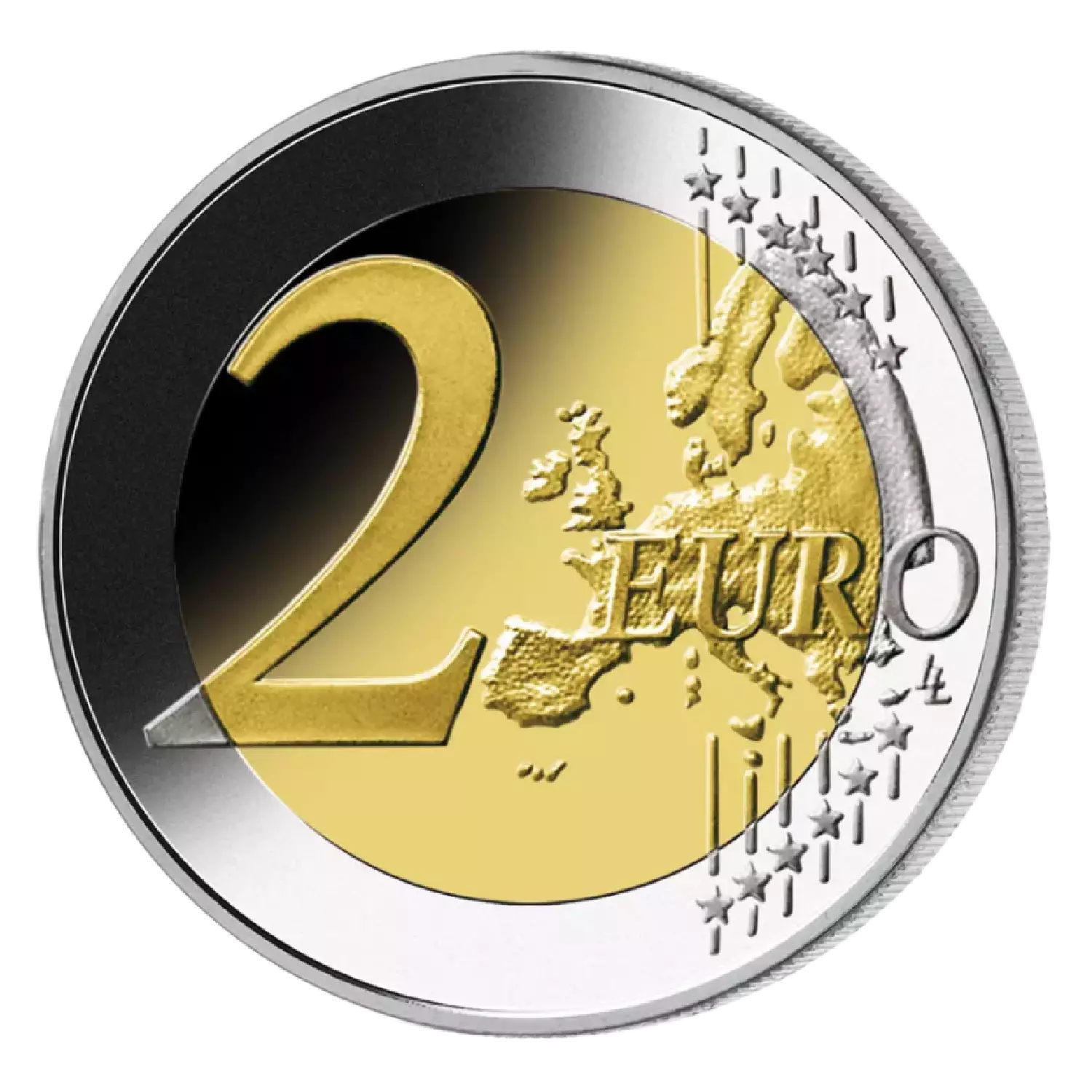
2 euro commemorative coin of the Republic of Lithuania, issued in 2016 in a circulation of 1,000,000 copies. Dedicated to Baltic culture. Minted at the Lithuanian Mint in Vilnius. Bimetallic, diameter 25.75 mm, weight 8.5 g.
Overse
The center of the coin depicts a stylized composition of traditional Baltic ornamental motifs present in Lithuanian folk art: weaving, carving, decorative elements. In the center is a solar symbol, one of the main symbols of Baltic mythology, symbolizing the sun, life and cosmic harmony. At the top is the inscription "BALTŲ KULTŪRA" (Baltic Culture). At the bottom is "LIETUVA" and the year "2016". On the outer ring are the 12 stars of the EU.
Reverse
The reverse is the common side of the 2 euro coins of the second type, designed by Luc Luix (Royal Belgian Mint). It depicts a map of Europe as a single continent without internal borders - a symbol of European unity. On the left is a large denomination "2" and the inscription "EURO", on the right is a map with six thin horizontal lines in the background. On the outer ring are the 12 stars of the European Union. The band is with fine ribbing and the Lithuanian inscription "LAISVĖ ★ VIENYBĖ ★ GEROVĖ ★" (Freedom, Unity, Prosperity).
Historical context
Baltic culture (Baltų kultūra) is the cultural heritage of the Baltic peoples, who have inhabited the eastern coast of the Baltic Sea and adjacent territories since ancient times. The Baltic peoples include modern Lithuanians and Latvians, as well as the extinct ancient Prussians, Jatvi, Galinds, Curonians, and Semigallians. The Balts are one of the oldest Indo-European groups, which formed in these lands around 2,000 BC after the arrival of the Indo-Europeans. Baltic culture is characterized by a deep connection with nature, polytheistic mythology (with the main gods Perkūnas - the god of thunder, Dievas - the sky deity), developed folk art (weaving, amber weaving, wood carving), archaic folklore. The Balts preserved their pagan faith the longest in Europe - Lithuania was Christianized only in 1387, and the Samogitian tribes - in 1413.