
Shopping Cart
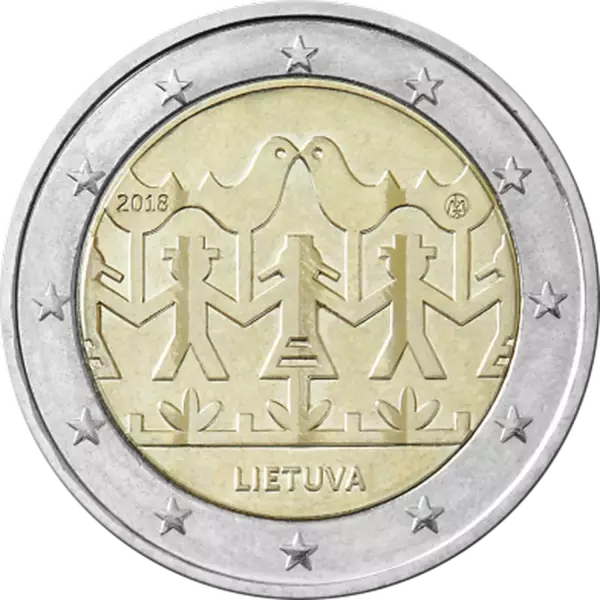


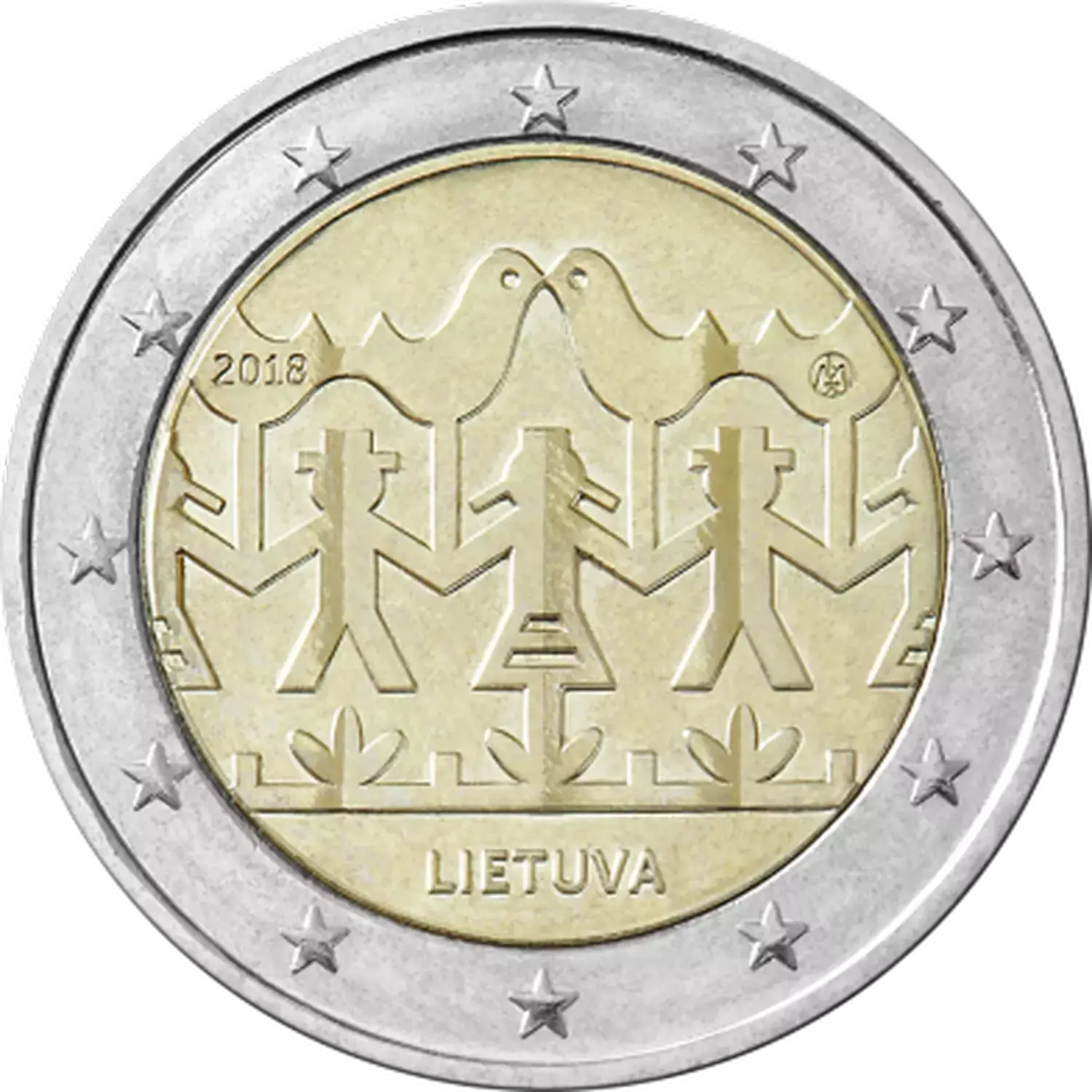
A 2 euro commemorative coin of the Republic of Lithuania, issued on June 26, 2018, in a circulation of 1,000,000 copies. Dedicated to the Lithuanian Song and Dance Festival. It was minted at the Lithuanian Mint in Vilnius. Bimetallic, diameter 25.75 mm, weight 8.5 g.
Overse
The national side of the coin depicts stylized figures of people and birds, characteristic of Lithuanian folk dances and songs and typical of karpinnio (paper cuttings) - a genre of Lithuanian folk art. The figures perform a dance, depicting the dynamics of the festival. The coin also bears the inscription "LIETUVA", the year of issue "2018" and the mark of the Lithuanian Mint. On the ring are the 12 stars of the EU.
Reverse
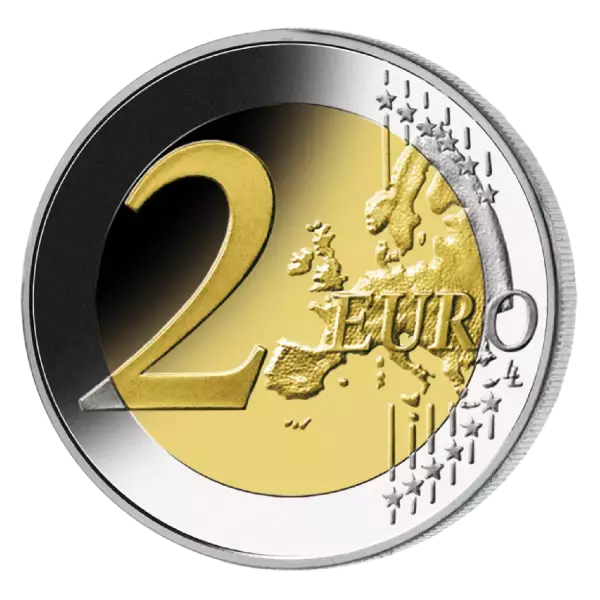
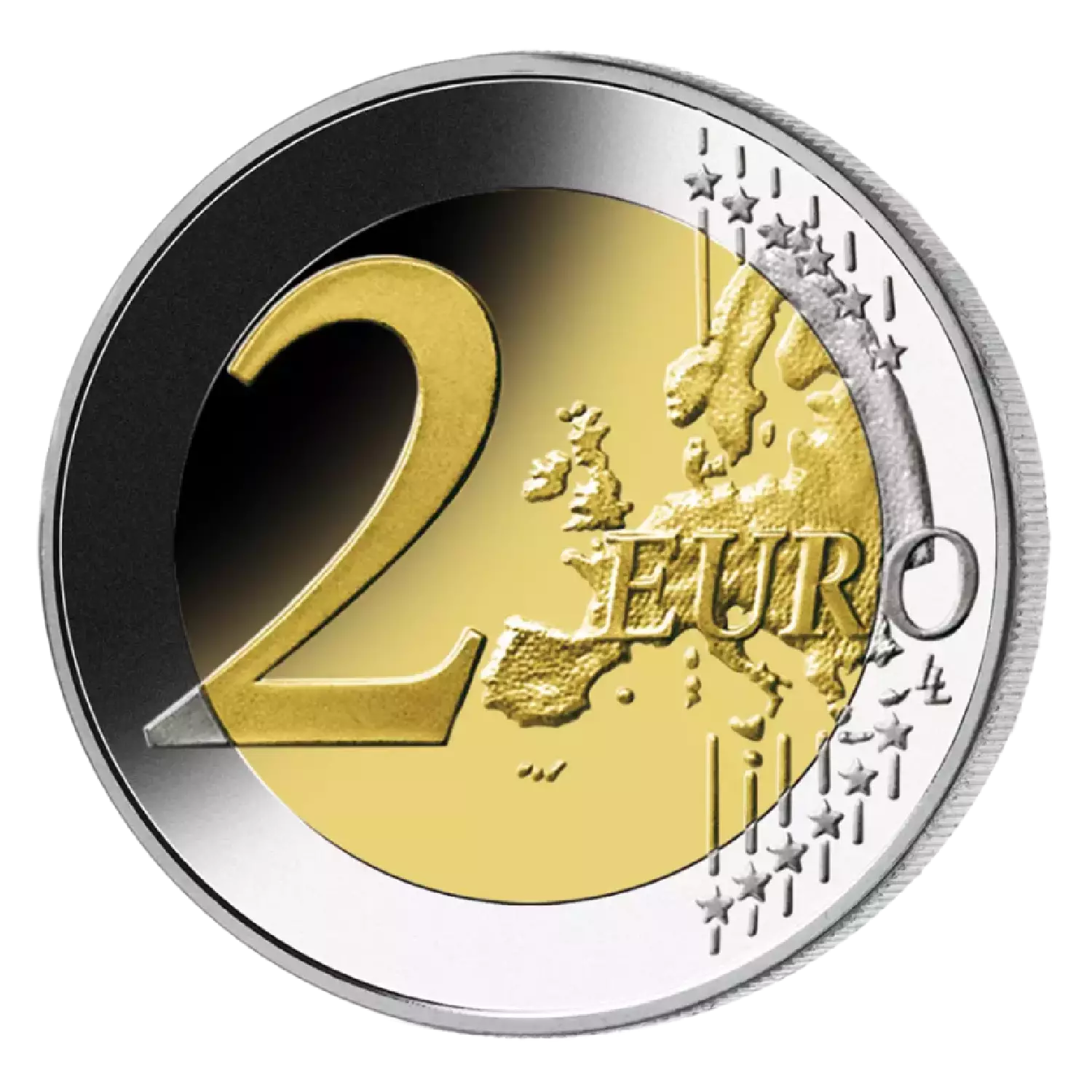
The reverse is the common side of the 2 euro coins of the second type, designed by Luc Luix (Royal Belgian Mint). It depicts a map of Europe as a single continent without internal borders - a symbol of European unity. On the left is a large denomination "2" and the inscription "EURO", on the right is a map with six thin horizontal lines in the background. On the outer ring are the 12 stars of the European Union. The band is with fine ribbing and the Lithuanian inscription "LAISVĖ ★ VIENYBĖ ★ GEROVĖ ★" (Freedom, Unity, Prosperity).
Historical context
The Lithuanian Song and Dance Festival (Lietuvių dainų ir šokių šventė, colloquially - Dainų šventė) is a large-scale traditional song and dance festival in Lithuania, held approximately every four years. The main venue is Vingis Park in Vilnius. The first festival took place on August 23-25, 1924 in Kaunas (then the temporary capital of Lithuania). Since then, the festival has become a national tradition and a symbol of the unity and strength of the Lithuanian people. The celebration includes Folklore Day, Ensemble Evening and the culminating Song Day - when a united choir of 15-20 thousand singers sings on the main podium in Vingis Park, totaling over 40,000 participants. On November 7, 2003, UNESCO declared the tradition of Song and Dance Festivals in Lithuania, Latvia and Estonia a "Masterpiece of the Oral and Intangible Heritage of Humanity", and in 2008 added it to the List of Intangible Cultural Heritage.