
Shopping Cart
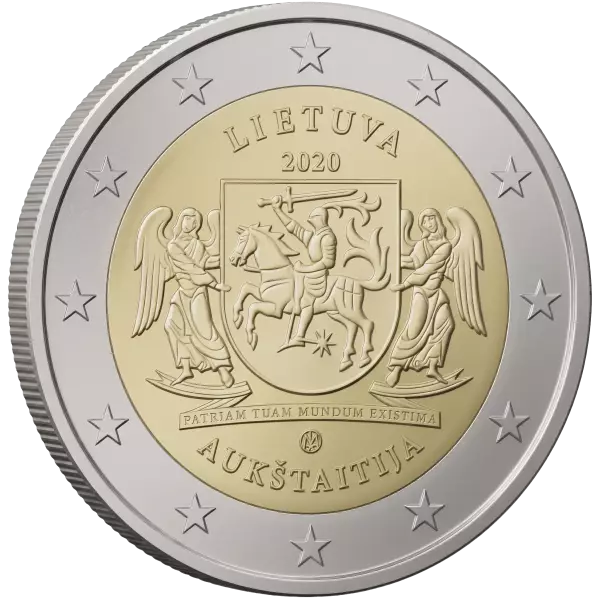


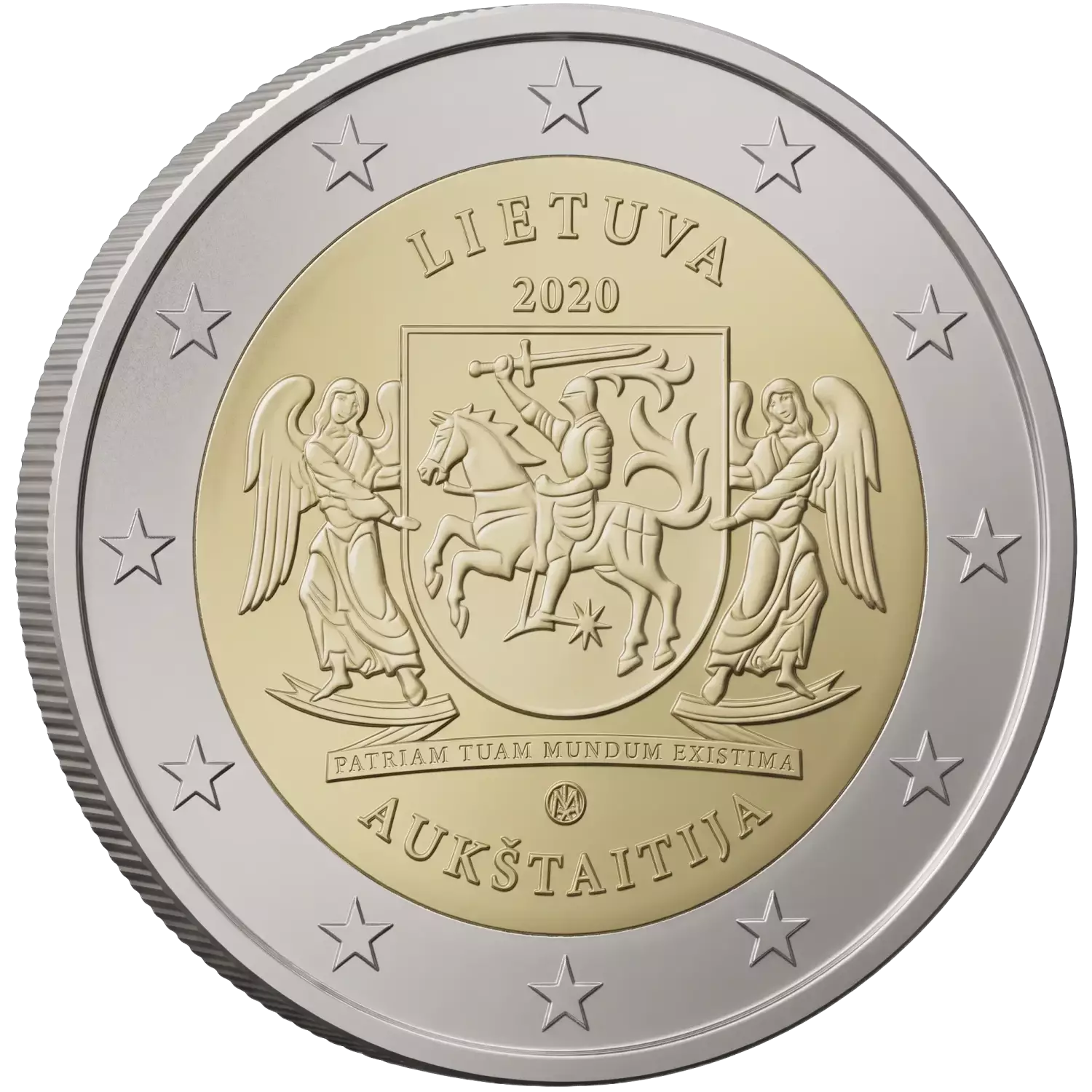
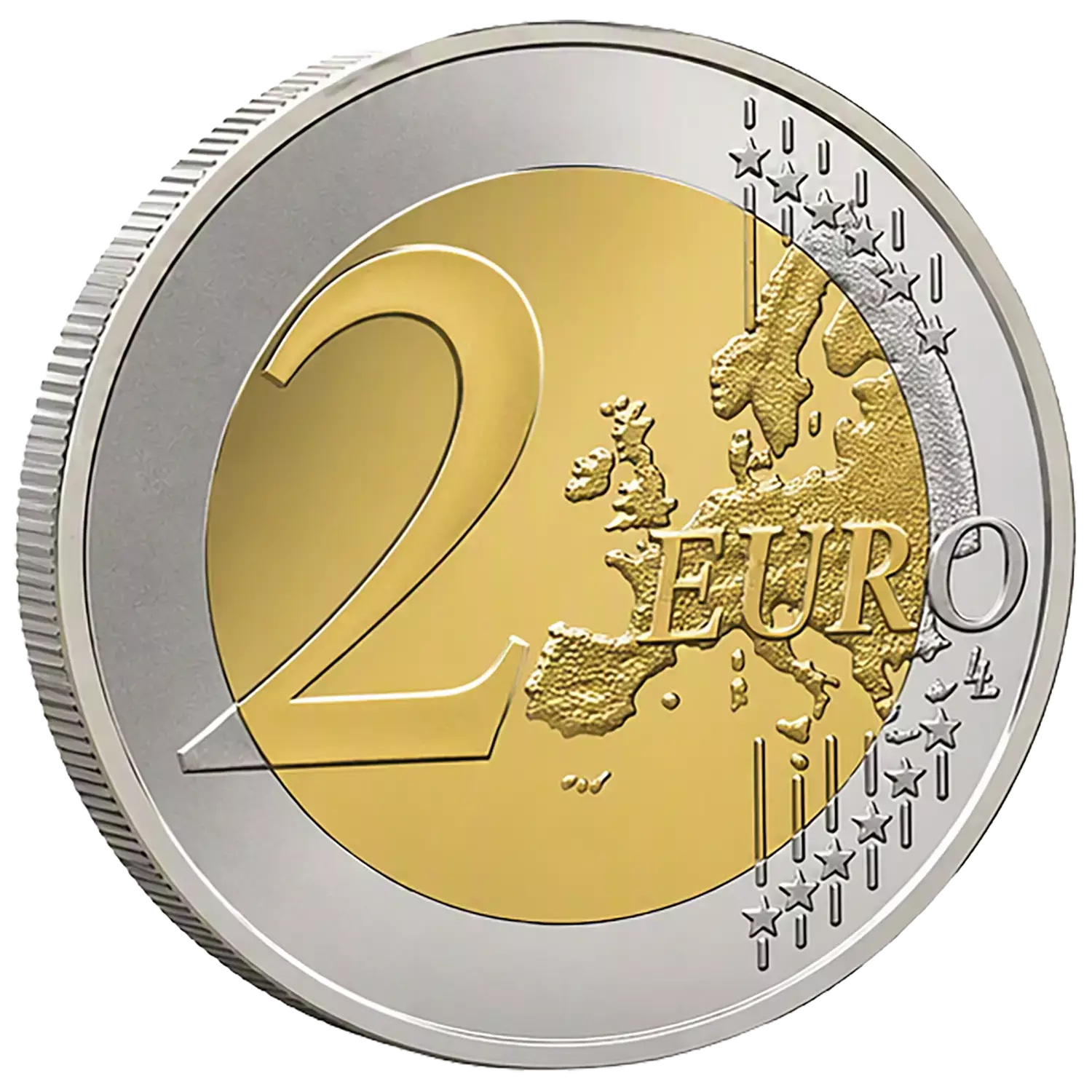
A 2 euro commemorative coin of the Republic of Lithuania, issued in 2020 in a circulation of 500,000 copies. The second in the series "Lithuanian Ethnographic Regions", dedicated to Aukštaitija. It was minted at the Lithuanian Mint. Bimetallic, diameter 25.75 mm, weight 8.5 g.
Obverse
In the center of the coin, the coat of arms of Aukštaitija (Aukštaitijas herbas) is depicted - the historical heraldic sign of the region with a silver griffin on a blue field. The griffin is a symbol of strength, royal dignity and heavenly power. At the top, in an arc, is the name of the region "AUKŠTAITIJA". At the bottom, is "LIETUVA" and the year "2020". On the ring are the 12 stars of the EU.
Reverse
The reverse is the common side of the 2 euro coins of the second type, designed by Luc Luix (Royal Belgian Mint). It depicts a map of Europe as a single continent without internal borders - a symbol of European unity. On the left is a large denomination "2" and the inscription "EURO", on the right is a map with six thin horizontal lines in the background. On the outer ring are the 12 stars of the European Union. The rim is finely fluted and has the Lithuanian inscription "LAISVĖ ★ VIENYBĖ ★ GEROVĖ ★" (Freedom, Unity, Prosperity).
Historical context
Aukštaitija (Upper Lithuania) is one of the five historical and ethnographic regions of Lithuania, located in the north-eastern part of the country, between Samogitia (in the west), Suwalki (in the southwest) and Latvia (in the north). The largest region by area. The main cities: Kaunas, Panevėžys, Utena, Anykščiai, Zarasai, Birže. Aukštaitija is the cradle of Lithuanian statehood: it was here that the Grand Duchy of Lithuania was formed in the 13th century, from where the princely dynasty of Gediminas originated. Kaunas is located here - the former temporary capital of Lithuania (1918-1940), when Vilnius was controlled by Poland. Aukštaitija is famous for its forest and lake landscapes: here is Aukštaitija National Park (the first national park in Lithuania, established in 1974) with 126 lakes. The region is also known for sutartines - a unique polyphonic song genre.