
Shopping Cart
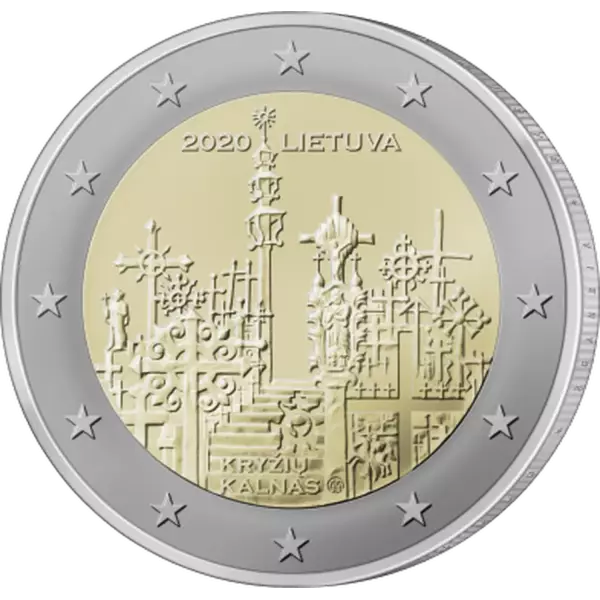


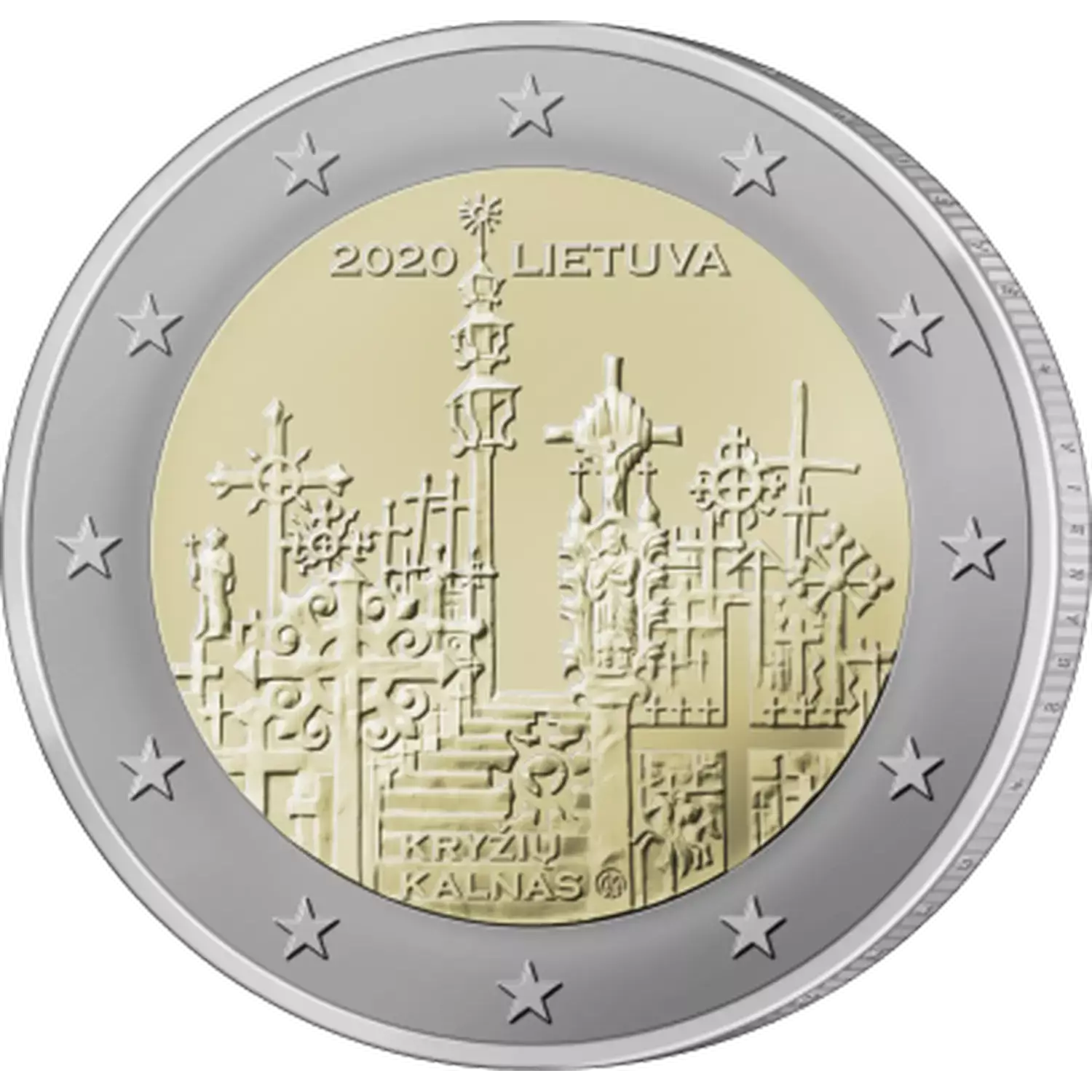
A 2 euro commemorative coin of the Republic of Lithuania, issued in 2020 in a circulation of 500,000 copies. Dedicated to the Hill of Crosses. It was minted at the Lithuanian Mint in Vilnius. Bimetallic, diameter 25.75 mm, weight 8.5 g.
Overse
The center of the coin depicts the Hill of Crosses: numerous fragments of wooden and forged crosses of various sizes and shapes, standing closely together, symbolizing the Lithuanian tradition of cross-making and folk culture. Around it are the inscriptions: "KRYŽIŲ KALNAS" (Hill of Crosses), "LIETUVA", year "2020". On the ring - 12 EU stars.
Reverse
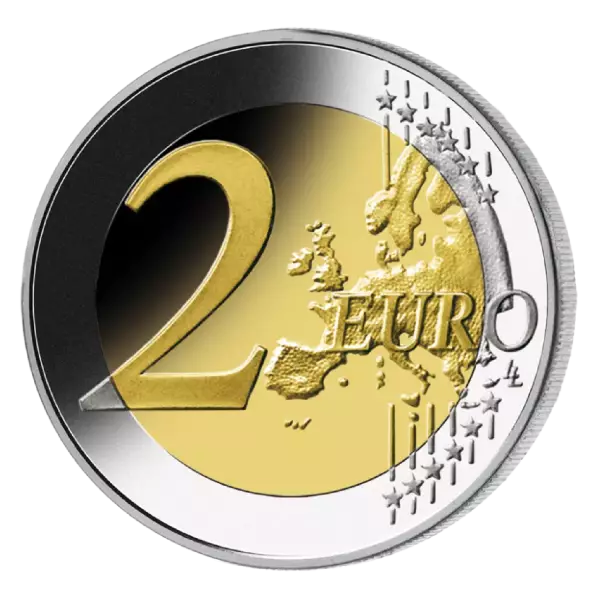
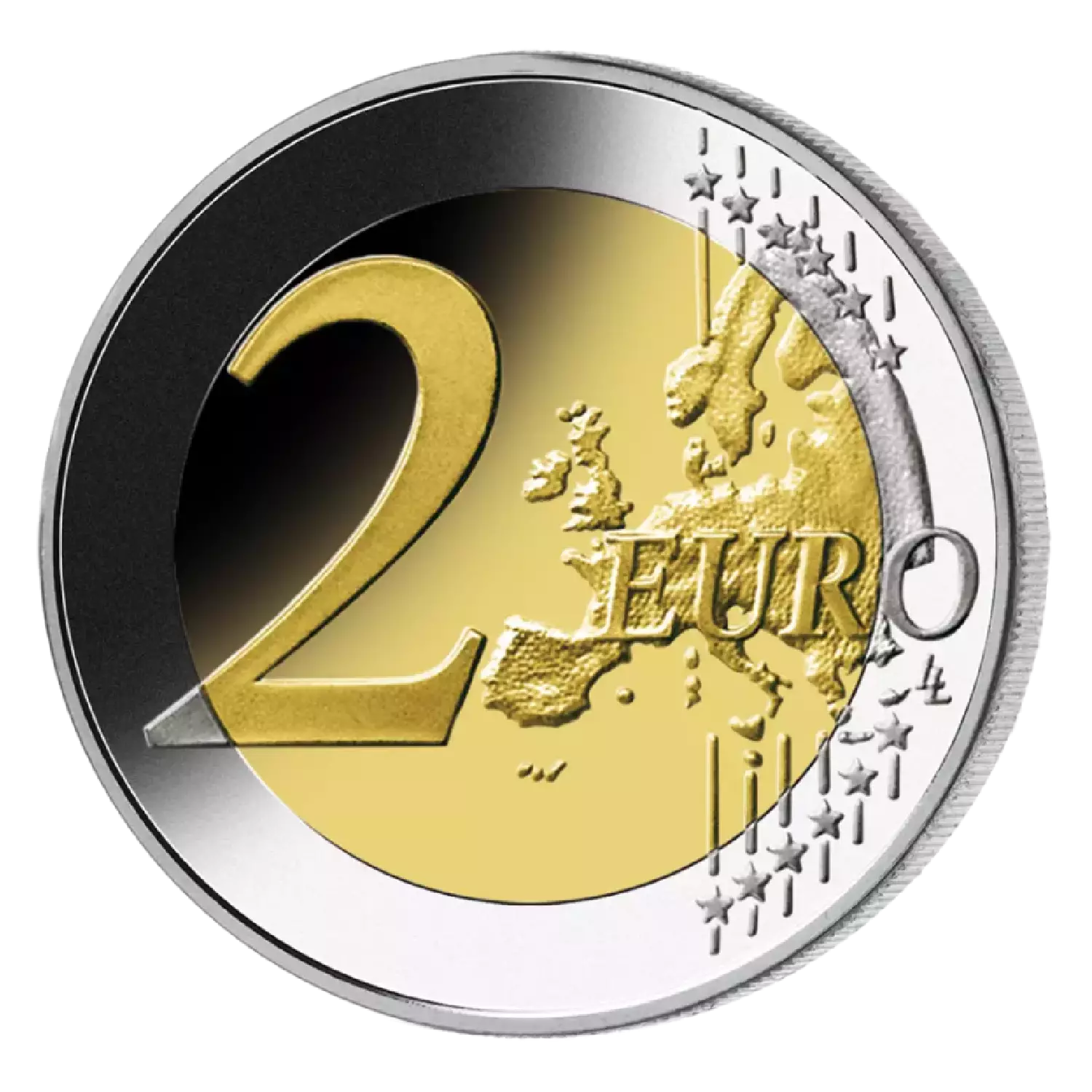
The reverse is the common side of the 2 euro coins of the second type, designed by Luc Luix (Royal Belgian Mint). It depicts a map of Europe as a single continent without internal borders - a symbol of European unity. On the left - a large denomination "2" and the inscription "EURO", on the right - a map with six thin horizontal lines in the background. On the outer ring - 12 stars of the European Union. The band - with thin ribbing and the Lithuanian inscription "LAISVĖ ★ VIENYBĖ ★ GEROVĖ ★" (Freedom, Unity, Prosperity).
Historical context
The Hill of Crosses (Kryžių kalnas) is one of the most famous cultural and religious monuments of Lithuania and one of the most visited pilgrimage sites in Europe. It is located in Samogitia, 12 km north of Šiauliai. The history of the monument dates back to the Middle Ages, but the active erection of crosses began in the 1830s-1860s after the unsuccessful anti-Russian uprisings: Lithuanians erected crosses in memory of the dead and as a symbol of resistance to the Russian occupation. During Soviet times (1944-1990), the authorities bulldozed the mountain three times - in 1961, 1973 and 1975, but Lithuanians erected new crosses each time, despite persecution. The mountain became a symbol of the peaceful resistance of the Lithuanian people. In 1993, Pope John Paul II visited the Mountain of Crosses, declaring it a holy place for Catholics. Today, there are over 100,000 crosses, crucifixes and images of Mary of various sizes. Lithuanian cross-stitching is included in the UNESCO Intangible Cultural Heritage List.