Shopping Cart



In Stock
2 € coins
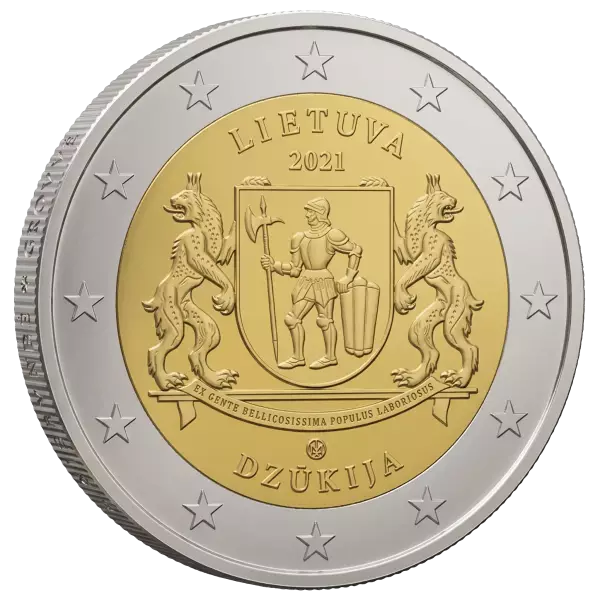
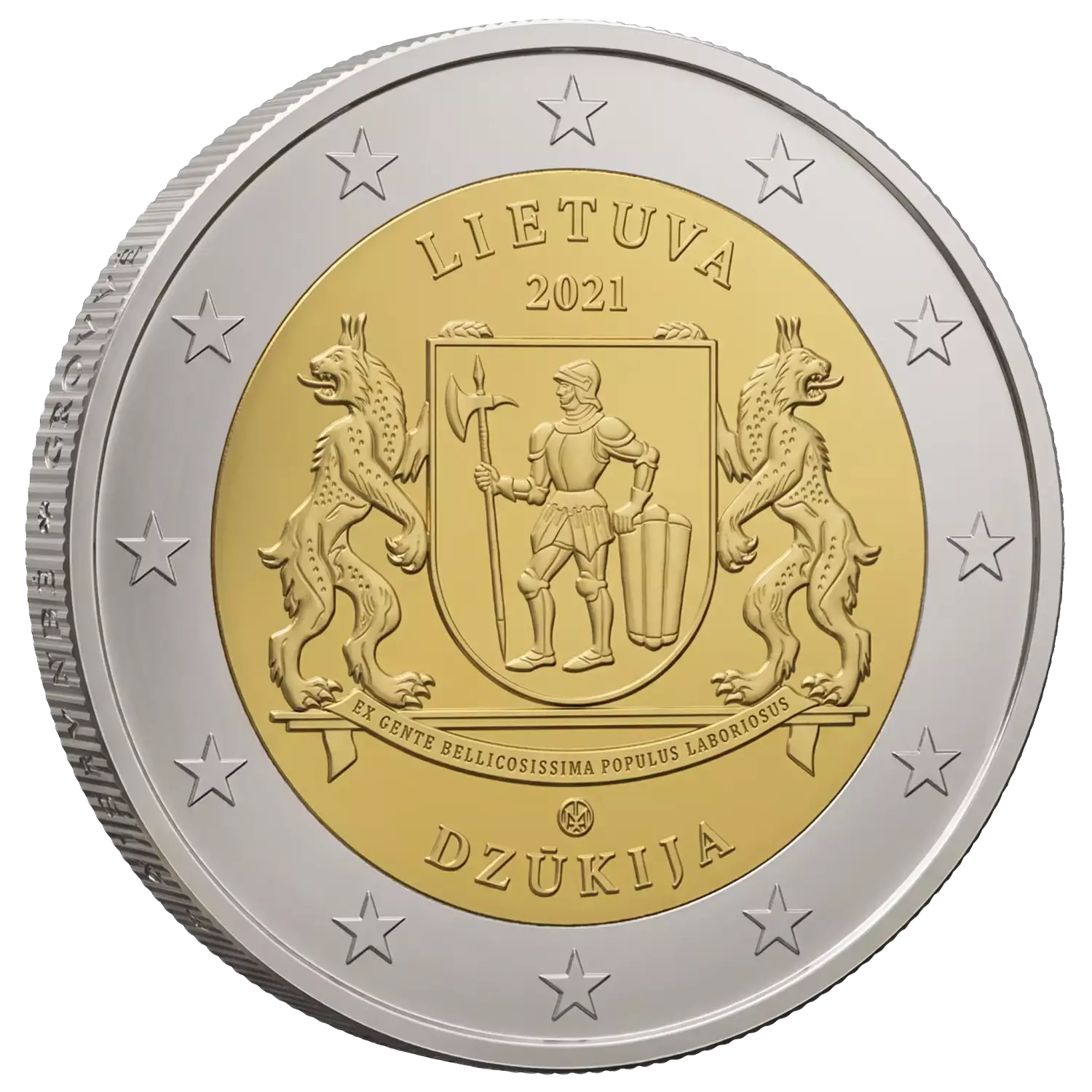
A 2 euro commemorative coin of the Republic of Lithuania, issued in 2021 in a circulation of 500,000 copies. The third in the series "Lithuanian Ethnographic Regions", dedicated to Dzūkija. It was minted at the Lithuanian Mint in Vilnius. Bimetallic, diameter 25.75 mm, weight 8.5 g.
The center of the coin depicts the stylized coat of arms of Dzūkija (Dzūkijos herbas) - a historical heraldic sign of the region, reflecting its nature and cultural heritage. At the top is the name of the region "DZŪKIJA". At the bottom is the name of the country "LIETUVA", the Lithuanian Mint mark "LMK", and the year "2021". The outer ring of the coin features the 12 five-pointed stars of the European Union.
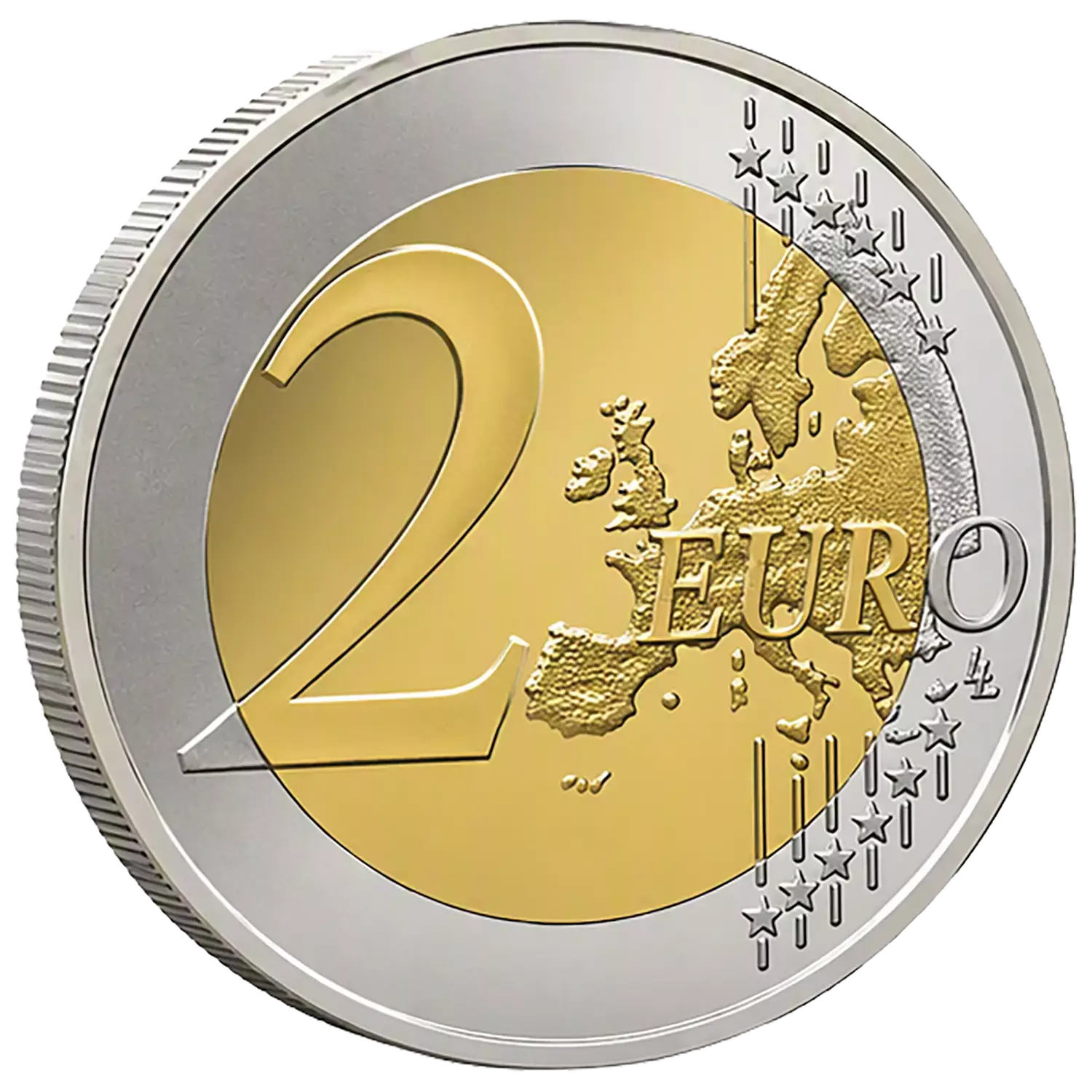
The reverse is the common side of the 2 euro coins of the second type, designed by Luc Luix (Royal Belgian Mint). It depicts a map of Europe as a single continent without internal borders, a symbol of European unity. On the left is a large denomination "2" and the inscription "EURO", on the right is a map with six thin horizontal lines in the background. On the outer ring are the 12 stars of the European Union. The rim is finely fluted and has the Lithuanian inscription "LAISVĖ ★ VIENYBĖ ★ GEROVĖ ★" (Freedom, Unity, Prosperity).
Dzūkija (also Dainava) is one of the five ethnographic regions of Lithuania, located in the southeastern part of the country, bordering Belarus in the east and Poland in the south. The region is also called Dainava - in honor of the ancient Baltic tribe of Dainava. The area is about 10,000 km². The main cities are Alytus, Druskininkai, Varena. Characteristic landscapes: pine forests, sand dunes, numerous lakes, the rivers Neman, Märkis, Ulos. Dzūkija is a region of traditional gathering - local residents are skilled in collecting mushrooms, berries (lingonberries, blueberries) and honey. Cultural heritage: Dzukija National Park (founded in 1991), ancient city of Kernave (first capital of Lithuania, UNESCO 2004), folk songs (including some sutartines). Dzukija people have their own dialect, close to South Aukštaitė, with characteristic phonetic features. Famous Dzukija people: Ludvikas Reza, Vincas Kreve-Mickevičius.