
Shopping Cart
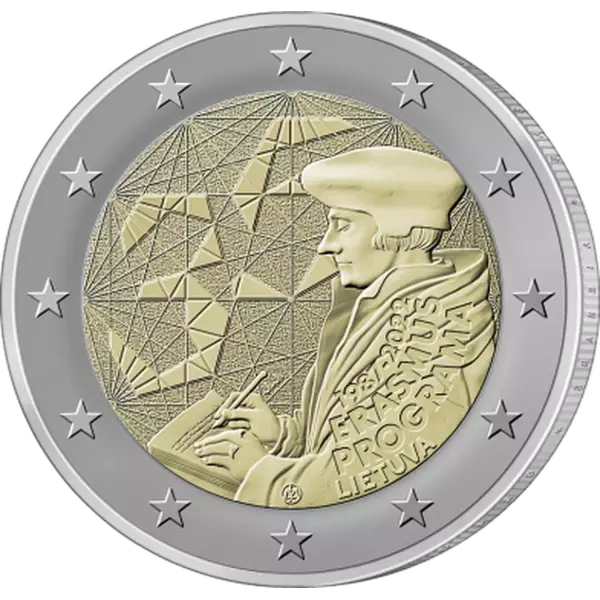
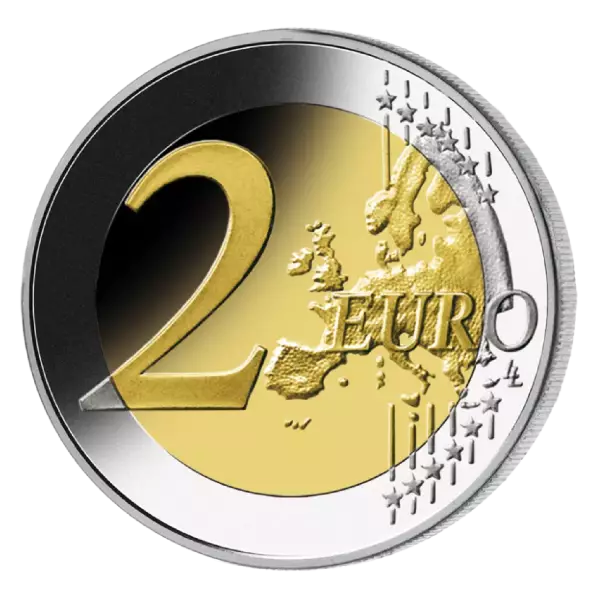


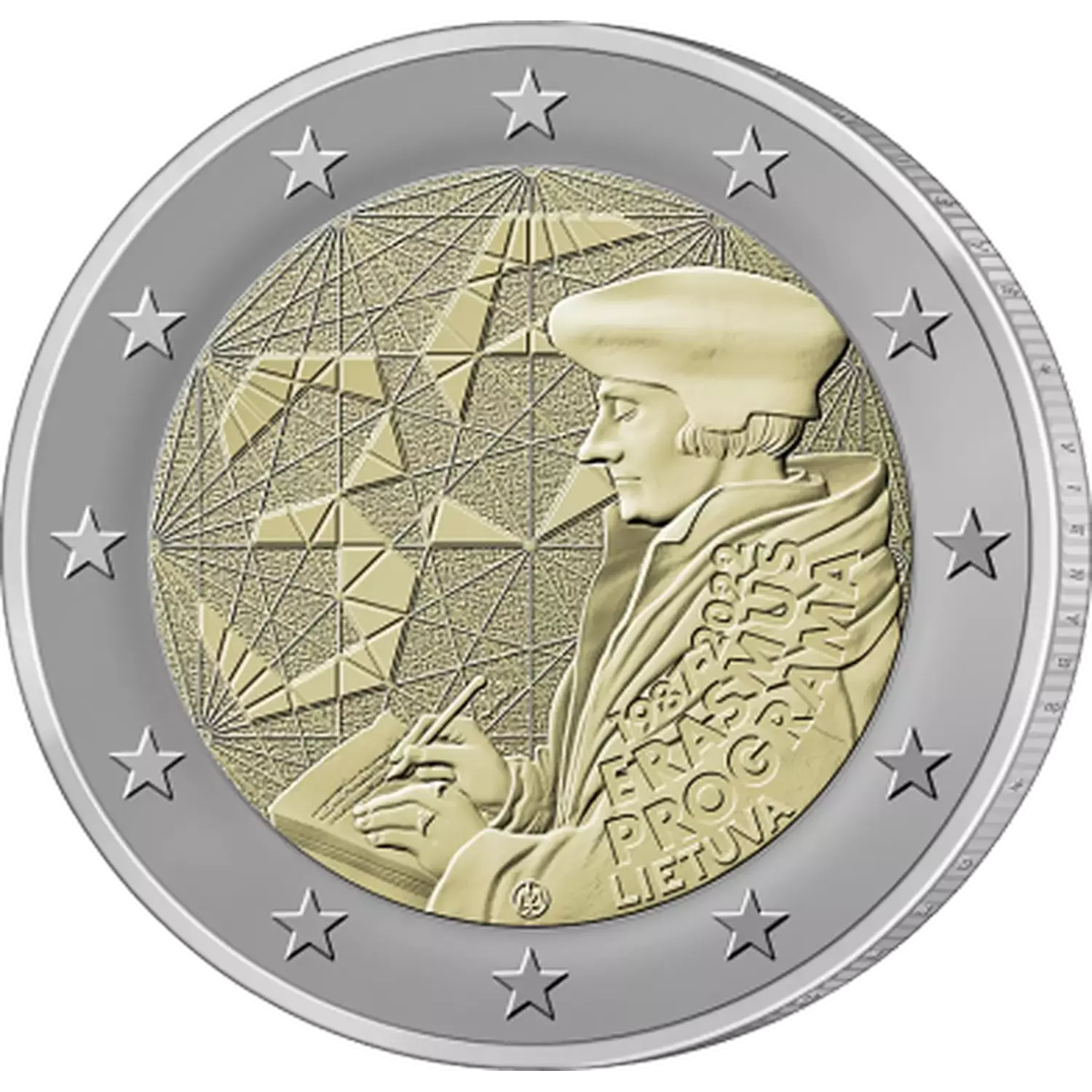
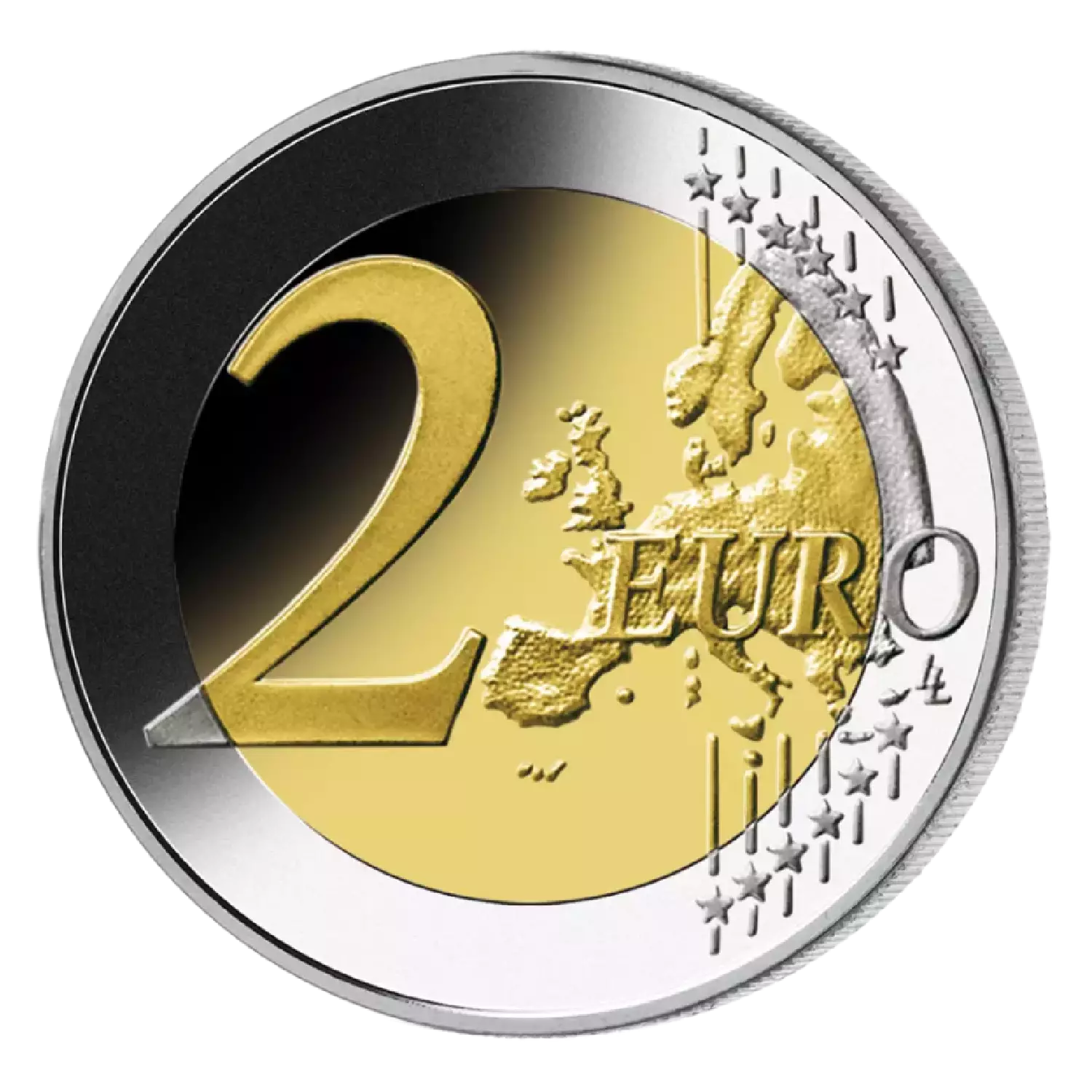
2 euro commemorative coin of the Republic of Lithuania, issued on 1 July 2022 in a circulation of 500,000 copies. Joint issue of the euro area countries in honor of the 35th anniversary of the Erasmus program. The author of the joint design is Joaquin Jimenez (JJ). It was minted at the Lithuanian Mint in Vilnius. Bimetallic, diameter 25.75 mm, weight 8.5 g.
Obverse
On the national side, in the center of the coin, the profile of the humanist Erasmus of Rotterdam is depicted, focused on writing a text. In the background, numerous lines converging at different points, creating a star pattern - a symbol of the international nature of the program. At the bottom, in the form of an arc, are the dates "1987-2022" and the inscription "ERASMUS PROGRAMME". Around it is the name of the issuing country "LIETUVA". On the outer ring are the 12 five-pointed stars of the EU.
Reverse
The reverse is the common side of the 2 euro coins of the second type, designed by Luc Luix (Royal Belgian Mint). It depicts a map of Europe as a single continent without internal borders - a symbol of European unity. On the left is a large denomination "2" and the inscription "EURO", on the right is a map with six thin horizontal lines in the background. On the outer ring are the 12 stars of the European Union. The band is finely fluted and has the Lithuanian inscription "LAISVĖ ★ VIENYBĖ ★ GEROVĖ ★" (Freedom, Unity, Prosperity).
Historical context
The Erasmus program (European Region Action Scheme for the Mobility of University Students) is one of the most famous programs of the European Union, launched on June 15, 1987 to stimulate student exchange between European universities. It is named after the Dutch humanist philosopher Erasmus of Rotterdam (c. 1466-1536), who himself was a "traveling scholar" who studied and taught at various European universities. The idea of the program belongs to the Italian educator Sofia Corradi (called the "mother of Erasmus"), who proposed it back in 1969. Since 2014, the programme has been merged into the broader Erasmus+, which covers education, youth, sport and vocational training. By 2022, over 13 million students had participated in the programme. Lithuania has been actively involved in the programme since joining the EU in 2004. In 2022, all eurozone countries issued a common coin.