
Shopping Cart
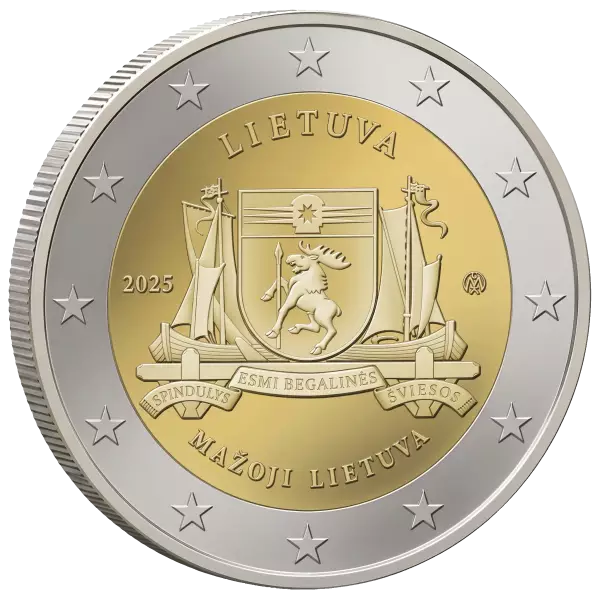


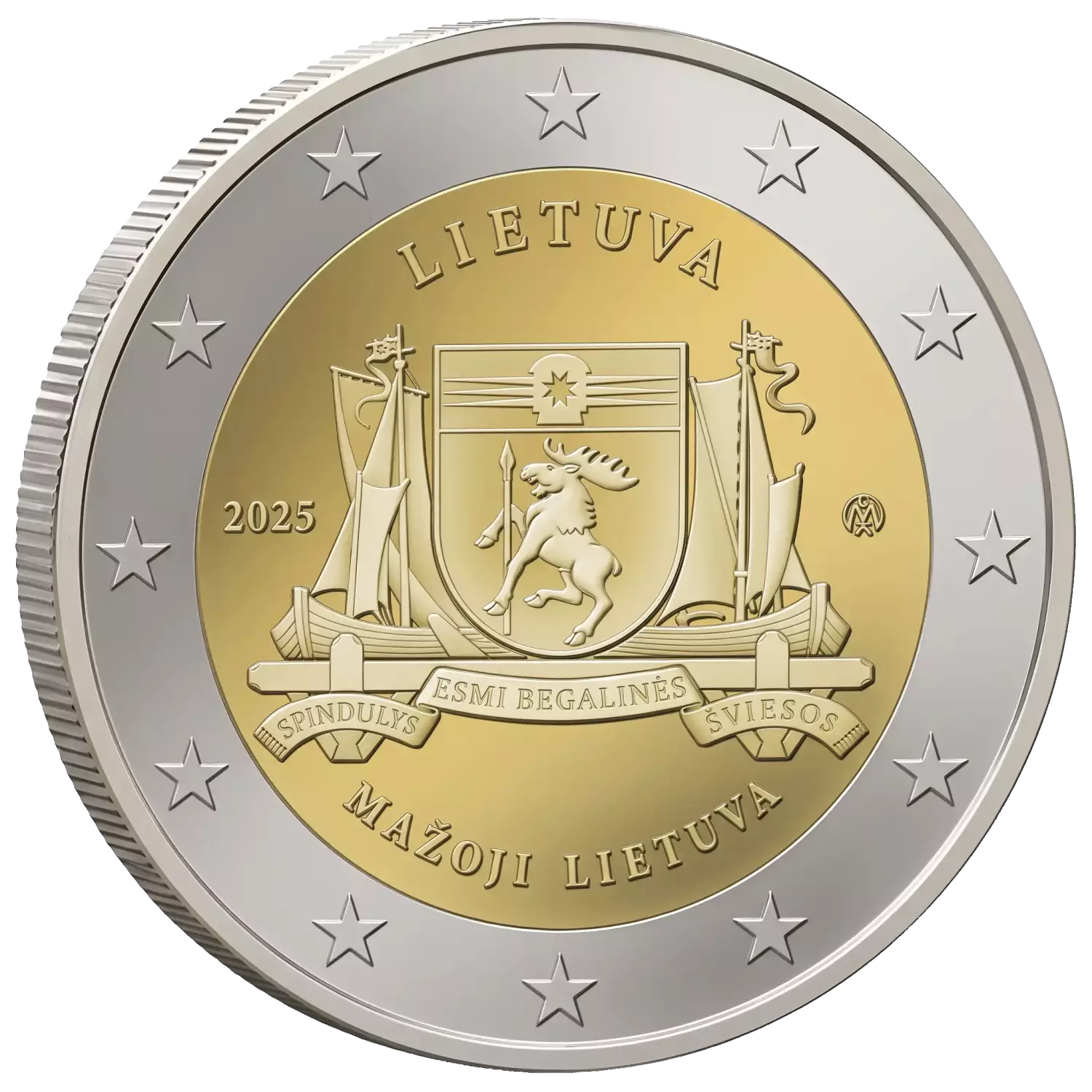
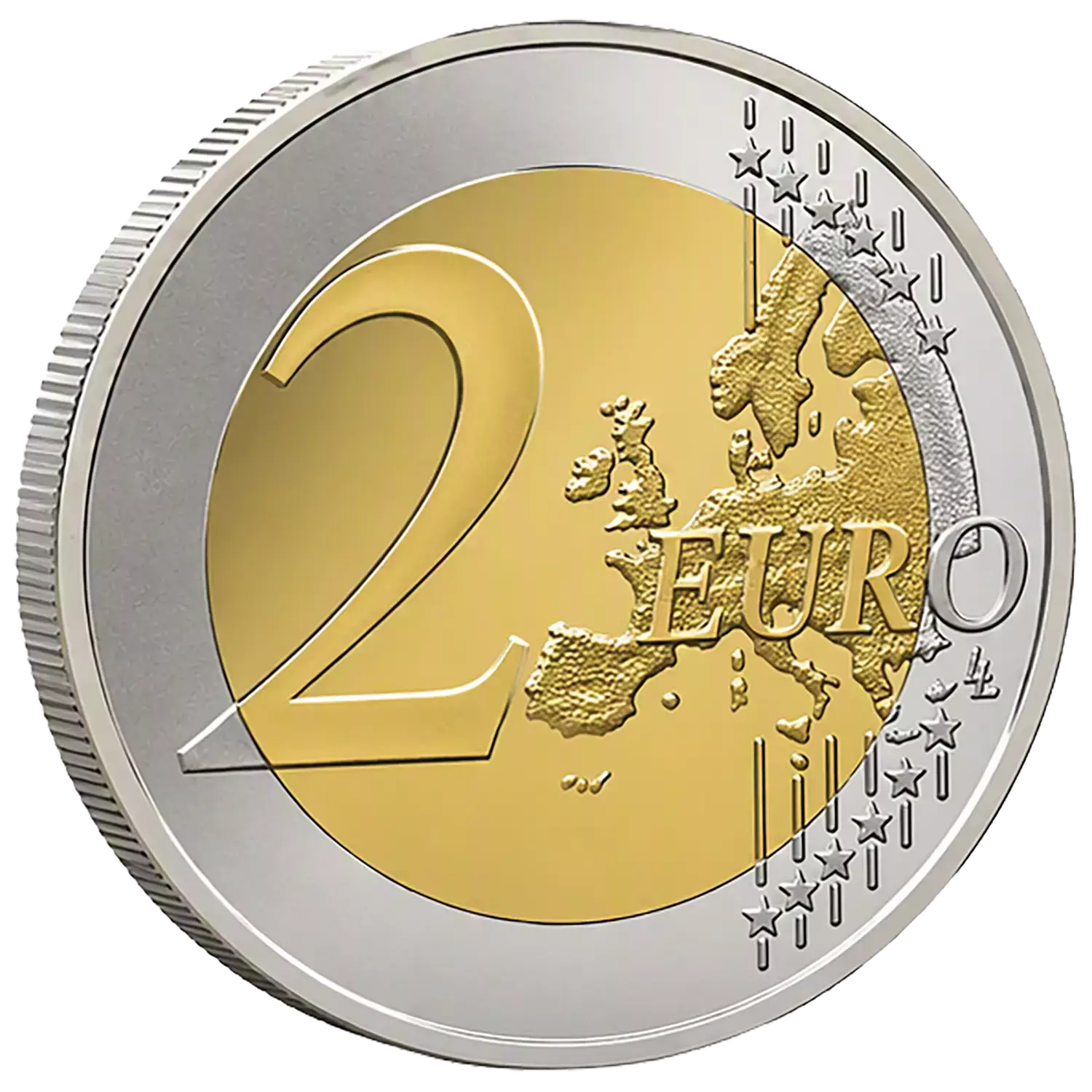
A 2 euro commemorative coin of the Republic of Lithuania, issued in 2025 in a circulation of 500,000 copies. The fifth (last) in the series "Lithuanian Ethnographic Regions", dedicated to Lithuania Minor. It was minted at the Lithuanian Mint in Vilnius. Bimetallic, diameter 25.75 mm, weight 8.5 g.
Obverse
The center of the coin depicts stylized symbols of Lithuania Minor - possibly a characteristic architectural motif of Klaipeda, a lighthouse, or the coat of arms of the region. At the top is the name "MAŽOJI LIETUVA" (Little Lithuania). At the bottom is the name of the country "LIETUVA", the Lithuanian Mint mark "LMK", and the year of issue "2025". The outer ring of the coin features the 12 five-pointed stars of the European Union.
Reverse
The reverse is the common side of the 2 euro coins of the second type, designed by Luc Luix (Royal Belgian Mint). It depicts a map of Europe as a single continent without internal borders, a symbol of European unity. On the left is a large denomination "2" and the inscription "EURO", on the right is a map with six thin horizontal lines in the background. On the outer ring are the 12 stars of the European Union. The rim is finely fluted and has the Lithuanian inscription "LAISVĖ ★ VIENYBĖ ★ GEROVĖ ★" (Freedom, Unity, Prosperity).
Historical context
Lithuania Minor (Mažoji Lietuva, or Prussian Lithuania — Prūsų Lietuva) is a historical and cultural region inhabited by Lithuanians, which historically was part of East Prussia, the modern Kaliningrad Oblast of Russia and the Klaipėda Region of Lithuania. The region was settled by Lithuanians from the 13th century, when they fled from the Crusaders. A unique Lithuanian Protestant (Lutheran) culture has been preserved here, in contrast to the Catholic Greater Lithuania. The first Lithuanian printed book was born in Lithuania Minor — the Catechism of Martynas Mažvydas in 1547 (printed in Königsberg). The Lithuanian written tradition developed here, and the first Lithuanian-language newspaper, Aušra, was published. The region suffered large-scale tragedies: in 1944-1945, almost the entire Lithuanian population was deported or fled from the Red Army's advance. Klaipėda Region was annexed to the Lithuanian SSR in 1939-1945. Today, the center of the Lithuanian part of Lithuania Minor is Klaipėda, the only seaport in Lithuania. The 2025 coin completes the five-volume set of ethnographic regions of Lithuania.