
Shopping Cart
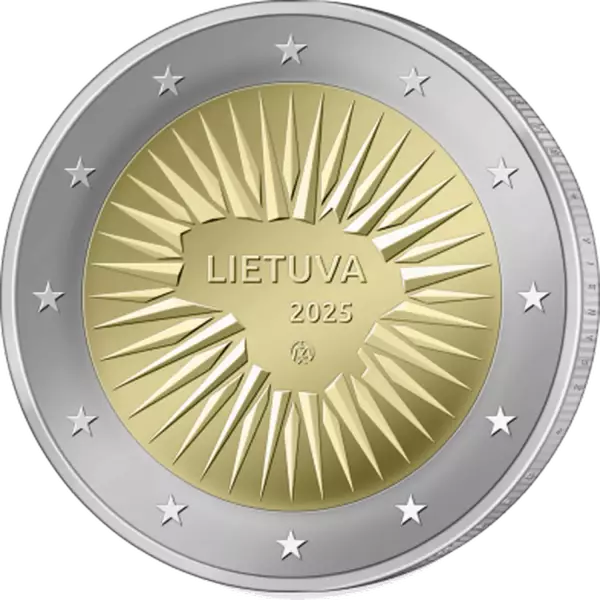
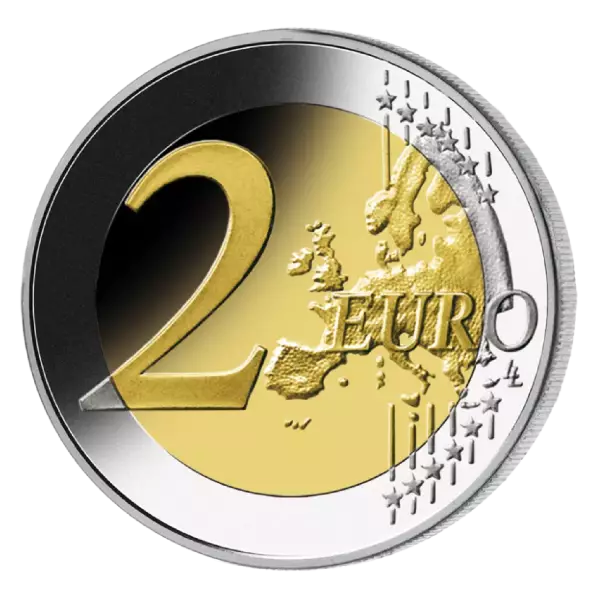


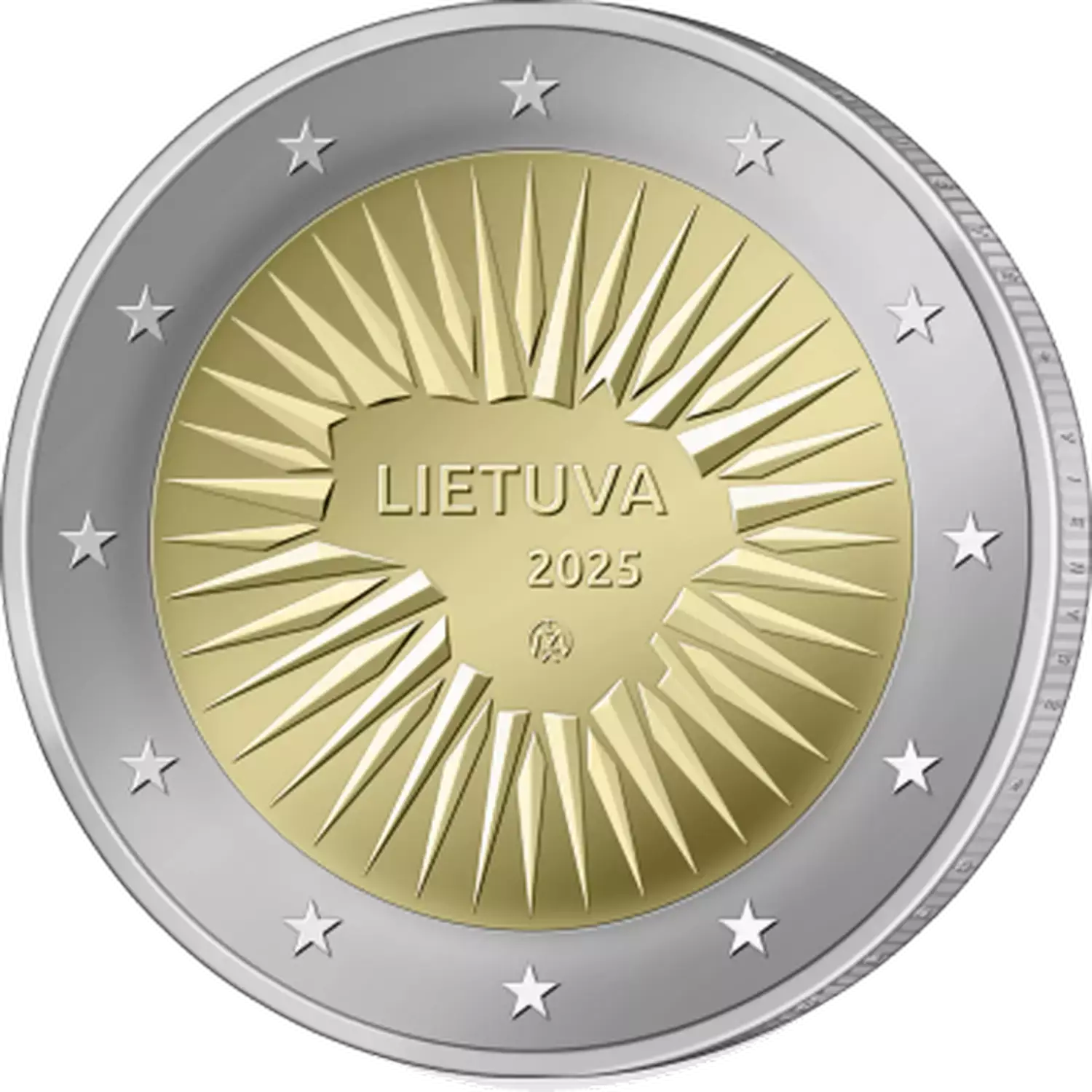
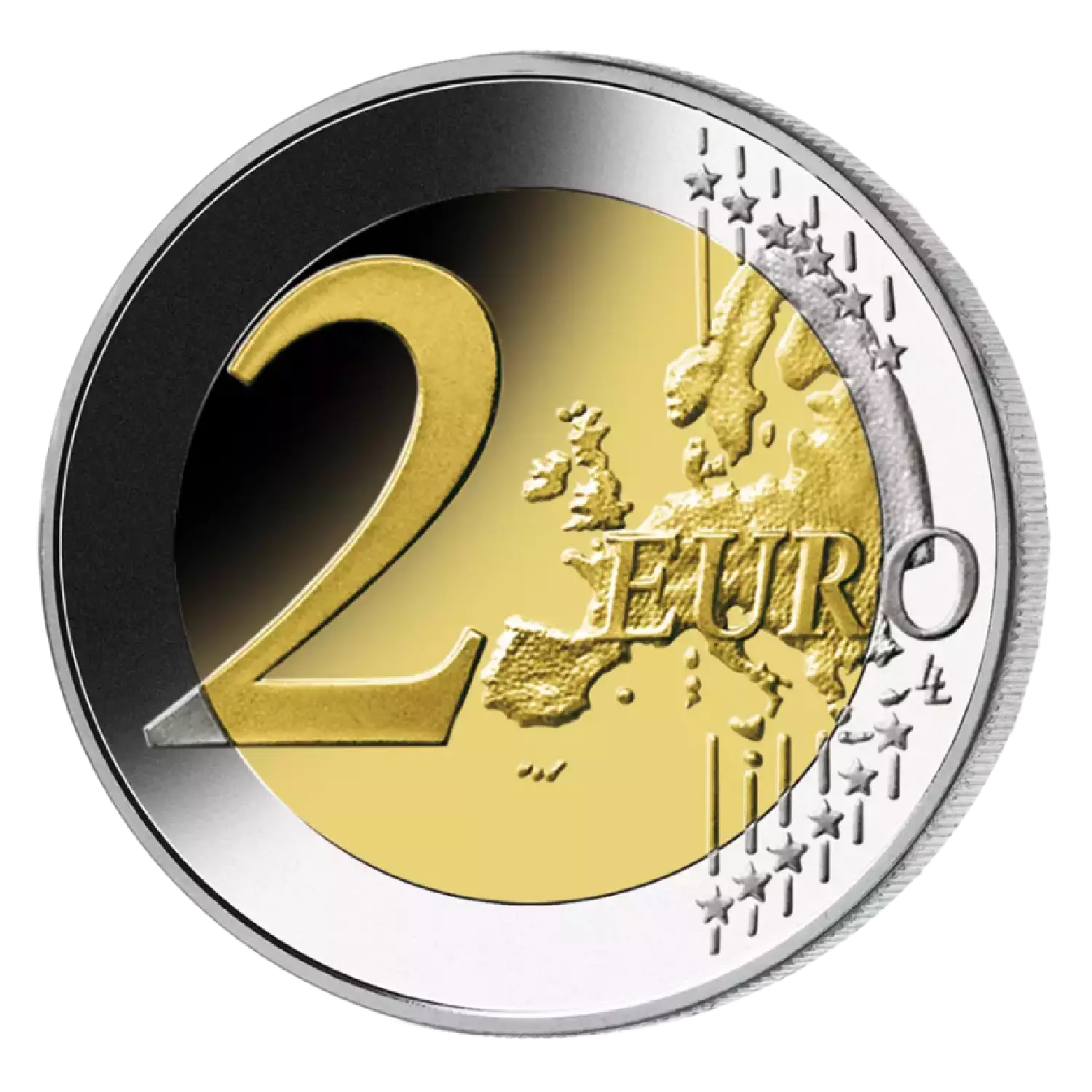
A 2 euro commemorative coin of the Republic of Lithuania, issued in 2025 in a circulation of 500,000 copies. Dedicated to the national defense of Lithuania. It was minted at the Lithuanian Mint in Vilnius. Bimetallic, diameter 25.75 mm, weight 8.5 g.
Obverse
The center of the coin depicts stylized symbols of national defense — possibly the silhouette of a Lithuanian warrior with Vytis (the national horseman symbol), a shield and the cross of the Vytis Cross — the highest military award of Lithuania. Around it is the inscription "KRAŠTO APSAUGA" (National Defense) or "LIETUVOS KARIUOMENĖ" (Lithuanian Armed Forces). At the bottom — "LIETUVA", the Lithuanian Mint mark "LMK", the year "2025". On the outer ring are the 12 five-pointed stars of the EU.
Reverse
The reverse is the common side of the 2 euro coins of the second type, designed by Luc Luix (Royal Belgian Mint). It depicts a map of Europe as a single continent without internal borders - a symbol of European unity. On the left is a large denomination "2" and the inscription "EURO", on the right is a map with six thin horizontal lines in the background. On the outer ring are the 12 stars of the European Union. The band is finely ribbed and has the Lithuanian inscription "LAISVĖ ★ VIENYBĖ ★ GEROVĖ ★" (Freedom, Unity, Prosperity).
Historical context
The Lithuanian Armed Forces (Lietuvos karnevė) are the national army of the Republic of Lithuania, founded on November 23, 1918, immediately after the restoration of Lithuania's independence. The army participated in the Wars of Independence of 1918-1920 against the Bolsheviks, the Polish-Lithuanian confrontations, and Vermont-Avanov. Disbanded after the Soviet occupation in 1940, restored on January 13, 1992 after the restoration of independence. In 2004, Lithuania joined NATO. After the Russian invasion of Ukraine in 2022, Lithuania significantly strengthened its defense: it increased the defense budget to over 3% of GDP (the target by 2030 is 5.25%), restored compulsory military service, and hosts a German Bundeswehr brigade on its territory on a permanent basis. The Lithuanian Armed Forces number about 16,500 servicemen. The National Guard (Šaulių sąjunga) has over 10,000 volunteers. Lithuania is one of the most active NATO countries in supporting Ukraine.