
Shopping Cart
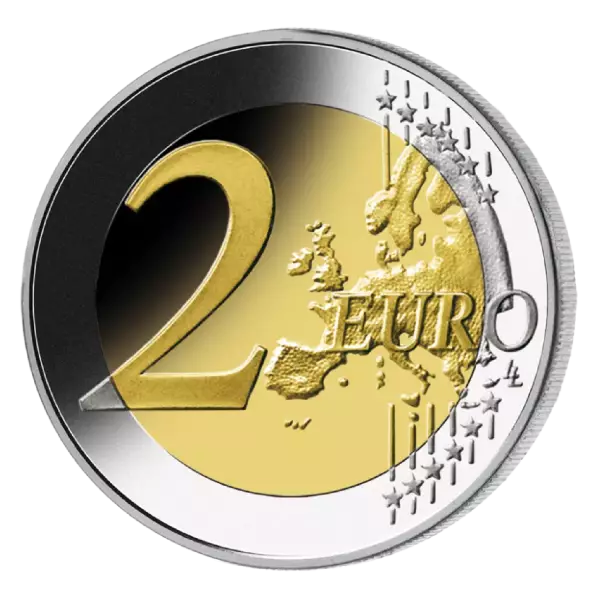

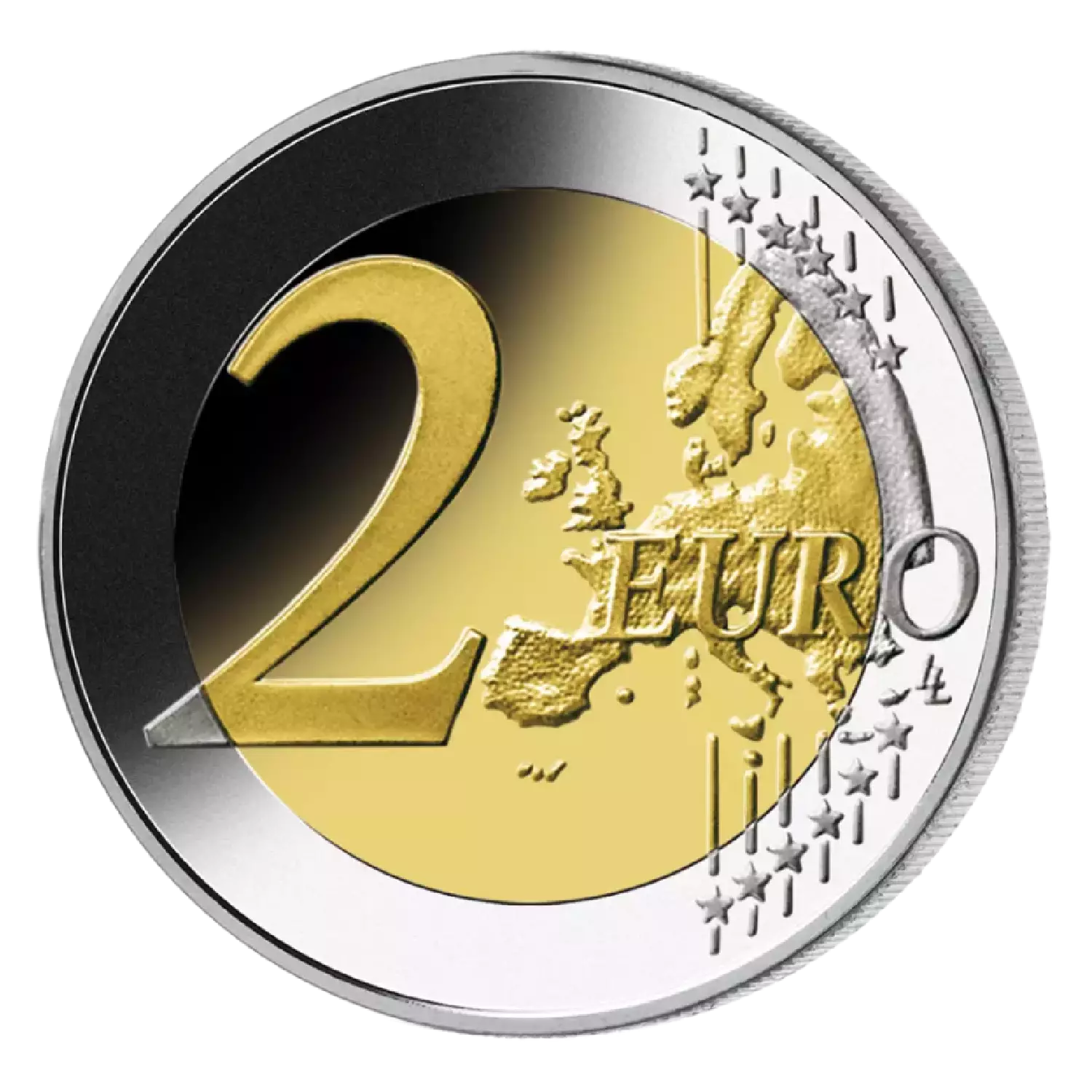
2 euro commemorative coin of the Grand Duchy of Luxembourg, issued in 2005 in a circulation of 2,800,000 copies. Dedicated to the triple anniversary: the 50th anniversary of Henri, the 5th anniversary of his accession to the throne, the 100th anniversary of Adolf's death. Minted at the Mint of Finland. Bimetallic, diameter 25.75 mm, weight 8.5 g.
Obverse
The center of the coin depicts two superimposed portraits: in the foreground is the profile of Grand Duke Henri, looking to the right, in the background is the profile of Grand Duke Adolf (1817-1905), who reigned since 1890. The combination of two generations of the Nassau-Weilburg dynasty symbolizes the continuity of the ruling house. The inscriptions around the circle are: "50° anniversaire de S.A.R. le Grand-Duc Henri" (50th anniversary of His Royal Highness Grand Duke Henri), "5° anniversaire de l'accession au trône" (5th anniversary of accession to the throne), "100° anniversaire du décès du Grand-Duc Adolphe" (100th anniversary of the death of Grand Duke Adolphe), the year "2005" and the name of the country "LËTZEBUERG". On the outer ring are the 12 stars of the EU.
Reverse
The reverse is the common side of the 2 euro coins of the first type (until 2007), designed by Luc Luix. It depicts a map of the enlarged European Union with stylized lines below the map. On the left is a large denomination "2" and the inscription "EURO". On the outer ring are the 12 five-pointed stars of the EU. The rim is finely fluted and has the inscription "2 ★", repeated six times, alternately upright and inverted.
Historical context
Grand Duke Adolf (Adolphe, Wilhelm, Karl, August, Friedrich, 1817-1905) was the founder of the Luxembourg branch of the House of Nassau-Weilburg. He was born on July 24, 1817 in Biberich (Duchy of Nassau). From 1839 to 1866 he was Duke of Nassau. After the Prussian annexation of Nassau in 1866, he lost the duchy. In 1890, when the death of King William III of the Netherlands interrupted the senior branch of the House of Nassau, and under the 1783 Treaty of Nassau, Luxembourg and the Netherlands had different rulers (a woman could rule the Netherlands, but not Luxembourg), Adolf became Grand Duke of Luxembourg. His reign (1890-1905) marked the beginning of an independent Luxembourg monarchy. Adolf founded a dynasty that has continued to rule to this day. He died on 17 November 1905 and is buried in Weilburg Castle. The 2005 coin links two representatives of this dynasty 100 years later.