
Shopping Cart
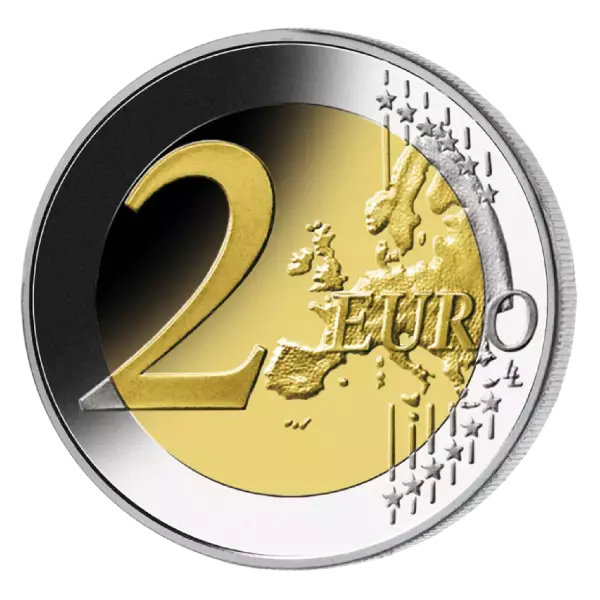

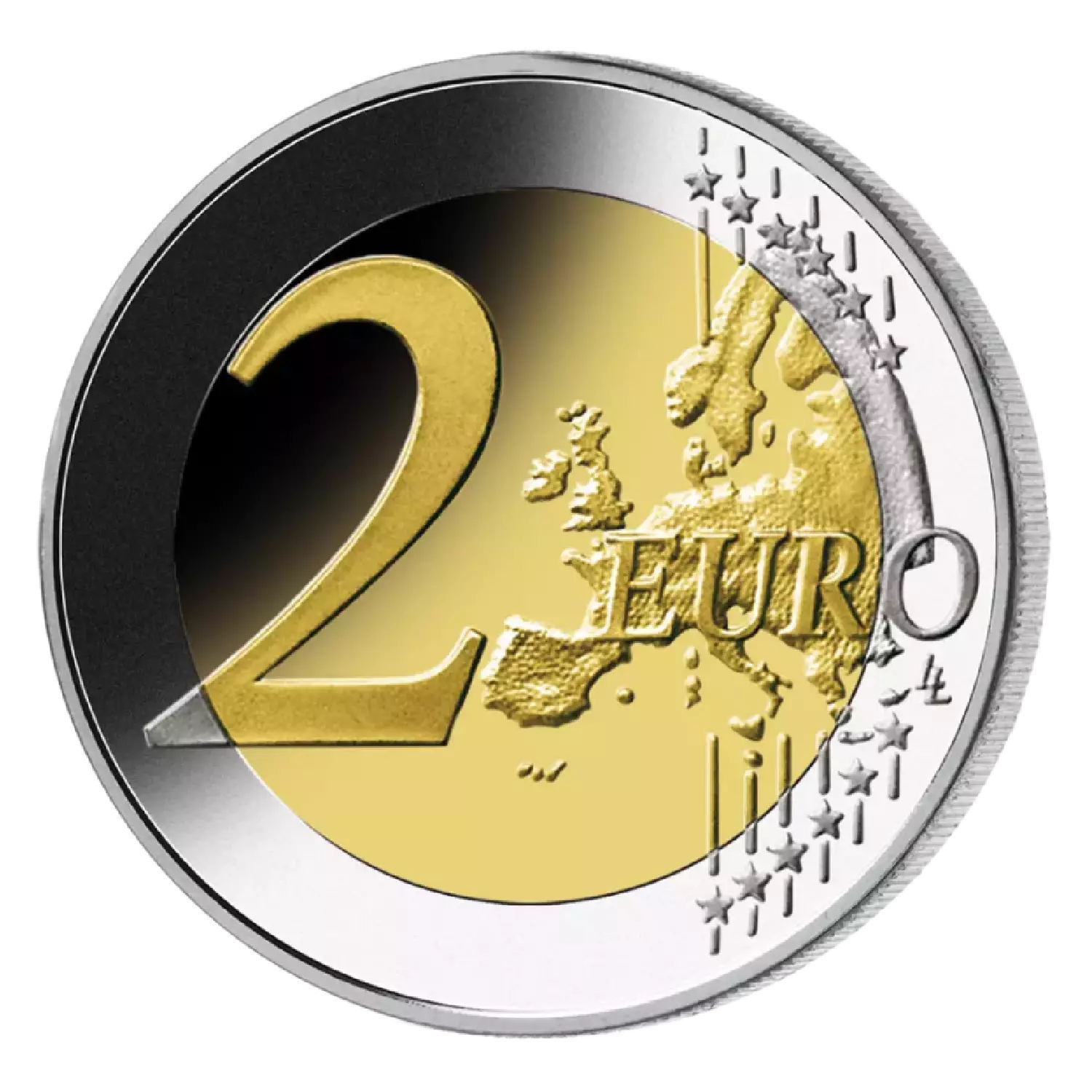
2 euro commemorative coin of the Grand Duchy of Luxembourg, issued in 2007 in a circulation of 1,020,000 copies. Dedicated to the Grand Ducal Palace. The author of the design is Alain Hoffmann. It was minted at the Paris Mint. Bimetallic, diameter 25.75 mm, weight 8.5 g.
Obverse
The right foreground of the coin depicts a three-quarter portrait of Grand Duke Henri, looking to the left. In the background on the left is the facade of the Grand Ducal Palace (Palais Grand-Ducal) in perspective. The lower part of the coin bears the inscription "LËTZEBUERG", while the year "2007" is placed vertically on the left side, above it is a cornucopia with coins from the Paris Mint, below it is the horn of the Director of the Mint, Hubert Larivière. On the outer ring are the 12 five-pointed stars of the EU.
Reverse
The reverse is the common side of the 2 euro coins of the second type, designed by Luc Luix (Royal Belgian Mint). It depicts a map of Europe as a single continent without internal borders - a symbol of European unity. On the left is a large denomination "2" and the inscription "EURO", on the right is a map with six thin horizontal lines in the background. On the outer ring are the 12 stars of the European Union. The band is finely fluted and the inscription "2 ★", repeated six times alternately upright and inverted.
Historical context
The Grand Ducal Palace (Palais Grand-Ducal, Groussherzogleche Palais) is the official residence of the Grand Duke of Luxembourg in the historic center of Luxembourg City on Rue Marché-aux-Herbs. The building was originally built in 1572-1573 as the Luxembourg City Hall in the Spanish Renaissance style (Luxembourg then belonged to Spain). After significant damage from a gunpowder explosion in 1554, the building was rebuilt under the leadership of architect Adam Roberts. Over the following centuries, it served as the residence of the governor, and in the 19th century. - the residence of the King-Grand Duke (with a common identity with the King of the Netherlands). In 1859, it was expanded by adding the "Chambre des Députés" (House of Deputies) - the current parliament. In 1995, the palace was restored. Today it serves as the official residence of the Grand Duke of Luxembourg and a place for official receptions and ceremonies. The summer residence of the dukes is Berg Castle.