
Shopping Cart
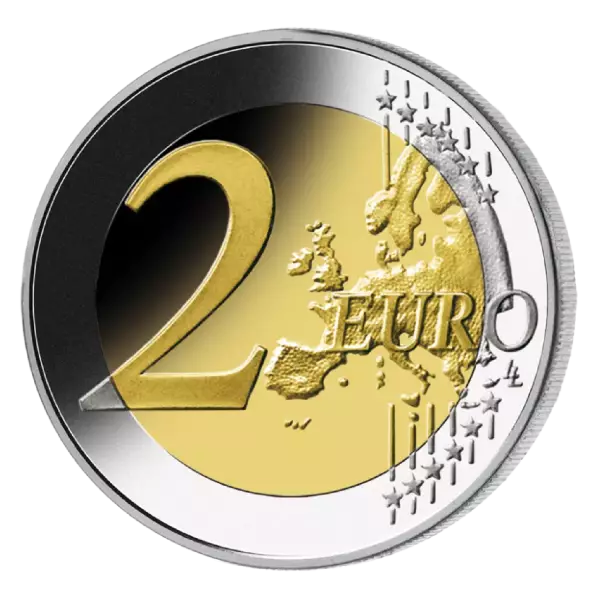

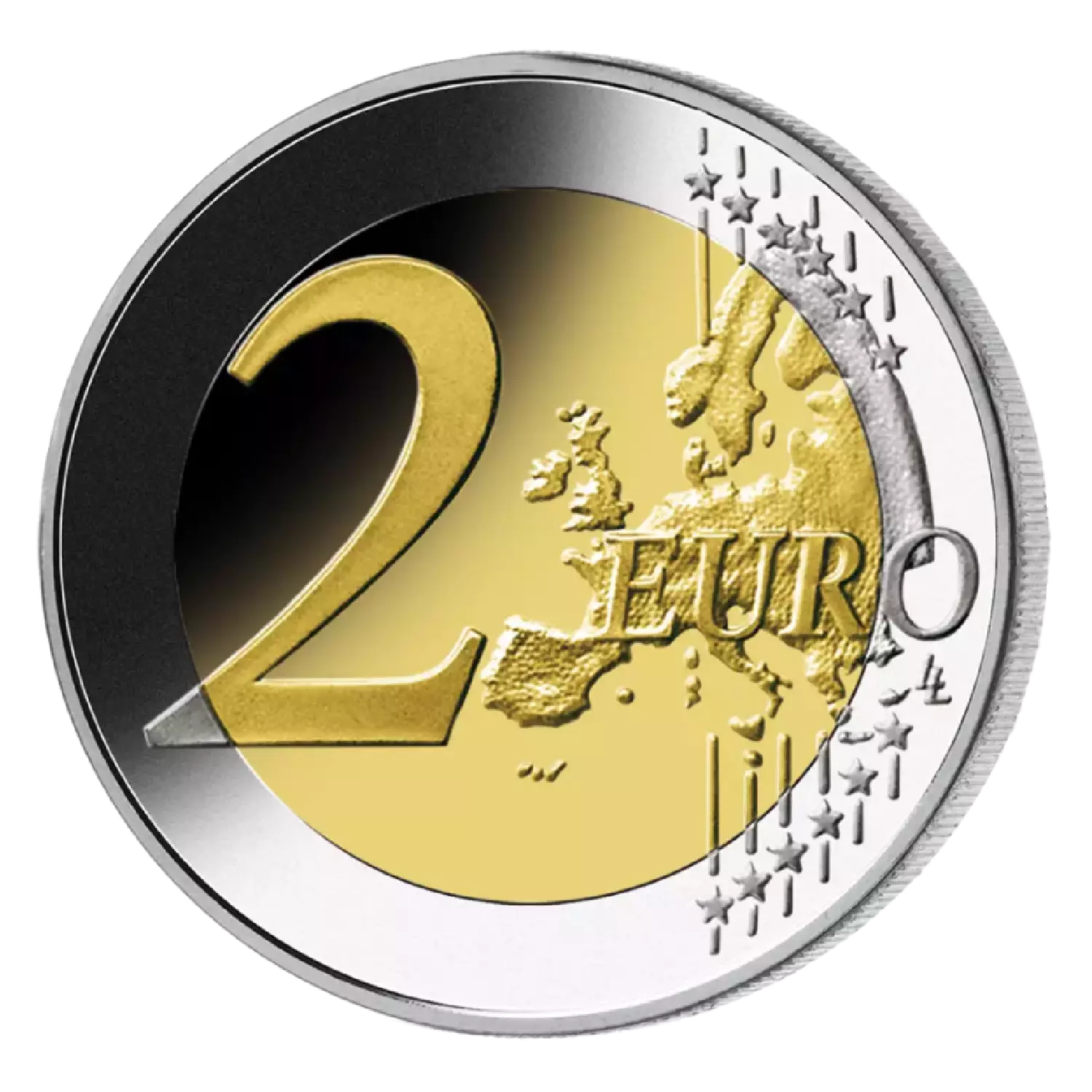
2 euro commemorative coin of the Grand Duchy of Luxembourg, issued in 2009 with a circulation of 1,355,000 copies. Dedicated to the 90th anniversary of the accession to the throne of Grand Duchess Charlotte. Minted at the Royal Mint of the Netherlands. Bimetallic, diameter 25.75 mm, weight 8.5 g.
Obverse
The center of the coin depicts two superimposed portraits: in the foreground is the profile of Grand Duke Henri, behind him is a portrait of Grand Duchess Charlotte (1896-1985). A symbolic combination of two generations of the ruling dynasty. At the top is the inscription "LËTZEBUERG", at the bottom are the years "1919-2009" and an inscription regarding the 90th anniversary of Charlotte's accession to the throne. Also - mint marks. The outer ring of the coin features the 12 five-pointed stars of the European Union.
Reverse
The reverse is the common side of the 2 euro coins of the second type, designed by Luc Luix (Royal Belgian Mint). It depicts a map of Europe as a single continent without internal borders, a symbol of European unity. On the left is a large denomination "2" and the inscription "EURO", on the right is a map with six thin horizontal lines in the background. On the outer ring are the 12 stars of the European Union. The band is finely fluted and has the inscription "2 ★" repeated six times, alternating upright and inverted.
Historical context
Grand Duchess Charlotte (Charlotte Adelgonde Elise Marie Wilhelmine, 1896-1985) was the Grand Duchess of Luxembourg from 1919 to 1964, one of the most prominent figures in the country's history. She was born on 23 January 1896. She became Grand Duchess on 14 January 1919 after the abdication of her sister Marie Adelaide (aged 21), who abdicated due to the scandals of her reign during the German occupation of World War I. Charlotte married Prince Felix of Bourbon-Parma in 1919. Her reign lasted 45 years, one of the longest in the country's history. During the occupation by Nazi Germany (1940-1944), Charlotte and her family emigrated to London, Canada and the United States, from where she called on Luxembourgers to resist on BBC radio. She became the "mother of the nation" and a symbol of freedom. After the war, she returned and led the reconstruction of the country. In 1964, she abdicated in favor of her son Jean. She died on July 9, 1985. Streets, Charlotte Bridge, monuments - everywhere her memory is honored.