
Shopping Cart
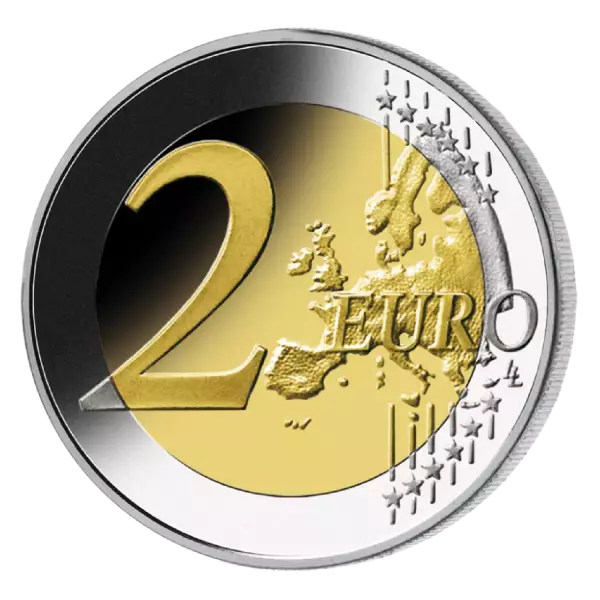

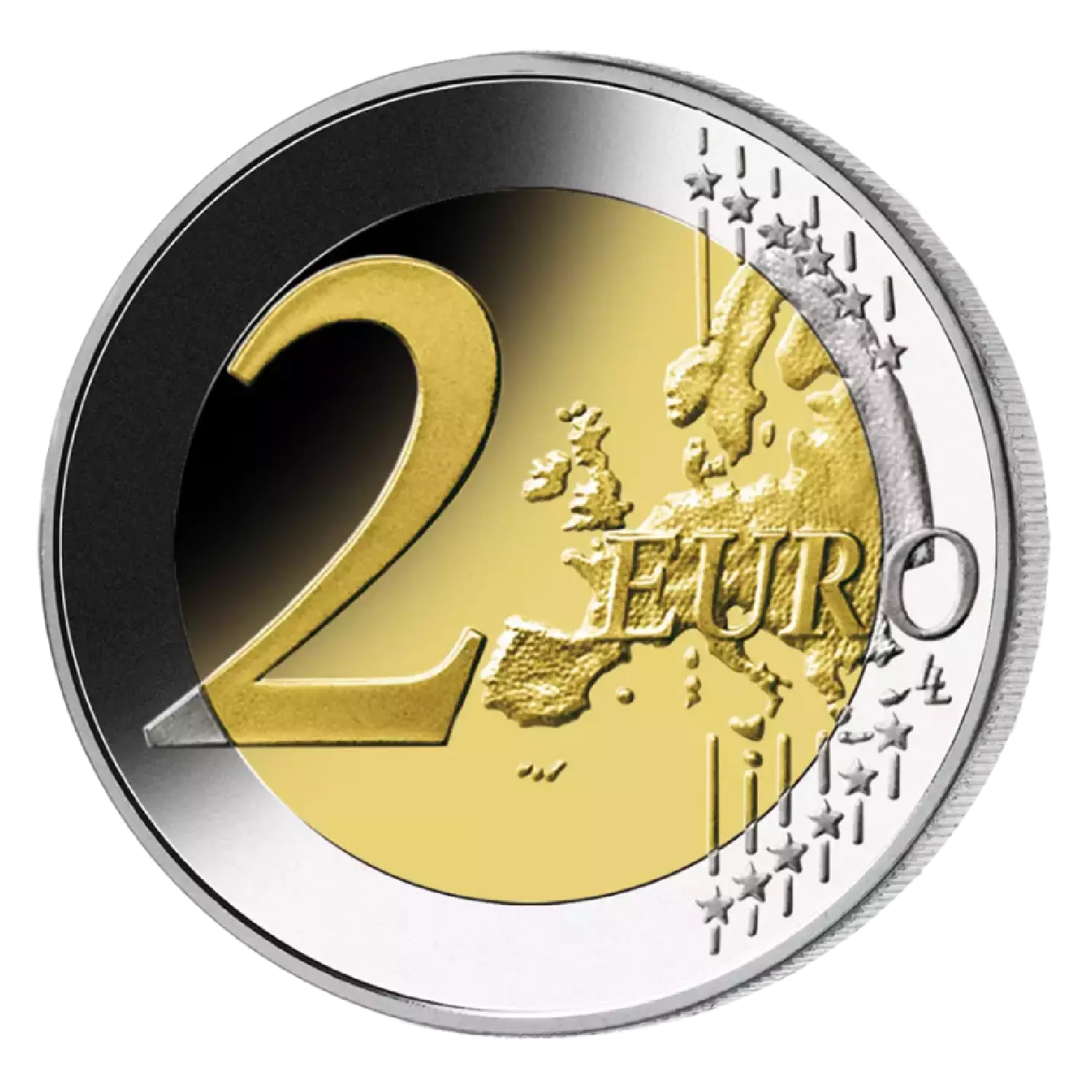
Commemorative coin of the Grand Duchy of Luxembourg, issued in 2012 in a circulation of 1,400,000 copies. A common coin of all 17 euro zone countries in honor of the 10th anniversary of euro banknotes and coins. The author of the joint design is Helmut Andexlinger (Austrian Mint). It was minted at the Royal Netherlands Mint. Bimetallic, diameter 25.75 mm, weight 8.5 g.
Obverse
The center of the coin depicts a stylized euro symbol "€", surrounded by elements symbolizing the use of the euro in Europe: a building (banking and trade), a bridge (unity), a ship, factory pipes (industry), wind turbines (green energy) and figures of people (citizens - euro users). In the background is a globe. Includes a hidden relief with the profile of Grand Duke Henri (a characteristic feature of all joint issues of Luxembourg). Inscriptions: "LËTZEBUERG 2002-2012". On the outer ring - 12 stars of the EU.
Reverse
The reverse is the common side of the 2 euro coins of the second type, designed by Luc Luix (Royal Belgian Mint). It depicts a map of Europe as a single continent without internal borders - a symbol of European unity. On the left - a large denomination "2" and the inscription "EURO", on the right - a map with six thin horizontal lines in the background. On the outer ring - 12 stars of the European Union. The band is finely grooved and the inscription "2 ★", repeated six times alternately upright and inverted.
Historical context
The euro is the official currency of the European Union, created on January 1, 1999 as a non-cash currency, and introduced into circulation as banknotes and coins on January 1, 2002 in 12 countries: Austria, Belgium, Finland, France, Germany, Greece, Ireland, Italy, Luxembourg, the Netherlands, Portugal and Spain. For the first few weeks of 2002, national currencies (lira, mark, franc, etc.) circulated in parallel with the euro. Luxembourg was one of the founding countries of the euro, exchanging the Luxembourgish franc (LUF) at a rate of 1 euro = 40.3399 LUF. In 2012, the euro zone consisted of 17 countries. The changeover to the single currency was the biggest monetary reform in history. All eurozone countries issued a common 2-euro coin with the same design. The design was chosen through an online vote by EU citizens (over 34,000 votes).