
Shopping Cart
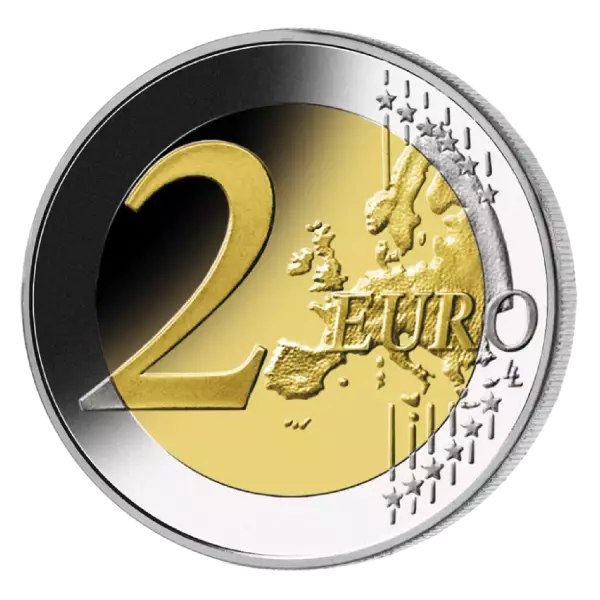

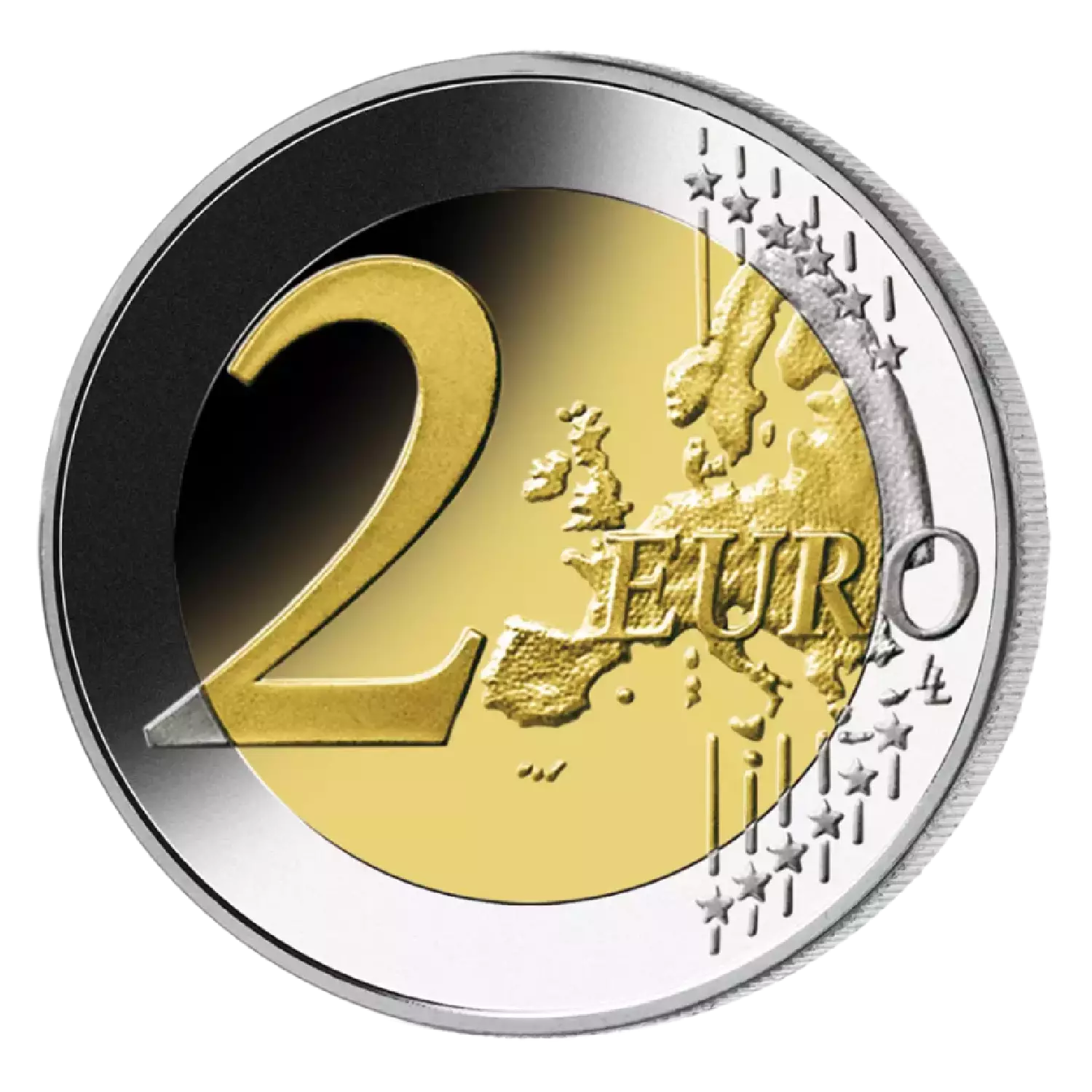
2 euro commemorative coin of the Grand Duchy of Luxembourg, issued on February 6, 2014 in a circulation of 1,400,000 copies. Dedicated to the 175th anniversary of Luxembourg's independence. Minted at the Royal Netherlands Mint (Utrecht). Bimetallic, diameter 25.75 mm, weight 8.5 g.
Overse
The coin is divided into three parts. In the upper right part is the profile of Grand Duke Henri, facing right. In the left frame, vertically in three lines, is the inscription: "1839 2014 / LËTZEBUERG". Above and below the year "2014" are the mint marks: above is a winged caduceus (Utrecht Mint), below is a sailboat (mint master Bruer). In the semicircular lower frame is the inscription "ONOFHANGEGKEET" (Independence of Luxembourg) with the signature "175 Joër" (175 years). Around are the 12 stars of the European Union.
Reverse
The reverse is the common side of the 2 euro coins of the second type, designed by Luc Luix (Royal Belgian Mint). It depicts a map of Europe as a single continent without internal borders - a symbol of European unity. On the left is a large denomination "2" and the inscription "EURO", on the right is a map with six thin horizontal lines in the background. On the outer ring are the 12 stars of the European Union. The edge has a thin groove and the inscription "2 ★", repeated six times alternately upright and inverted.
Historical context
The independence of Luxembourg is one of the key events in the country's history. On 19 April 1839, a treaty was signed in London, which recognized the Grand Duchy of Luxembourg as an independent state and defined its modern borders. Before that, Luxembourg had been the subject of negotiations between European powers after the collapse of the Austrian Empire and the Congress of Vienna (1815). The first Grand Duke (1815–1840) was King William I of the Netherlands. In 1830, the Belgian Revolution began, resulting in the separation of Belgium from the Netherlands. A significant part of Luxembourg (the French-speaking, i.e. the modern southern provinces) passed to Belgium; the other part (including the city of Luxembourg) remained in personal union with the Netherlands as a Grand Duchy. In 1890, after the death of William III, Luxembourg completely separated from the Netherlands, and the Nassau-Weilburg dynasty ruled it. 1839 is considered the beginning of modern Luxembourg.