
Shopping Cart
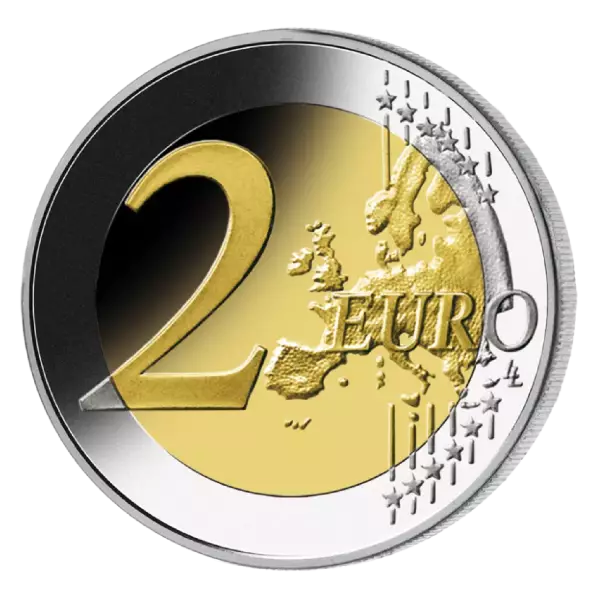

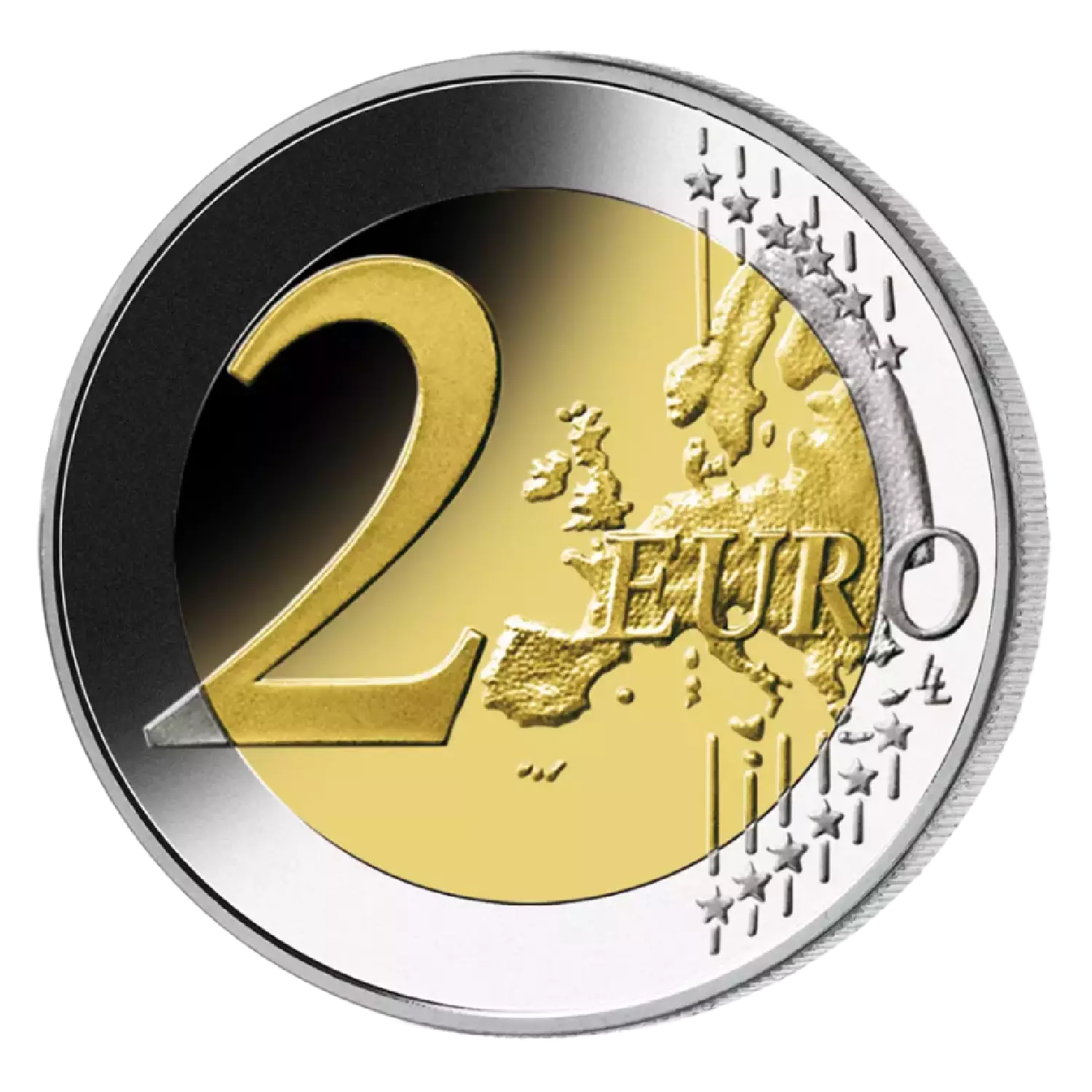
2 euro commemorative coin of the Grand Duchy of Luxembourg, issued in 2018 in a circulation of 340,000 copies. Dedicated to the 175th anniversary of the death of Grand Duke Guillaume I. Minted at the Royal Netherlands Mint. Bimetallic, diameter 25.75 mm, weight 8.5 g.
Obverse
On the left of the coin is a portrait of the current Grand Duke Henri, on the right is a portrait of Grand Duke Guillaume I. Inscriptions: "LËTZEBUERG", "175e ANNIVERSAIRE DE LA MORT DU GRAND-DUC GUILLAUME Ier" (175th anniversary of the death of Grand Duke Guillaume I) and the dates "1843-2018". Mint and mintmaster marks. On the outer ring of the coin are 12 five-pointed stars of the EU.
Reverse
The reverse is the common side of the 2 euro coins of the second type, designed by Luc Luix (Royal Belgian Mint). It depicts a map of Europe as a single continent without internal borders - a symbol of European unity. On the left - a large denomination "2" and the inscription "EURO", on the right - a map with six thin horizontal lines in the background. On the outer ring - 12 stars of the European Union. The band is finely fluted and has the inscription "2 ★", repeated six times alternately upright and inverted.
Historical context
Grand Duke Guillaume I (Dutch: Willem I, 24 August 1772 – 12 December 1843) was the first King of the United Kingdom of the Netherlands (1815–1840) and the first Grand Duke of Luxembourg (1815–1840). He was the son of the last Stadtholder of the Dutch Republic, William V. After Napoleon's defeat at the Congress of Vienna in 1815, the United Kingdom of the Netherlands was created by merging the former Dutch Republic, the southern Netherlands (Belgium) and other territories, with Luxembourg as a separate Grand Duchy in personal union with the Netherlands. The reign of Guillaume I was marked by economic modernization, but also by tensions with the southern provinces, leading to the Belgian Revolution of 1830 and the separation of Belgium (1839, Treaty of London). In October 1840, Guillaume I abdicated in favor of his son Guillaume II and moved to Germany, where he died on 12 December 1843. The 175th anniversary in 2018 was commemorated by a coin.