
Shopping Cart
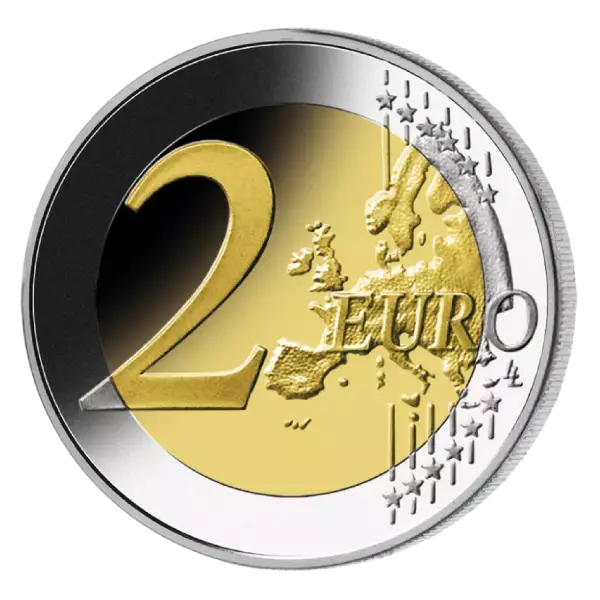

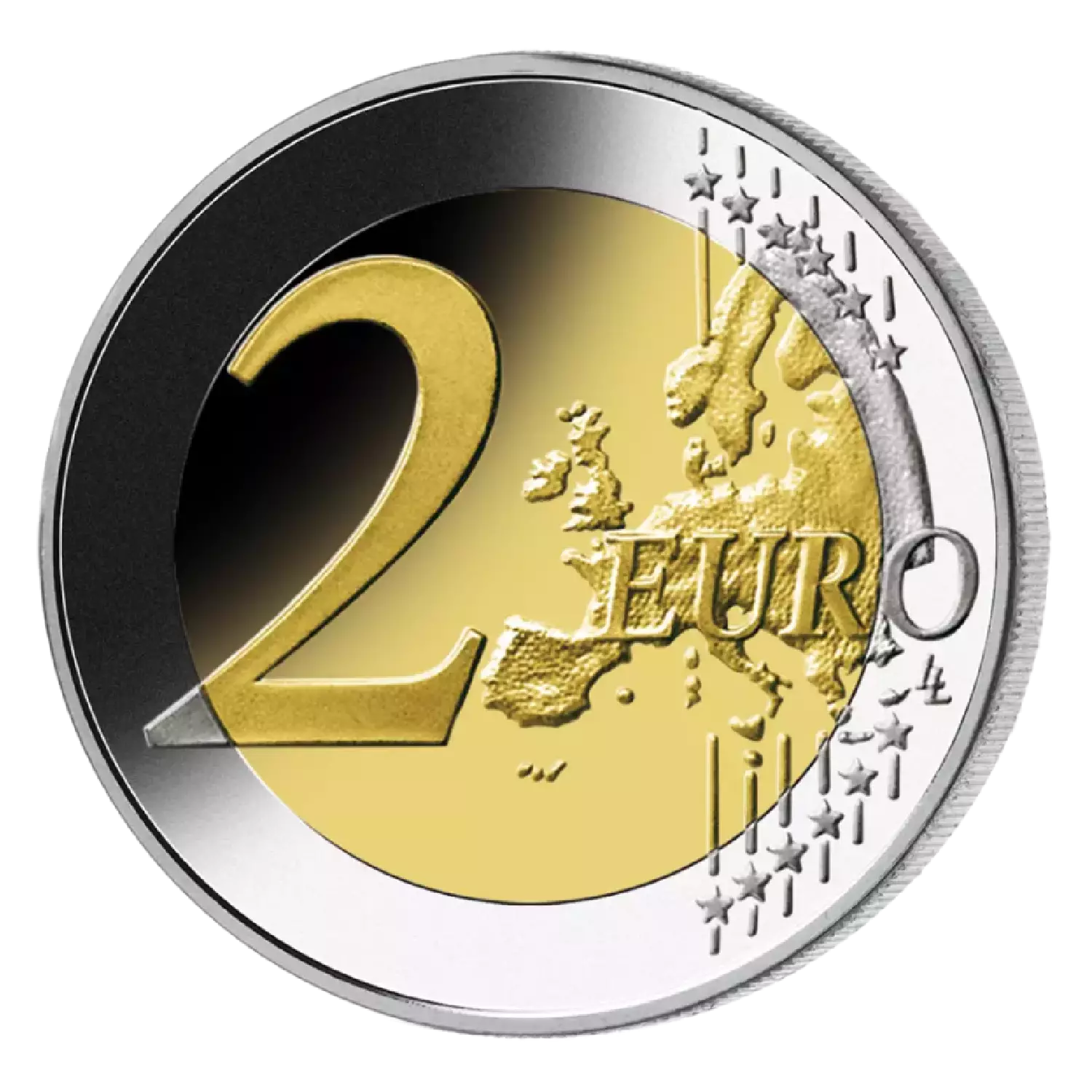
A 2 euro commemorative coin of the Republic of Malta, issued in 2016 in a circulation of 350,000 copies. The first in the series "Maltese Prehistoric Temples" (7 coins, 2016-2022). It was minted at the Paris Mint with the mark "F" (Mintmark Variant) in special issues. Bimetallic, diameter 25.75 mm, weight 8.5 g.
Obverse
The center of the coin depicts the megalithic architecture of the Ggantija temple complex: massive stone blocks forming the entrance to the temple, with a characteristic rounded "apse" shape. At the top, in an arc, is the inscription "Templi ta' Ġgantija" (Temples of Ggantija). Below is the name of the issuing country "MALTA" and the year "2016". On the outer ring are 12 five-pointed EU stars.
Reverse
The reverse is the common side of the 2 euro coins of the second type, designed by Luc Luix (Royal Belgian Mint). It depicts a map of Europe as a single continent without internal borders - a symbol of European unity. On the left - a large denomination "2" and the inscription "EURO", on the right - a map with six thin horizontal lines in the background. On the outer ring - 12 stars of the European Union. The band - with thin ribbing, with a Maltese cross and the inscription "★ 2 ★".
Historical context
Ġgantija (Maltese - "Gigants") is a megalithic temple complex on the island of Gozo (Malta), one of the oldest free-standing structures in the world. It consists of two adjacent temples built between 3600 and 3200 BC, making them older than the Egyptian pyramids and the megalithic structures of Stonehenge in England. The name "Ggantia" comes from a local legend that the temples were built by the giantess Sansuna. The temples had a five-stone (cinquefoil) plan with a series of "lobes" connected by a central corridor. The walls are composed of massive megaliths - some of them exceed 5 meters in height and weigh over 50 tons. The builders used two types of stone: hard coralline (for the external walls) and soft globigerine (for the internal decoration). Ggantia was one of the first Maltese sites to be inscribed on the UNESCO World Heritage List in 1980, along with the Hal Saflieni Hypogeum.