
Shopping Cart
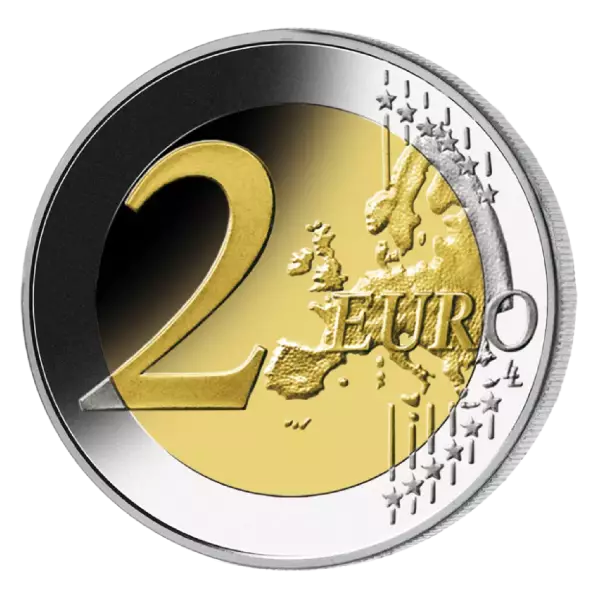

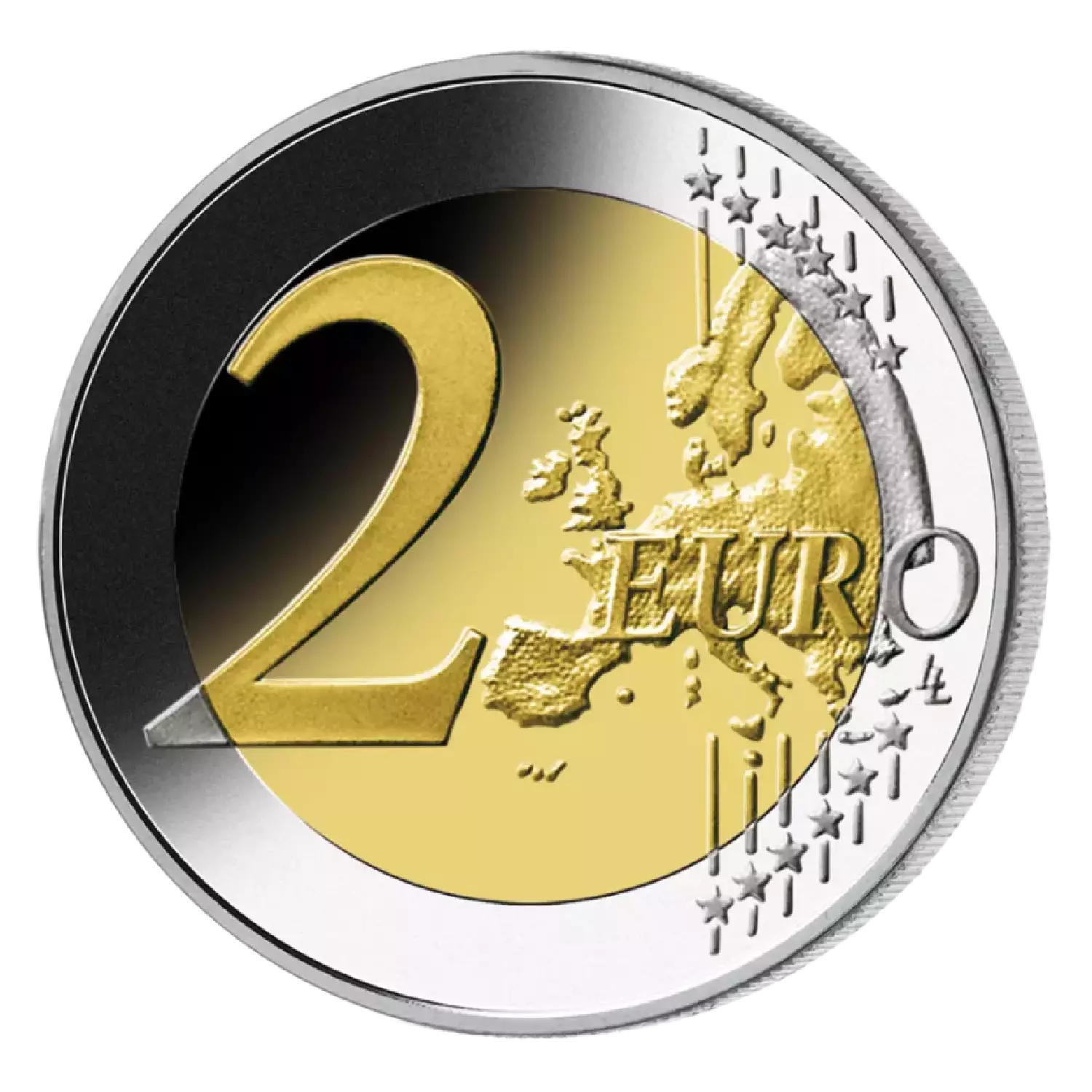
2 euro commemorative coin of the Republic of Malta, issued in 2023 with a circulation of 80,500 copies. Dedicated to the 550th anniversary of the birth of Nicolaus Copernicus. Minted at the Paris Mint. Bimetallic, diameter 25.75 mm, weight 8.5 g.
Obverse
The center of the coin depicts a portrait of Nicolaus Copernicus next to a heliocentric model of the Solar System - the Sun in the center, around which the planets revolve. Above - the inscription "NICOLAUS COPERNICUS", below - the dates "1473-2023" (from the year of birth to the 550th anniversary). On the right - the name of the country "MALTA". On the outer ring are the 12 five-pointed stars of the European Union.
Reverse
The reverse is the common side of the 2 euro coins of the second type, designed by Luc Luix (Royal Belgian Mint). It depicts a map of Europe as a single continent without internal borders - a symbol of European unity. On the left is a large denomination "2" and the inscription "EURO", on the right is a map with six thin horizontal lines in the background. On the outer ring are the 12 stars of the European Union. The band is finely fluted, with a Maltese cross and the inscription "★ 2 ★".
Historical context
Nicolaus Copernicus (Polish: Mikołaj Kopernik, February 19, 1473 - May 24, 1543) was a Polish astronomer, mathematician, physician, lawyer, economist, translator and canon, the author of the heliocentric model of the world, which became one of the most important revolutions in the history of science. He was born in Toruń to a merchant family. He studied at the universities of Krakow (mathematics, astronomy), Bologna, Padua (medicine) and Ferrara (jurisprudence). Canon of the Diocese of Warmia. His revolutionary work "De revolutionibus orbium coelestium" (On the Revolutions of the Celestial Spheres), in which he expounded the heliocentric theory - the Sun is at the center of the Universe, and the Earth and planets revolve around it - was published in 1543, a few days before his death. His theory became the basis for the subsequent works of Galileo, Kepler, Newton, and modern astronomy. He died on May 24, 1543 in Frombork.