
Shopping Cart
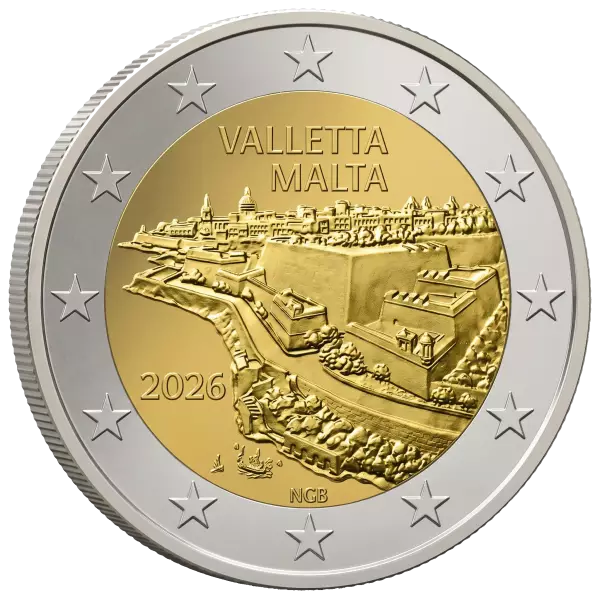


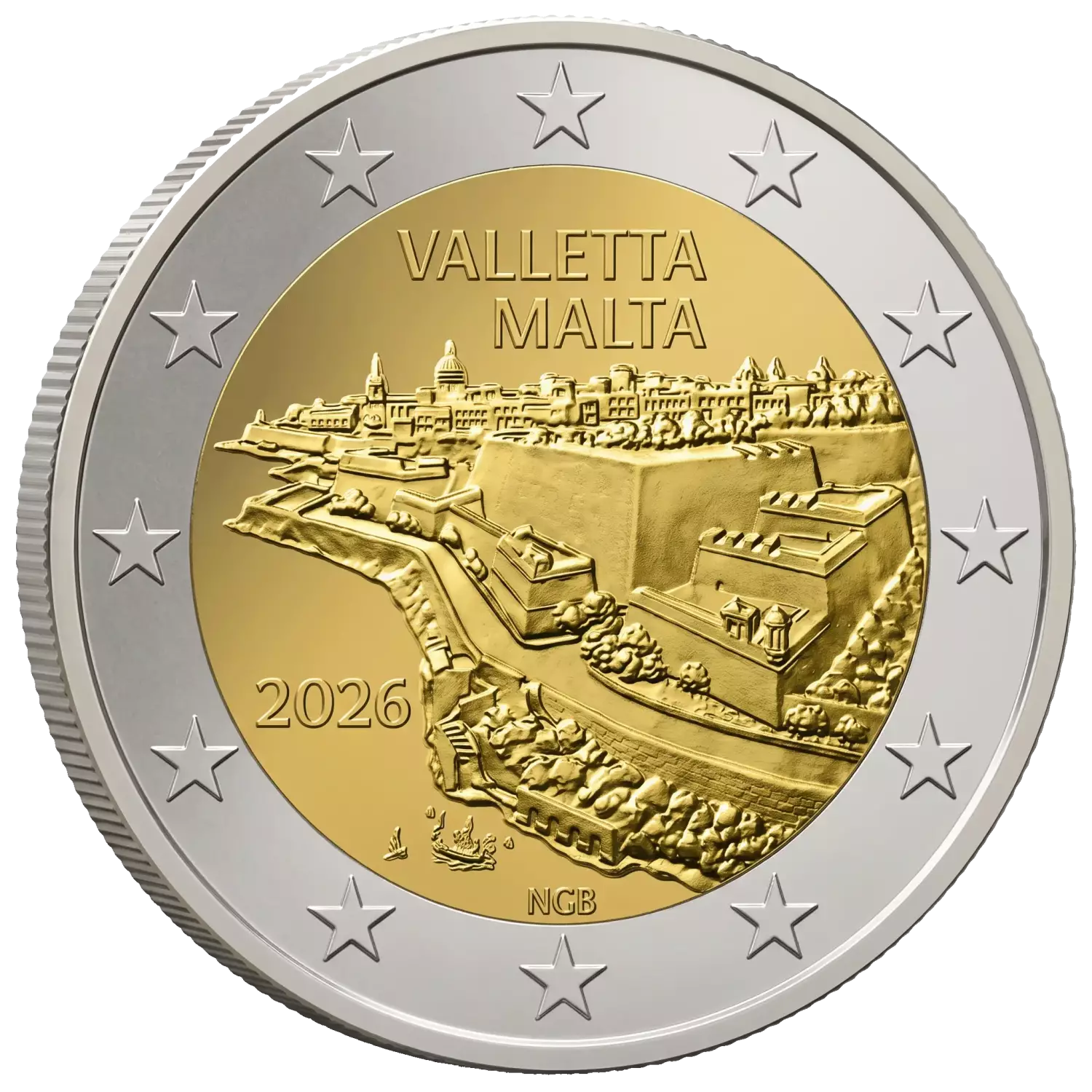
Commemorative coin 2 euros of the Republic of Malta, issued in 2026. The third in the series "Maltese Fortress Cities". Dedicated to Valletta. Minted at the Paris Mint. Bimetallic, diameter 25.75 mm, weight 8.5 g.
Obverse
The center of the coin depicts a panorama of Valletta - characteristic bastion walls rising from the sea, with silhouettes of St. John's Co-Cathedral, the Grand Master's Palace, and other Baroque monuments. At the top in an arc is the inscription "Valletta". At the bottom - "MALTA" and the year "2026". On the outer ring are the 12 five-pointed stars of the European Union.
Reverse
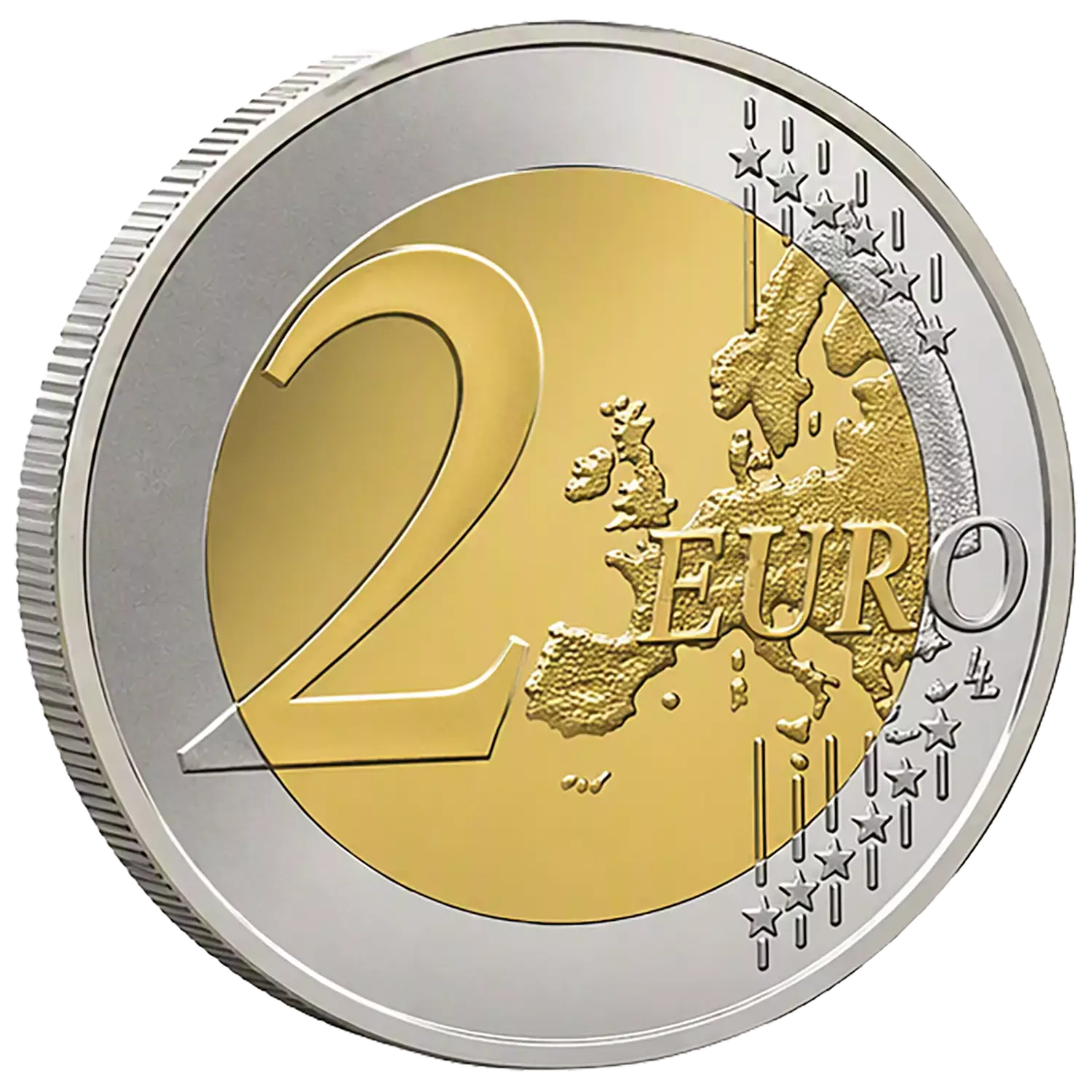
The reverse is the common side of the 2 euro coins of the second type, designed by Luc Luix (Royal Belgian Mint). It depicts a map of Europe as a single continent without internal borders - a symbol of European unity. On the left - a large denomination "2" and the inscription "EURO", on the right - a map with six thin horizontal lines in the background. On the outer ring are the 12 stars of the European Union. The band - with thin ribbing, with a Maltese cross and the inscription "★ 2 ★".
Historical context
Valletta is the capital of Malta, located on a peninsula between the harbors of the Grand Harbour and Marsamxett. Founded on 28 March 1566 by the Grand Master of the Knights of St. John, Jean Parisot de La Valletta, after whom it was named. The creation of the city was a response to the Great Siege of 1565, an unsuccessful attempt by the Ottoman Empire to capture Malta. After the siege, it became obvious that the Knights needed a new, well-fortified capital. The city plan was developed by the Italian military engineer Francesco Laparelli (a student of Michelangelo), and was further developed by Girolamo Cassar. Valletta is one of the first planned capitals in Europe (with a rectangular network of streets). Among the monuments: Co-Cathedral of St. John (with paintings by Caravaggio), Palace of the Grand Master, Knights' auberges (auberge), Upper Barrakka Gardens overlooking the Grand Harbour. Inducted into the UNESCO World Heritage List in 1980, it was the European Capital of Culture in 2018.