
Shopping Cart
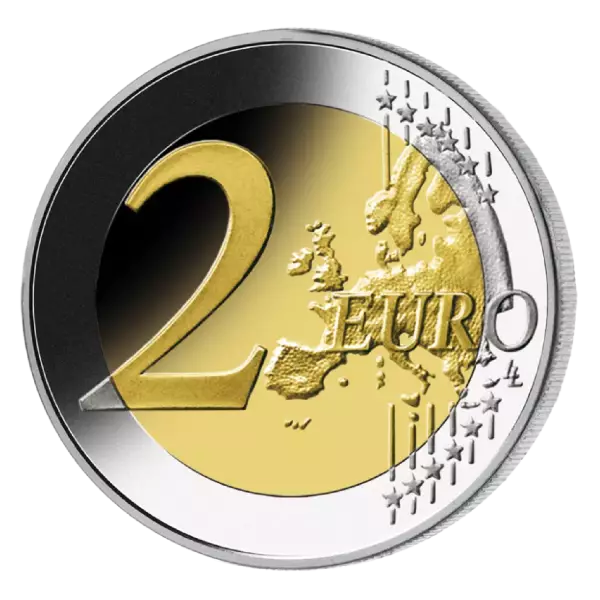

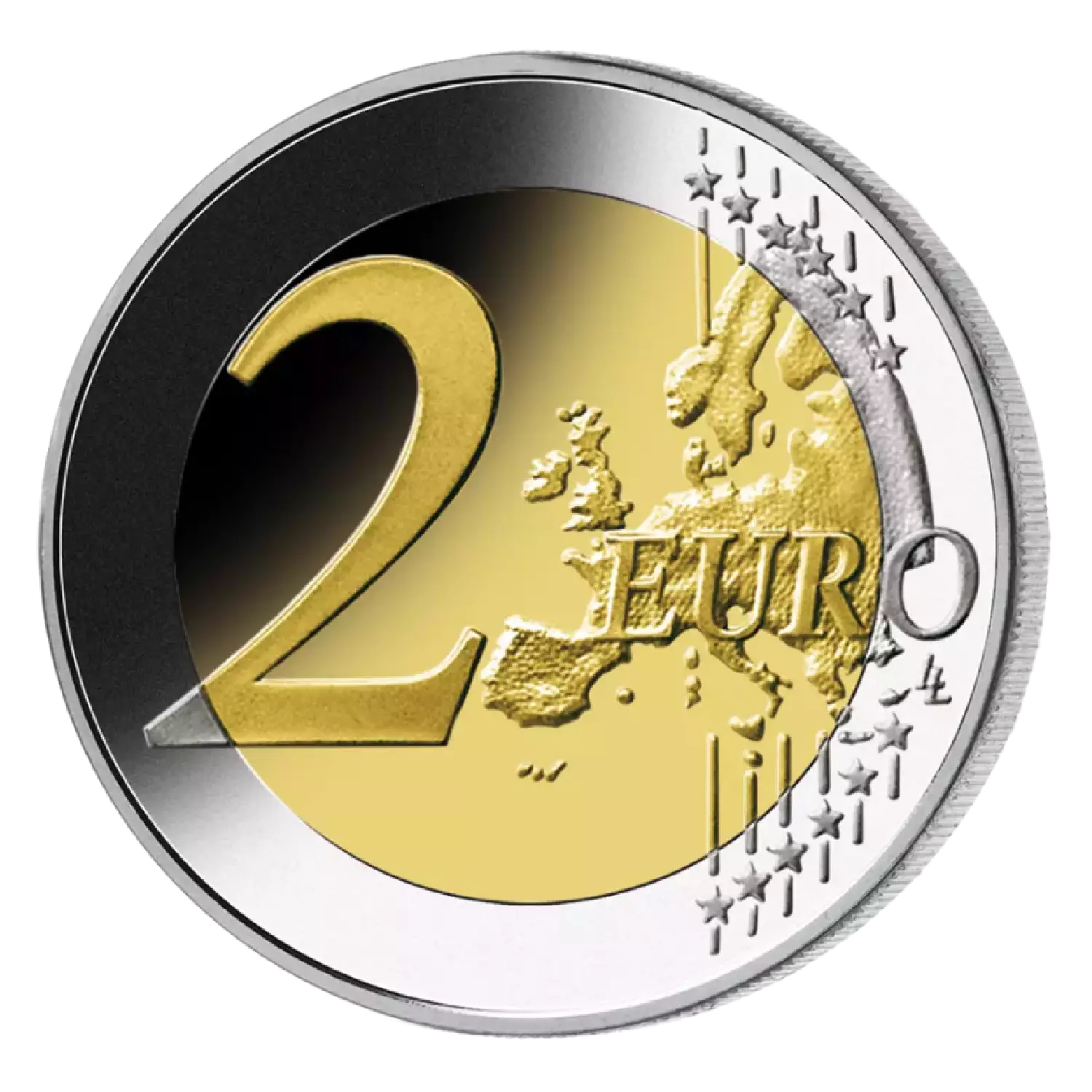
The 2 euro commemorative coin of the Principality of Monaco, issued in 2015 in a circulation of only 10,000 copies, is one of the rarest issues of Monaco. Dedicated to the 800th anniversary of the founding of the Prince's Palace. It was minted at the Paris Mint. Bimetallic, diameter 25.75 mm, weight 8.5 g.
Obverse
The obverse depicts the stylized tower of the Prince's Palace, rising on the Rock of Monaco (Le Rocher) above the Mediterranean Sea. The composition conveys the historical fortress in its original form. The inscriptions "MONACO" and the dates "1215-2015" are placed around it. On the right is the mark of the Paris Mint. On the outer ring of the coin are the 12 five-pointed stars of the European Union.
Reverse
The reverse is the common side of the 2 euro coins of the second type, designed by Luc Luix (Royal Belgian Mint). It depicts a map of Europe as a single continent without internal borders - a symbol of European unity. On the left - a large denomination "2" and the inscription "EURO", on the right - a map with six thin horizontal lines in the background. On the outer ring - 12 stars of the European Union. The band - with thin ribbing and the inscription "2 ★", repeated six times alternately upright and inverted.
Historical context
The Prince's Palace of Monaco (Palais Princier de Monaco) is the residence of the Princes of Monaco, located on the Rock of Monaco (Le Rocher), which dominates the Mediterranean Sea. In 1215, the Genoese Guelph sailors built the first fort on this strategically important site, the peak of Monaco (Monoecus, from the ancient Greek name). It was a defensive structure amidst the rivalry between the Guelphs and Ghibellines in the Italian city-states. In 1297, François Grimaldi (nicknamed "the Cunning", la Malizia), disguised as a Franciscan monk, entered the fortress with his men and captured it, beginning the rule of the Grimaldi dynasty. The palace was expanded and modernized over the centuries - from a medieval fortress to a Renaissance palace, Baroque and Neoclassical. Today, the Palace is both the official residence of Prince Albert II and a historical museum open to tourists. The Palace Guard (Princely Carabinieri) performs the traditional changing of the guard every day at 11:55 am.