
Shopping Cart
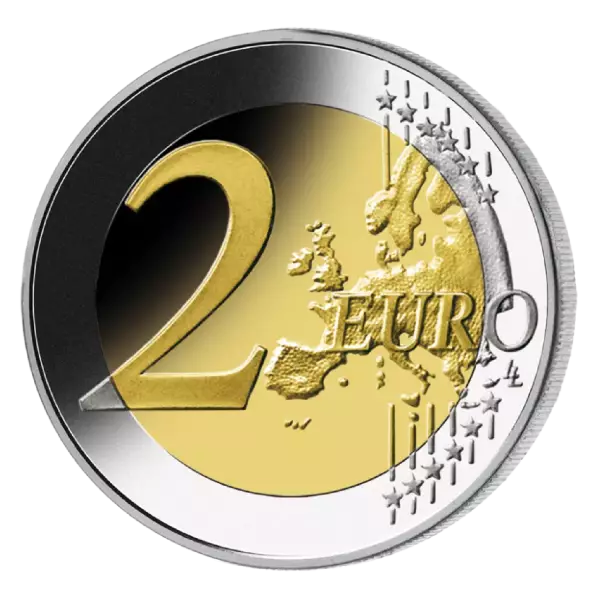

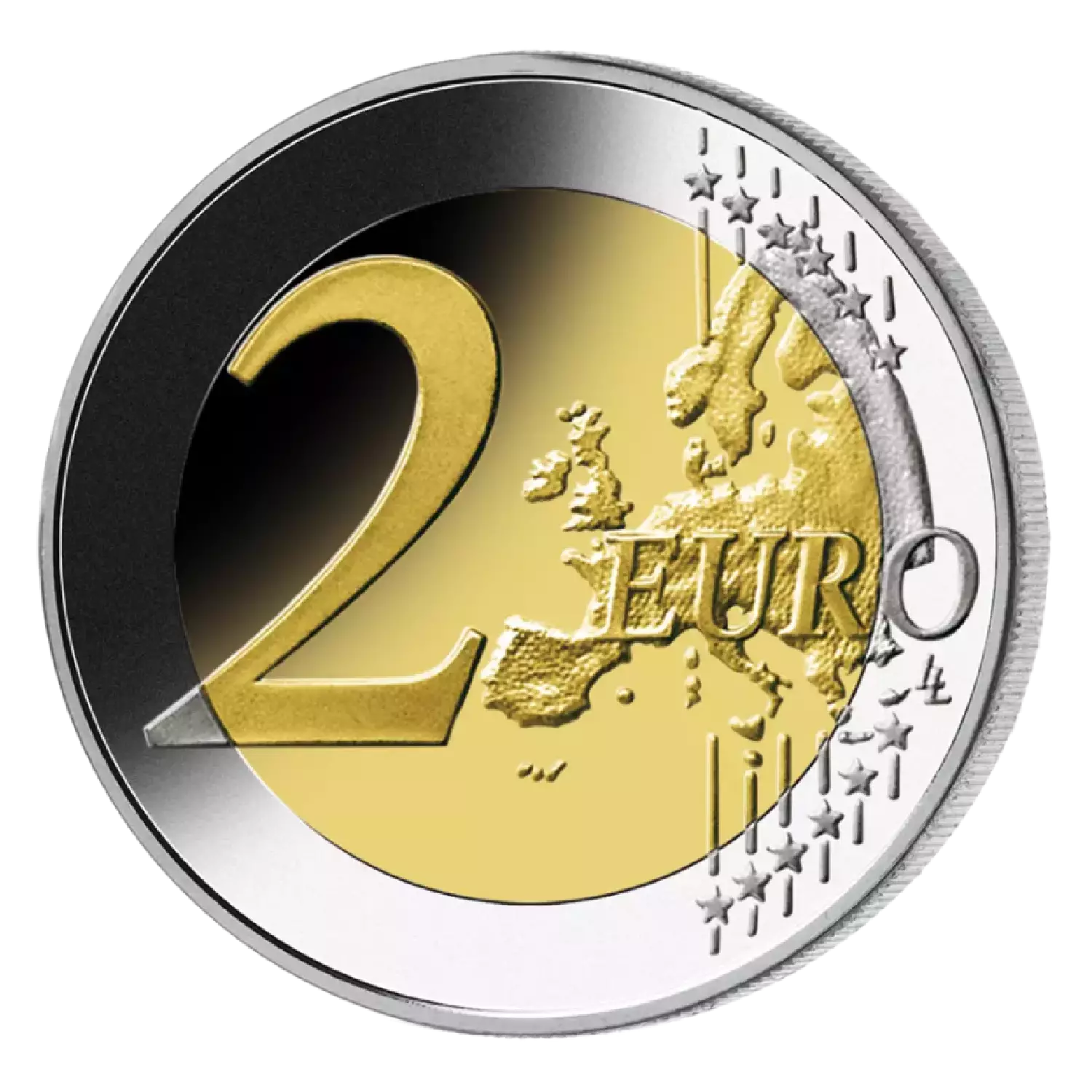
Commemorative coin of the Principality of Monaco, issued in 2018 in a circulation of 15,000 copies. Dedicated to the 250th anniversary of François Joseph Bosio. Minted at the Paris Mint. Bimetallic, diameter 25.75 mm, weight 8.5 g.
Obverse
The center of the coin depicts the sculpture "Hercule Archer" - one of the most famous works of Antoine Bourdelle, located in Monaco. Bourdelle created the sculpture in 1909, probably under the influence of the classical works of Bosio. At the top, in an arc, is the inscription "250e ANNIVERSAIRE FRANÇOIS JOSEPH BOSIO". At the bottom, "MONACO" and the year "2018". On the right is the mark of the Paris Mint. On the outer ring are the 12 stars of the EU.
Reverse
The reverse is the common side of the 2 euro coins of the second type, designed by Luc Luix (Royal Belgian Mint). It depicts a map of Europe as a single continent without internal borders - a symbol of European unity. On the left is a large denomination "2" and the inscription "EURO", on the right is a map with six thin horizontal lines in the background. On the outer ring are the 12 stars of the European Union. The rim is finely fluted and the inscription "2 ★", repeated six times alternately upright and inverted.
Historical context
Baron François Joseph Bosio (March 19, 1768 - July 29, 1845) was a French neoclassical sculptor, a native of Monaco, one of the most famous sculptors of the Napoleonic Empire and Restoration eras. He was born in Monaco, studied under Augustin Page in Paris. He worked in Italy (1786-1808), where he studied ancient models in depth. He returned to Paris in 1808. Emperor Napoleon I appointed him "First Sculptor of the Emperor" - he created numerous portraits of the emperor, sculptural groups for triumphal arches, and monuments. Among the most famous works: quadriga for the Arc de Triomphe on the Place de la Carrousel (Paris), bronze monument to Louis XIV on the Place de la Victories in Paris, statue of Henry IV in the Louvre. After the fall of Napoleon, he continued his career under the Bourbons. Member of the French Academy from 1816. Baron from 1825. Died in Paris on July 29, 1845. A square in Paris and a street in Monaco bear his name.