
Shopping Cart
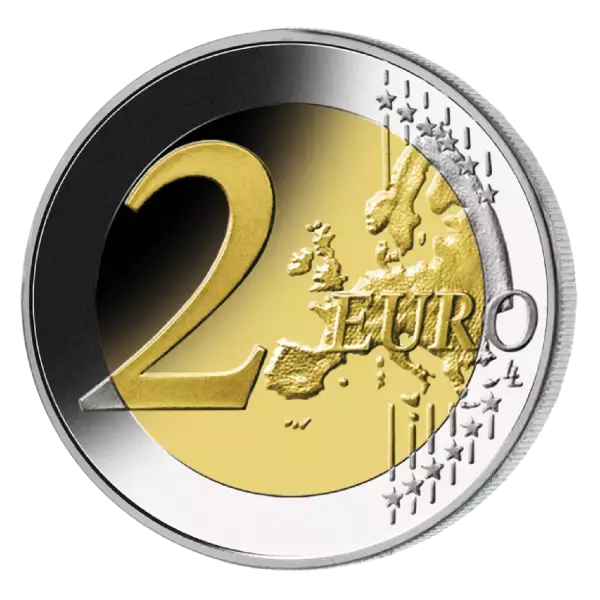

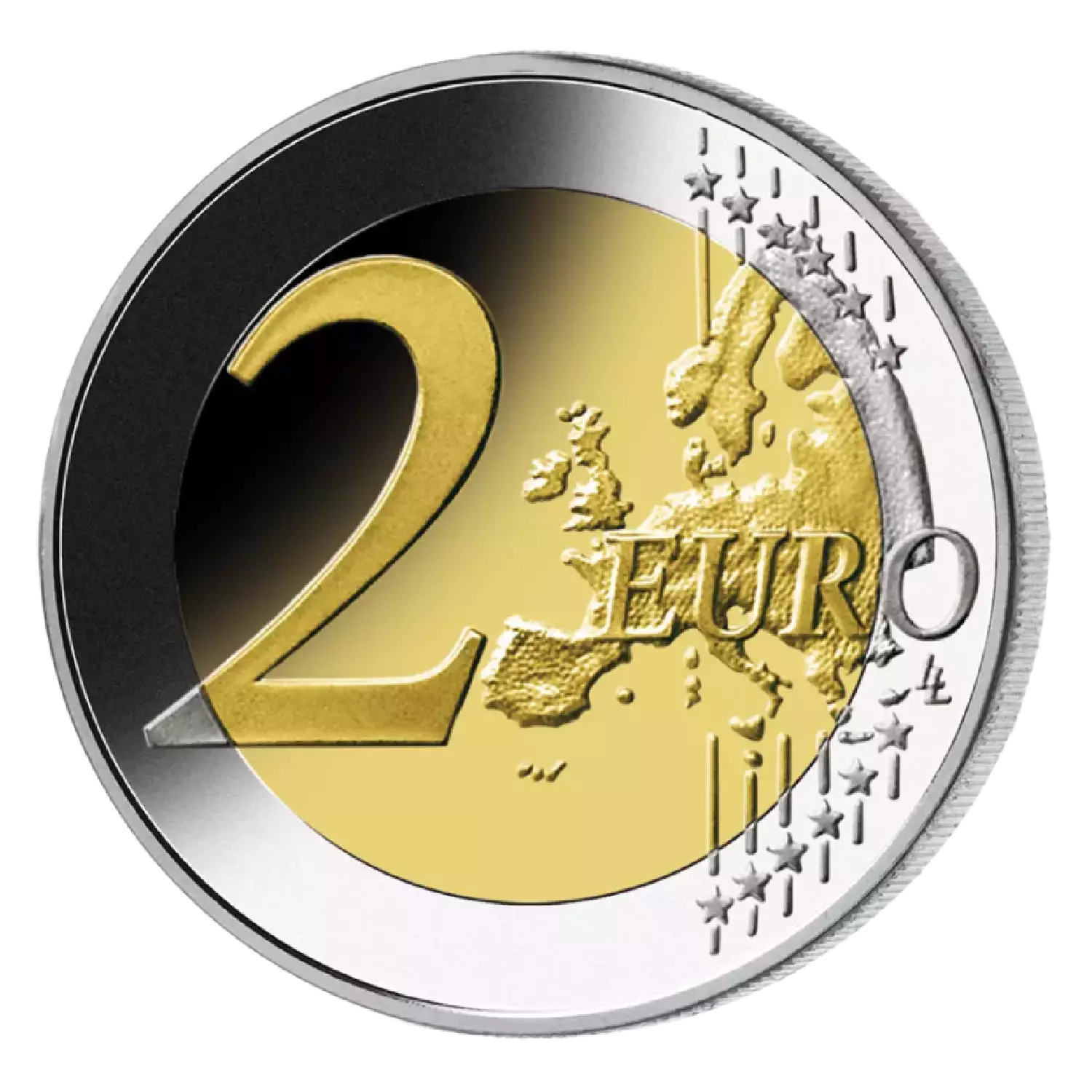
Commemorative coin of the Principality of Monaco, issued in 2019 in a circulation of 15,000 copies. Dedicated to the 200th anniversary of the accession to the throne of Prince Honoré V. It was minted at the Paris Mint. Bimetallic, diameter 25.75 mm, weight 8.5 g.
Obverse
The center of the coin depicts a portrait of Prince Honoré V Grimaldi in profile. At the top, in an arc, is the inscription "PRINCE HONORÉ V" and the dates "1819-2019". At the bottom, is "MONACO". On the right, is the mark of the Paris Mint (cornucopia). On the outer ring are the 12 five-pointed stars of the European Union.
Reverse
The reverse is the common side of the 2 euro coins of the second type, designed by Luc Luix (Royal Belgian Mint). It depicts a map of Europe as a single continent without internal borders - a symbol of European unity. On the left is a large denomination "2" and the inscription "EURO", on the right is a map with six thin horizontal lines in the background. On the outer ring are the 12 stars of the European Union. The band is finely fluted and has the inscription "2 ★", repeated six times alternately upright and inverted.
Historical context
Prince Honoré V Grimaldi (14 May 1778 – 2 October 1841) was Prince of Monaco from 1819 to 1841. He was born in Paris, the son of Honoré IV and Louise d'Aumon. In his youth he served in the Napoleonic army – he participated in many military campaigns, was a chamberlain to Emperor Napoleon I. After the French Revolution and the annexation of Monaco by France in 1793, the Grimaldi family was deprived of power. After the Congress of Vienna in 1815, Monaco was restored as a sovereign principality. In 1819, after the death of his father Honoré IV, Honoré V ascended the throne. His reign was marked by radical economic reforms: the introduction of state monopolies (on tobacco, bread, meat, flour), with which he tried to restore the finances of the principality after the Napoleonic Wars. He built roads and ports. However, the monopolies caused discontent among the inhabitants of Menton and Roquebrune, which ultimately led to their separation in 1848 under his successor Charles III.