
Shopping Cart
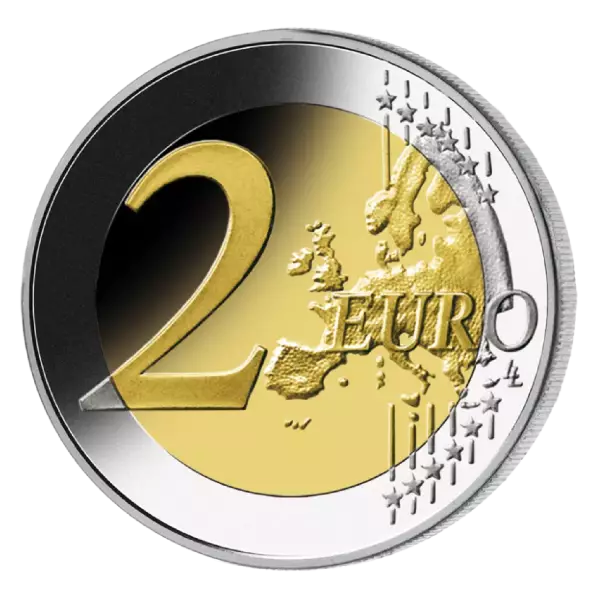

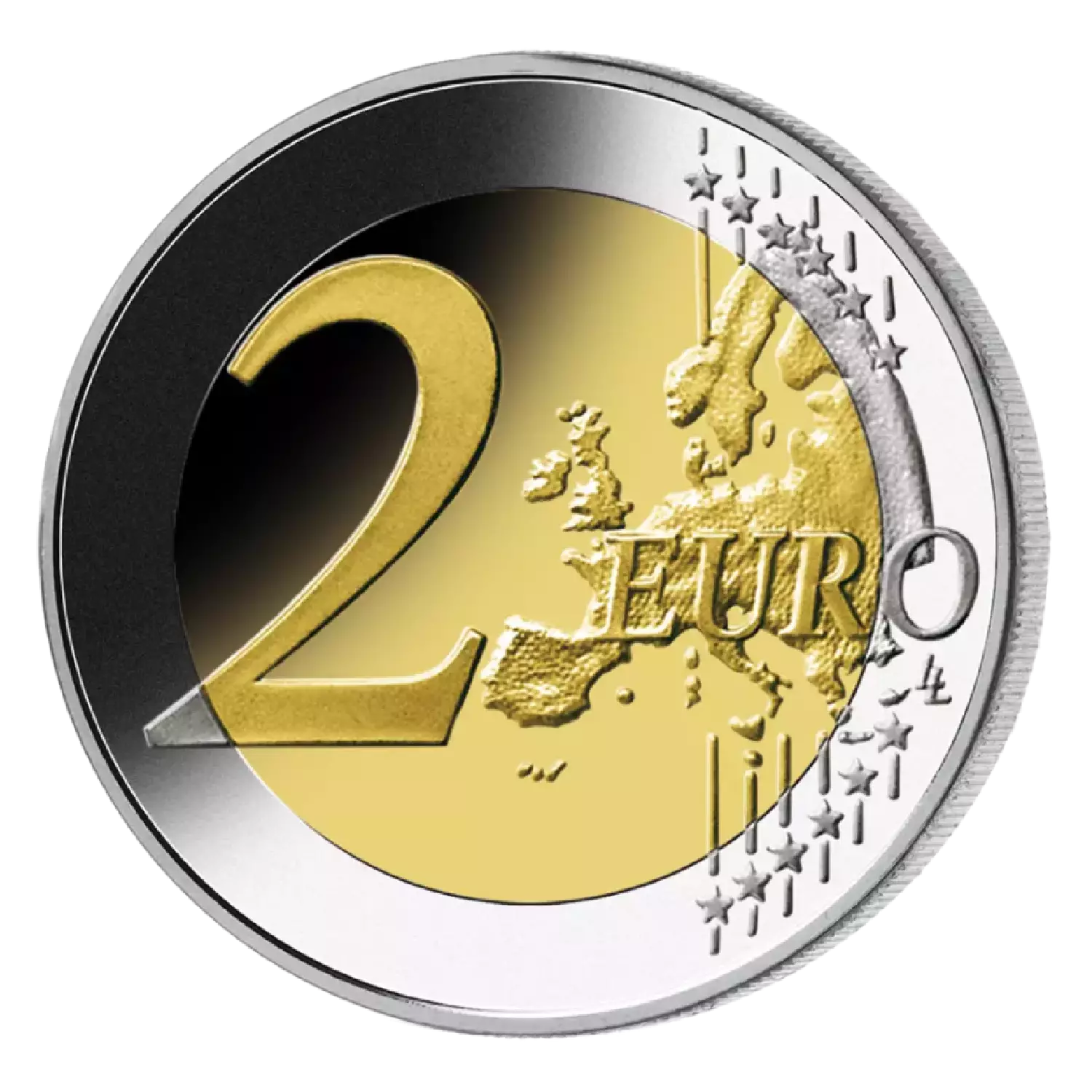
A 2 euro commemorative coin of the Netherlands, issued on March 25, 2007, with a circulation of 6,333,000 copies. A joint issue of 13 eurozone countries in honor of the 50th anniversary of the Treaties of Rome. It was minted at the Royal Dutch Mint in Utrecht. Bimetallic, diameter 25.75 mm, weight 8.5 g.
Obverse
In the center of the coin is a book - the unfolded Treaty of Rome, against the background of the paving stones of Piazza del Campidoglio, designed by Michelangelo. At the top in an arc is the inscription "TRATTATI DI ROMA 50° ANNIVERSARIO". At the bottom in an arc is the name of the country "NEDERLAND". Above the book is the word "EUROPA". Below is the Utrecht mint mark (winged caduceus) and the mintmaster's mark. On the outer ring are the 12 five-pointed stars of the EU.
Reverse
The reverse is the common side of the 2 euro coins of the second type, designed by Luc Luix (Royal Belgian Mint). It depicts a map of Europe as a single continent without internal borders - a symbol of European unity. On the left is a large denomination "2" and the inscription "EURO", on the right is a map with six thin horizontal lines in the background. On the outer ring are the 12 stars of the European Union. The band is finely fluted and has the inscription "GOD ★ ZIJ ★ MET ★ ONS ★" (God is with us).
Historical context
The Treaties of Rome are two treaties signed on 25 March 1957 in the Palazzo dei Conservatori on the Capitoline Hill in Rome by representatives of six countries: Belgium, Italy, Luxembourg, the Netherlands, France and West Germany. One treaty established the European Economic Community (EEC), the other the European Atomic Energy Community (Euratom). The treaties entered into force on 1 January 1958. The EEC created a common market and customs union, and promoted the free movement of people, goods, services and capital. The Netherlands was one of the six founding countries; the Dutch Minister of Foreign Affairs, Josef Luns, signed the treaties. The Treaties of Rome are the foundation of the European Union, which was finally formed after the Maastricht Treaty of 1992. The Treaties eventually led to the introduction of the euro in 1999 (as a non-cash currency) and in 2002 (banknotes and coins).