
Shopping Cart
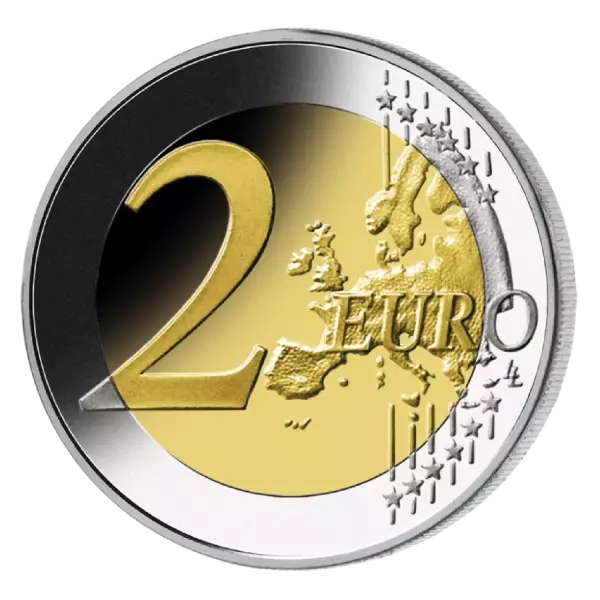

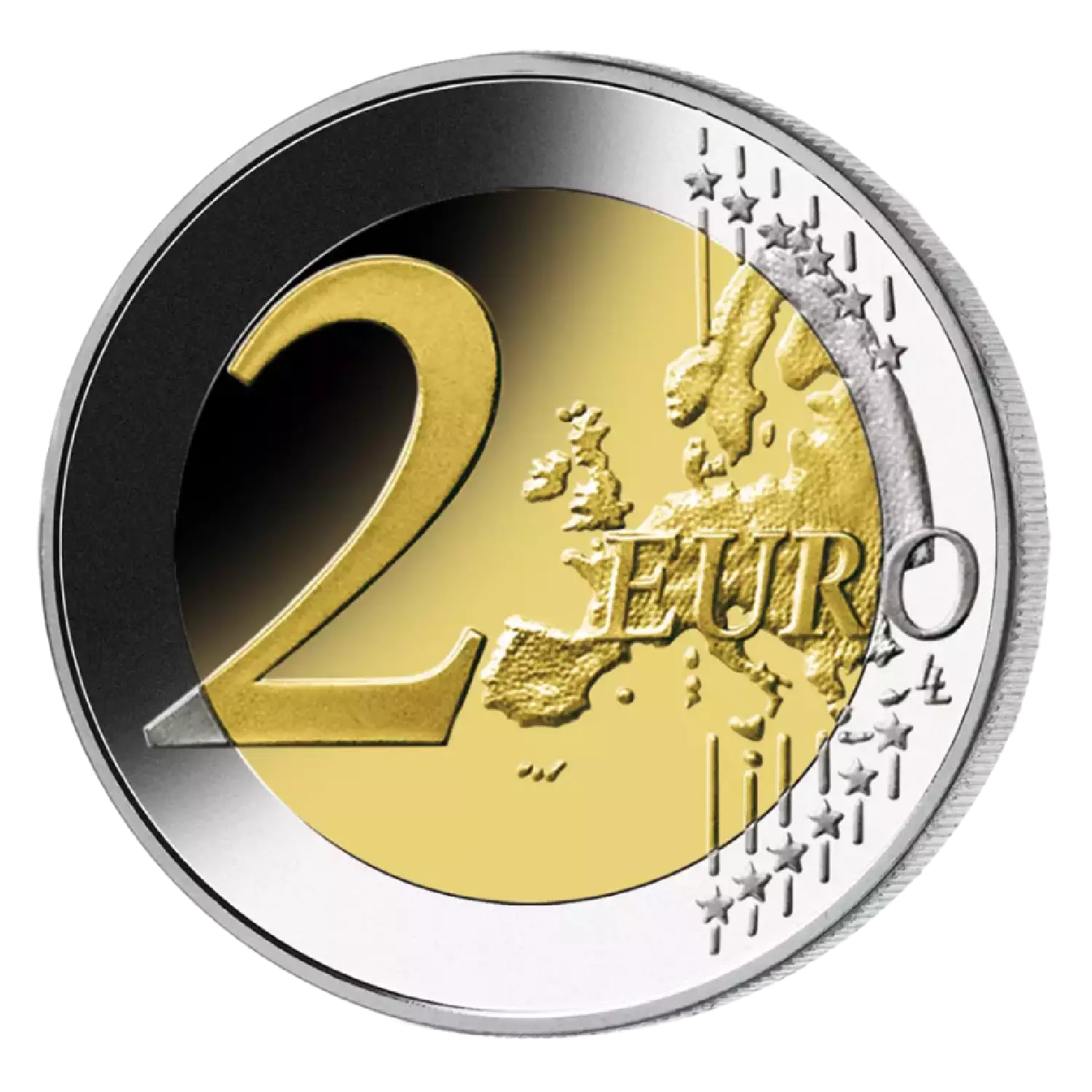
A 2 euro commemorative coin of the Netherlands, issued on October 14, 2011, with a circulation of 4,000,000 copies. Dedicated to the 500th anniversary of Erasmus of Rotterdam's "Praise of Folly". It was minted at the Royal Netherlands Mint. Bimetallic, diameter 25.75 mm, weight 8.5 g.
Obverse
The coin depicts a portrait of Erasmus of Rotterdam in profile against the background of a stylized motif of the cover of the book "Stultitiae Laus". On the right is a portrait of Queen Beatrix (as a hereditary tradition of Dutch coins). Inscriptions: "Beatrix Koningin der Nederlanden" (Beatrix Queen of the Netherlands) and "Erasmus Lof der Zotheid 1511-2011" (Erasmus Praise of Folly 1511-2011). On the outer ring are the 12 five-pointed stars of the European Union.
Reverse
The reverse is the common side of the 2 euro coins of the second type, designed by Luc Luix (Royal Belgian Mint). It depicts a map of Europe as a single continent without internal borders - a symbol of European unity. On the left is a large denomination "2" and the inscription "EURO", on the right is a map with six thin horizontal lines in the background. On the outer ring are the 12 stars of the European Union. The band is finely fluted and has the inscription "GOD ★ ZIJ ★ MET ★ ONS ★" (God is with us).
Historical context
"In Praise of Folly" (Stultitiae Laus, in French Moriae Encomium) is a satirical essay by the prominent Dutch humanist Erasmus of Rotterdam (Desiderius Erasmus Roterodamus, c. 1466-1536), first published in 1511 in Paris. It was written around 1509 during a trip from Italy to England, when Erasmus was staying at the house of his friend Thomas More in London. In the work, the personified Folly (Stultitia, Moria) delivers a satirical speech, praising its own significance for humanity and ridiculing various social classes: scholastics, theologians, monks, courtiers, and lawyers. This is a brilliant satire on the vices of the church and society on the eve of the Reformation. The work became one of the most famous works of the European Renaissance. Erasmus was born in Rotterdam, studied in Paris, Oxford, Cambridge, and Italian universities. One of the most influential thinkers of his time. The Erasmus program is named after him.