
Shopping Cart
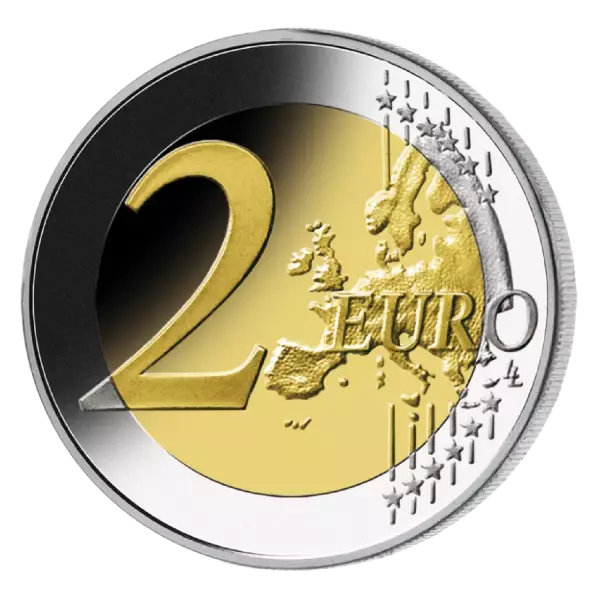

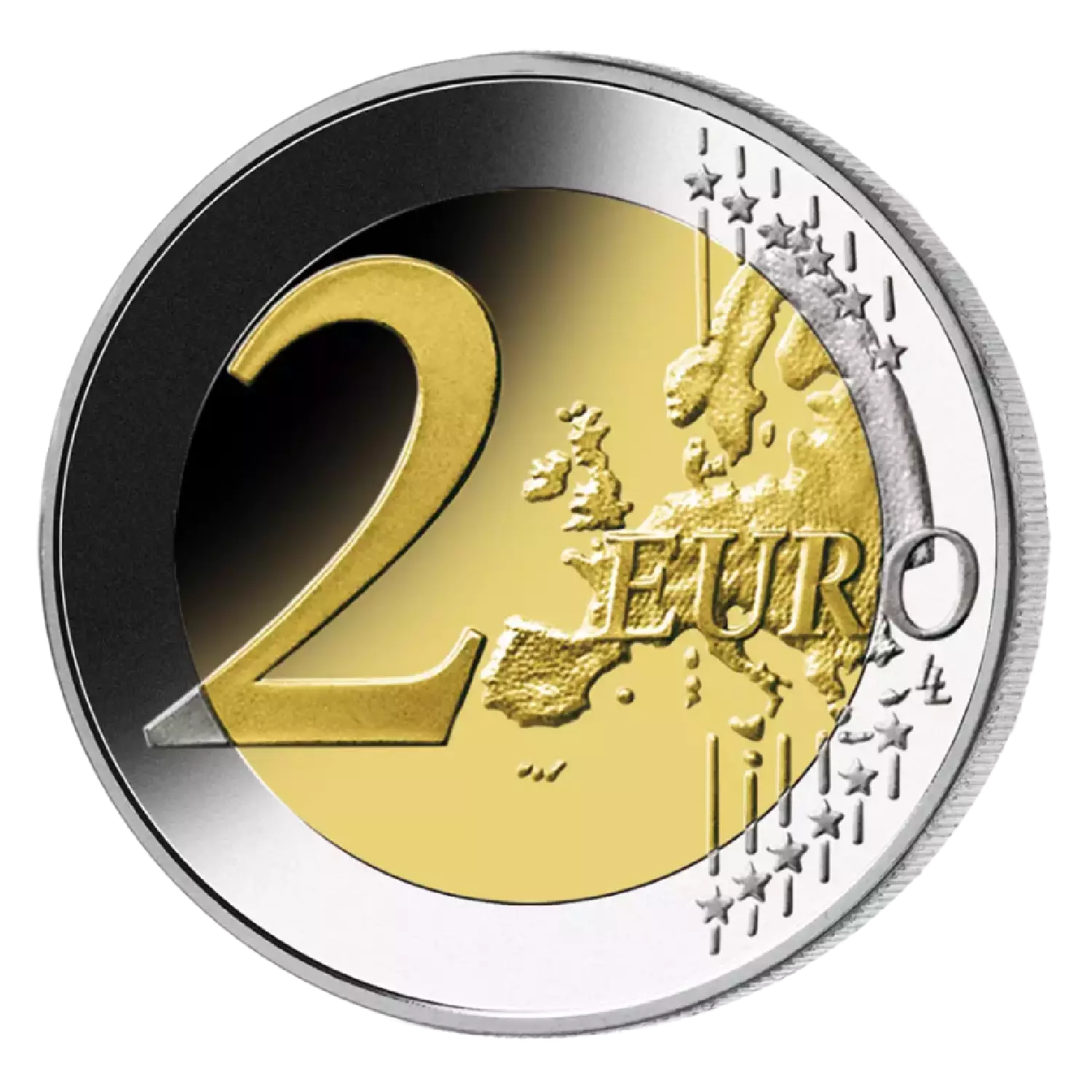
2 Euro commemorative coin of the Federal Republic of Germany, issued on February 2, 2007. The second in the series "Federal States of Germany". Dedicated to the state of Mecklenburg-Vorpommern. Minted at five German mints. Total mintage of about 30 million copies. Bimetallic, diameter 25.75 mm, weight 8.5 g.
Overse
The center of the coin depicts Schwerin Castle with its characteristic silhouette - numerous towers, hipped roofs, and the water mirrors of Lake Schwerin surrounding the castle. At the top is the name of the state "MECKLENBURG-VORPOMMERN". At the bottom is the mint mark, year of issue, and the designer's signature. On the left in the field is the inscription "BUNDESREPUBLIK DEUTSCHLAND". On the outer ring are the 12 five-pointed stars of the European Union.
Reverse
The reverse is the common side of the 2 euro coins of the first type, designed by Luc Luix. It depicts a map of the enlarged European Union with stylized lines below the map. On the left is a large denomination "2" and the inscription "EURO". On the outer ring are the 12 five-pointed stars of the EU. The band is with fine ribbing and the German inscription "EINIGKEIT UND RECHT UND FREIHEIT" (Unity and Law and Freedom).
Historical context
Schwerin Castle (Schloss Schwerin) is the residence of the Landtag (parliament) of the state of Mecklenburg-Vorpommern, located on an island in the middle of Lake Schwerin in the city of Schwerin. The first fortifications at this site existed as early as the 10th-11th centuries. The modern castle was built in 1845-1857 by architects Gottfried Semper, Friedrich August Stüler and Georg Adolf Demmler in the Neo-Renaissance style, modeled on the French castles of the Loire Valley (especially Chambord). The castle has 365 rooms - one for each day of the year. It served as the residence of the Grand Dukes of Mecklenburg-Schwerin until 1918. After World War II, it housed museums, a school, and then the Landtag (parliament) of Mecklenburg-Vorpommern. Among the most famous rooms are the Throne Hall, the Knights' Hall, and the Castle Chapel. It is now part of the UNESCO World Heritage Site.