
Shopping Cart
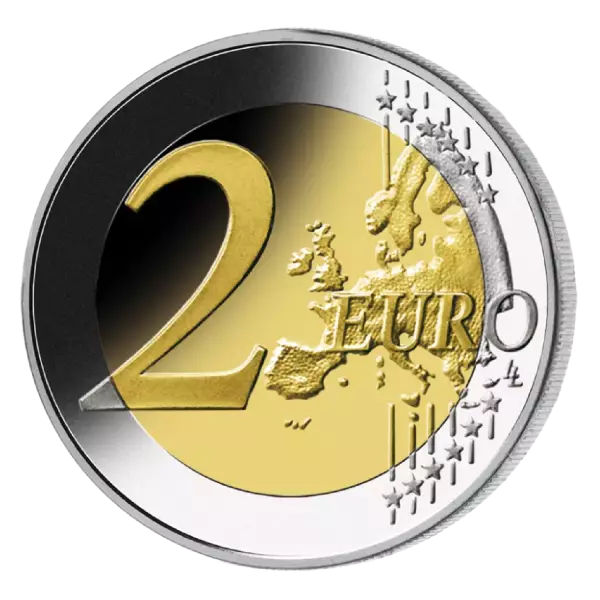

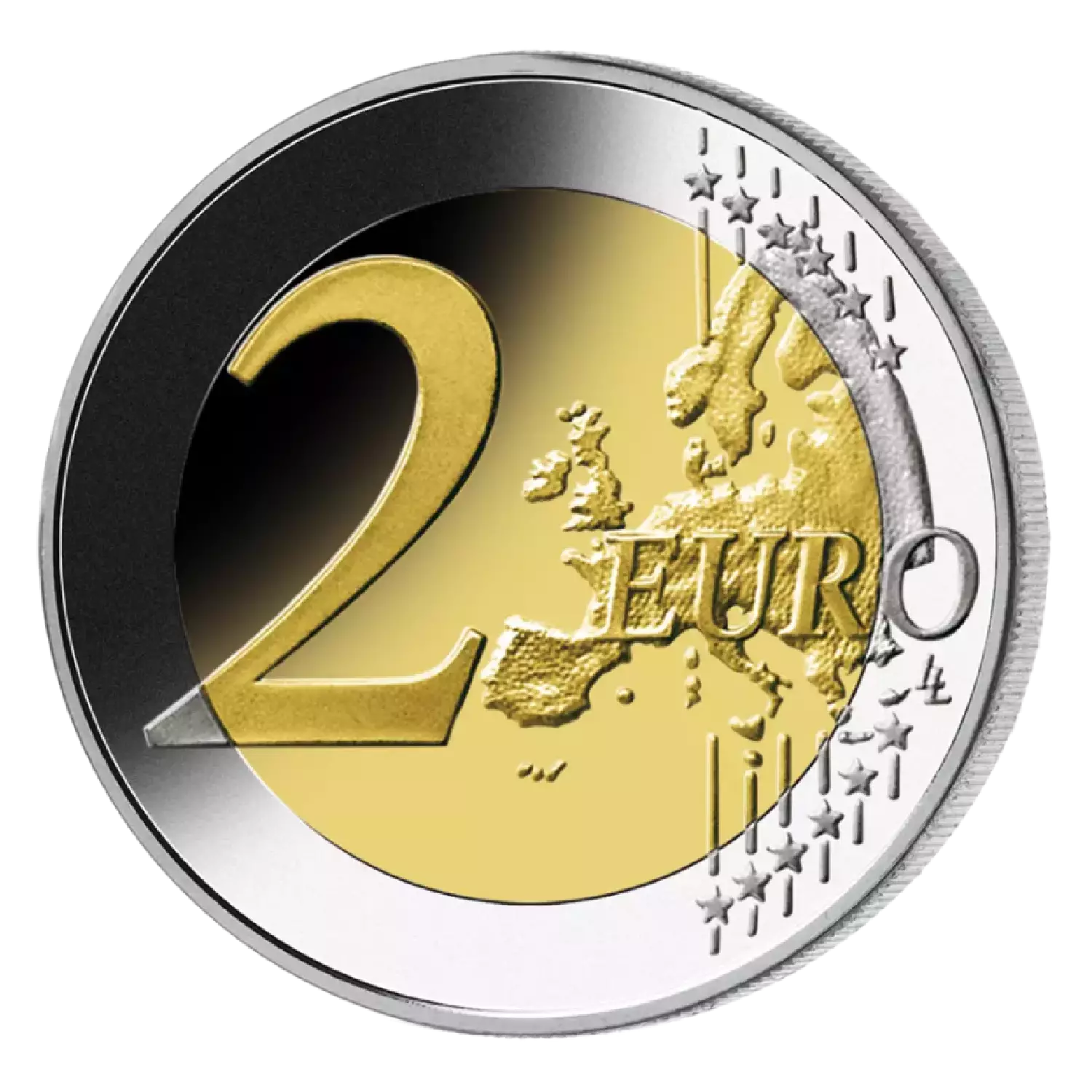
Commemorative coin of 2 euros of Germany, issued on February 1, 2008. The third in the series "Federal States of Germany". Dedicated to the state of Hamburg. Minted at five German mints. Total circulation of about 30 million copies. Bimetallic, diameter 25.75 mm, weight 8.5 g.
Overse
In the center of the coin is the Church of St. Michaelis (known as "Michel") - a characteristic Baroque church with a massive round dome tower and a spire 132 m high. At the top is the name "HAMBURG". At the bottom is the mint mark, year and signature of the designer. On the left in the field is the inscription "BUNDESREPUBLIK DEUTSCHLAND". On the outer ring are 12 five-pointed EU stars.
Reverse
The reverse is the common side of the 2 euro coins of the first type, designed by Luc Luix. It depicts a map of the enlarged European Union with stylized lines below the map. On the left is a large denomination "2" and the inscription "EURO". On the outer ring are 12 five-pointed EU stars. The band is with fine ribbing and the German inscription "EINIGKEIT UND RECHT UND FREIHEIT" (Unity and Law and Freedom).
Historical context
The Church of St. Michael (Hauptkirche Sankt Michaelis, known to Hamburgers as "Michel") is the most famous Lutheran cathedral of Hamburg, one of the symbols of the city. Built in 1647-1669 in the Baroque style, but after several fires and destruction, the current building dates from 1750-1762 (architect Johann Leonhard Prey) and 1907-1912 (reconstruction after the fire of 1906). The height of the tower is 132.14 m. The copper-clad cupola tower contains a historic 4-tower clock (the largest clock on a church tower in Germany). From here, a panorama of Hamburg and the port opens. The composer Carl Philipp Emanuel Bach is buried in the crypt. The Free and Hanseatic City of Hamburg (Freie und Hansestadt Hamburg) is the second most populous city in Germany (about 1.9 million inhabitants) and one of the three "free cities" of the Bundesländer (along with Berlin and Bremen). It has one of the largest seaports in Europe.