
Shopping Cart
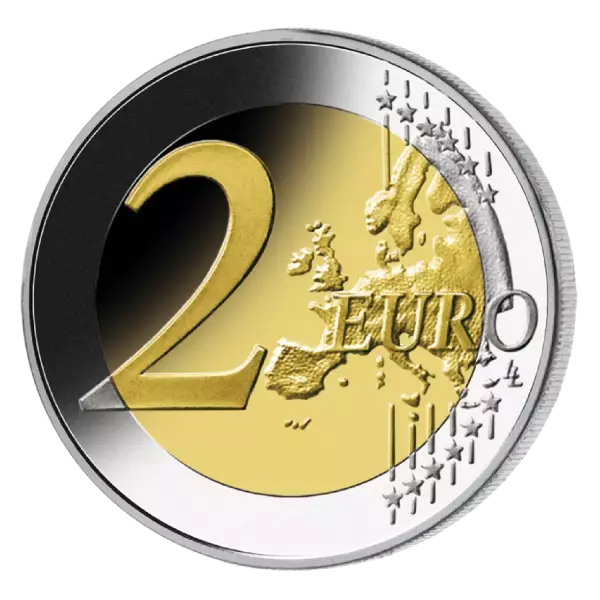

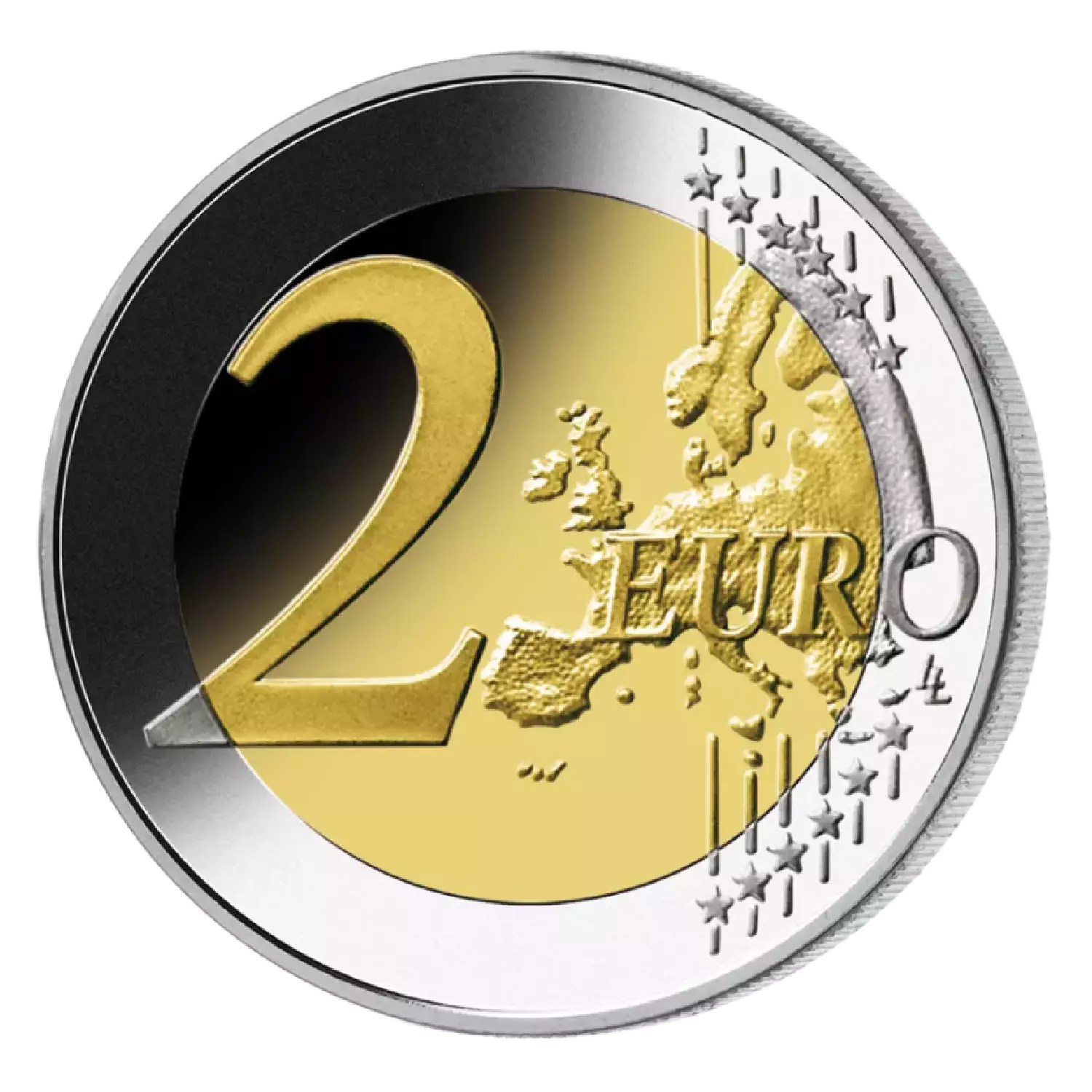
Commemorative coin of 2 euros of Germany, issued on January 30, 2009. The fourth in the series "Federal States of Germany". Dedicated to the state of Saarland. Minted at five German mints. Total circulation of about 30 million copies. Bimetallic, diameter 25.75 mm, weight 8.5 g.
Obverse
The center of the coin depicts the facade of the Ludwig Church (Ludwigskirche) in Saarbrücken - a characteristic Baroque Protestant church with a symmetrical facade, a large round rose window in the center, crowned with a rounded pediment. At the top - "SAARLAND". At the bottom - the mint mark, year and signature of the designer. On the left - "BUNDESREPUBLIK DEUTSCHLAND". On the outer ring are 12 five-pointed EU stars.
Reverse
The reverse is the common side of the 2 euro coins of the first type, designed by Luc Luix. It depicts a map of the enlarged European Union with stylized lines below the map. On the left is a large denomination "2" and the inscription "EURO". On the outer ring are 12 five-pointed EU stars. The band is finely fluted and the German inscription "EINIGKEIT UND RECHT UND FREIHEIT" (Unity and Law and Freedom).
Historical context
The Ludwig Church (Ludwigskirche) in Saarbrücken is the main Protestant church of the Saarland, a masterpiece of late Baroque in Germany. Built in 1762-1775 according to the design of the architect Friedrich Joachim Stengel - the court architect of the Prince of Nassau-Saarbrücken. Named after the founder-customer, Prince Wilhelm Heinrich of Nassau-Saarbrücken, but was called Ludwigskirche in honor of Saint Ludwig. The building has a characteristic centric composition: a Greek cross in plan, a symmetrical facade with pediments, decorated with eight statues of biblical figures by Johann Philipp Mimroch. The interior is made in the Rococo style - light, with elegant gilded decor. Almost completely destroyed during World War II (1944), restored in 1949-1954 and 1968-1972. Saarland is the smallest federal state of Germany (area 2,569 km²), historically located between France and Germany.