
Shopping Cart
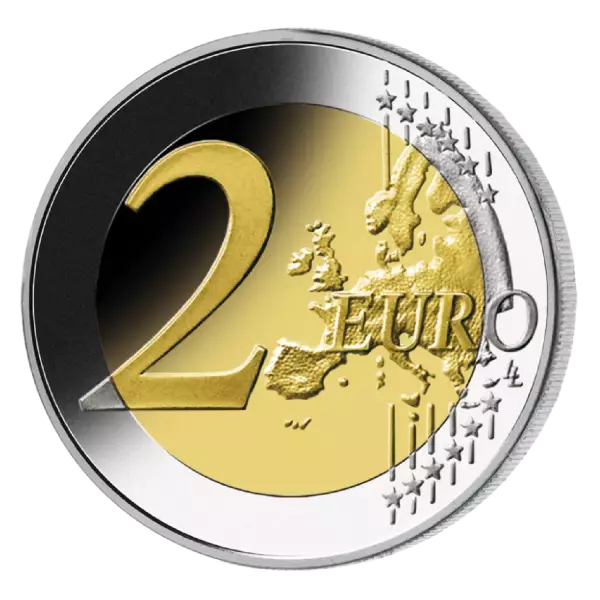

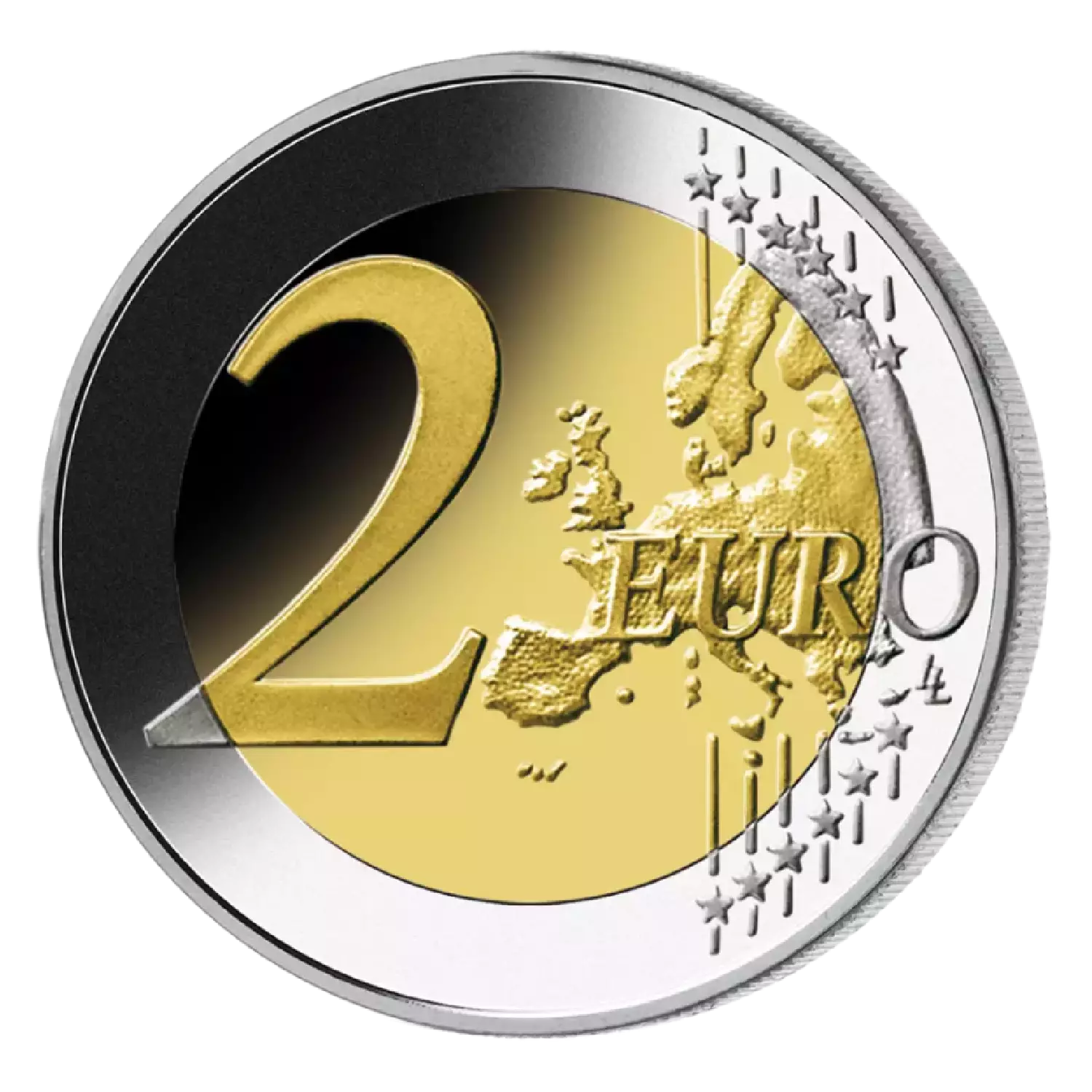
Commemorative coin of 2 euros of Germany, issued on January 26, 2010. The fifth in the series "Federal States of Germany". Dedicated to the state of Bremen. Minted at five German mints. Total circulation of about 30 million copies. Bimetallic, diameter 25.75 mm, weight 8.5 g.
Obverse
In the center of the coin is depicted the facade of the Bremen Town Hall (Rathaus) with a characteristic Gothic-Renaissance decor, next to it is a stone statue of Roland - a knight with a sword and shield, a symbol of city freedoms. Above - "BREMEN". Below - the mint mark and the year. On the left - "BUNDESREPUBLIK DEUTSCHLAND". On the outer ring are the 12 five-pointed stars of the EU.
Reverse
The reverse is the common side of the 2 euro coins of the second type, designed by Luc Luix (Royal Belgian Mint). It depicts a map of Europe as a single continent without internal borders - a symbol of European unity. On the left is a large denomination "2" and the inscription "EURO", on the right is a map with six thin horizontal lines in the background. On the outer ring are the 12 stars of the European Union. The band is finely fluted and has the German inscription "EINIGKEIT UND RECHT UND FREIHEIT" (Unity and Law and Freedom - words from the German anthem).
Historical context
The Town Hall and the Statue of Roland in Bremen (Rathaus und Roland zu Bremen) are UNESCO World Heritage Sites (since 2004), located on the central square of the city (Marktplatz). The Bremen Town Hall was built in 1405-1410 in the Northern Gothic style, and in 1608-1612 the facade was decorated with elements of the Weser Renaissance - a characteristic regional style. It is one of the few town halls in Europe that survived the Second World War without serious damage. In the Upper Hall (Obere Halle) is the famous vault with frescoes from the 17th century. A giant statue of Roland, 5.55 m high, was erected on the square in 1404 and is the oldest and most beautiful Roland preserved in Europe. Roland is a knight with a sword of truth and a shield, a traditional symbol of city freedoms and independence from the bishop. The Free Hanseatic City of Bremen (Freie Hansestadt Bremen) is the smallest federal state of Germany (404 km², 0.7 million inhabitants).