
Shopping Cart
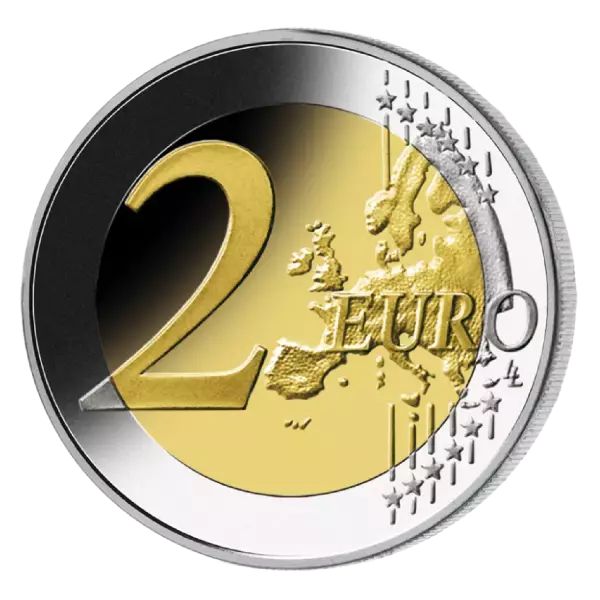

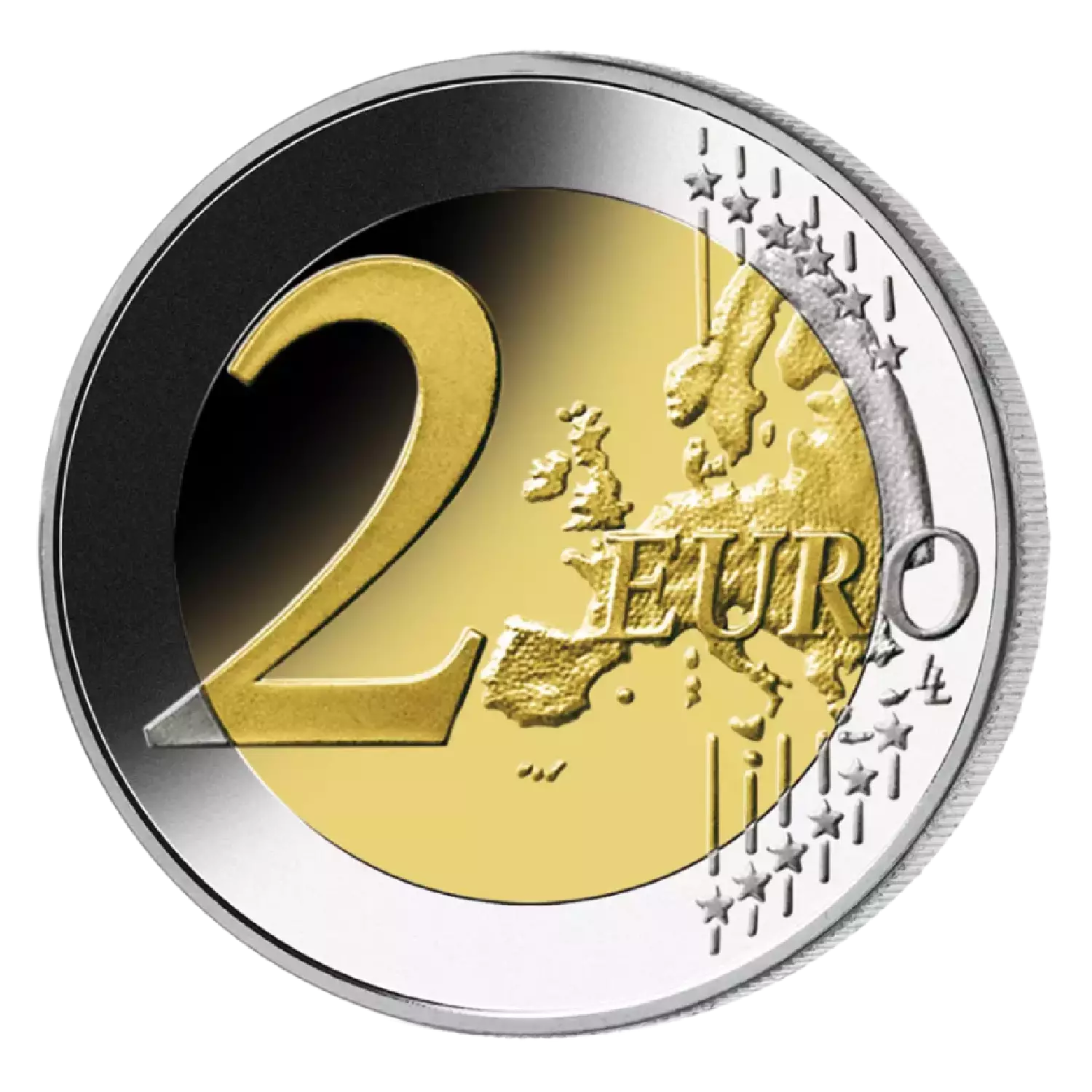
Commemorative coin 2 euros of the Federal Republic of Germany, issued on January 28, 2011. The sixth in the series "Federal States of Germany". Dedicated to the state of North Rhine-Westphalia. Minted at five German mints. Total circulation of about 30 million copies. Bimetallic, diameter 25.75 mm, weight 8.5 g.
Overse
In the center of the coin is depicted the facade of the Cologne Cathedral (Kölner Dom) with its characteristic two 157-meter spires. The composition conveys the vertical monumentality of Gothic. At the top is the name of the state "NORDRHEIN-WESTFALEN". Below is the mint mark, year and signature of the designer. On the left is "BUNDESREPUBLIK DEUTSCHLAND". On the outer ring are the 12 five-pointed stars of the European Union.
Reverse
The reverse is the common side of the 2 euro coins of the second type, designed by Luc Luix (Royal Belgian Mint). It depicts a map of Europe as a single continent without internal borders - a symbol of European unity. On the left - a large denomination "2" and the inscription "EURO", on the right - a map with six thin horizontal lines in the background. On the outer ring - 12 stars of the European Union. The band - with thin ribbing and the German inscription "EINIGKEIT UND RECHT UND FREIHEIT" (Unity and Law and Freedom - words from the German anthem).
Historical context
Cologne Cathedral (Hohe Domkirche Sankt Petrus) is the cathedral of Cologne, a masterpiece of Gothic architecture. Construction began on August 15, 1248, but was interrupted around 1473 due to financial and political difficulties. It was completed only on August 14, 1880 - construction lasted 632 years. The height of the spires is 157.38 m, which made Cologne Cathedral the tallest building in the world until 1884. The total length of the building is 144.58 m. The cathedral houses the Ark of the Three Magi (Dreikönigsschrein) - a 13th-century golden reliquary that, according to legend, contains the relics of the three biblical magi. The cathedral survived numerous bombings during World War II (1942-1945) - it received 14 direct hits, but survived. In 1996, it was included in the UNESCO World Heritage List. North Rhine-Westphalia is the most populous state of Germany (about 18 million inhabitants), the capital is Düsseldorf.