
Shopping Cart
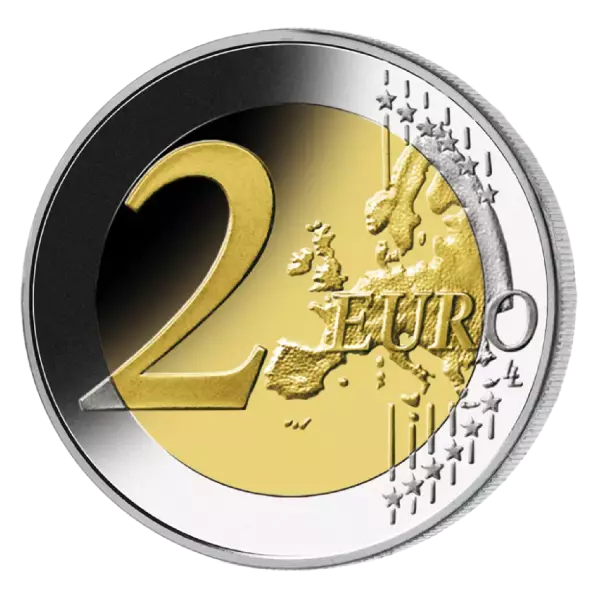

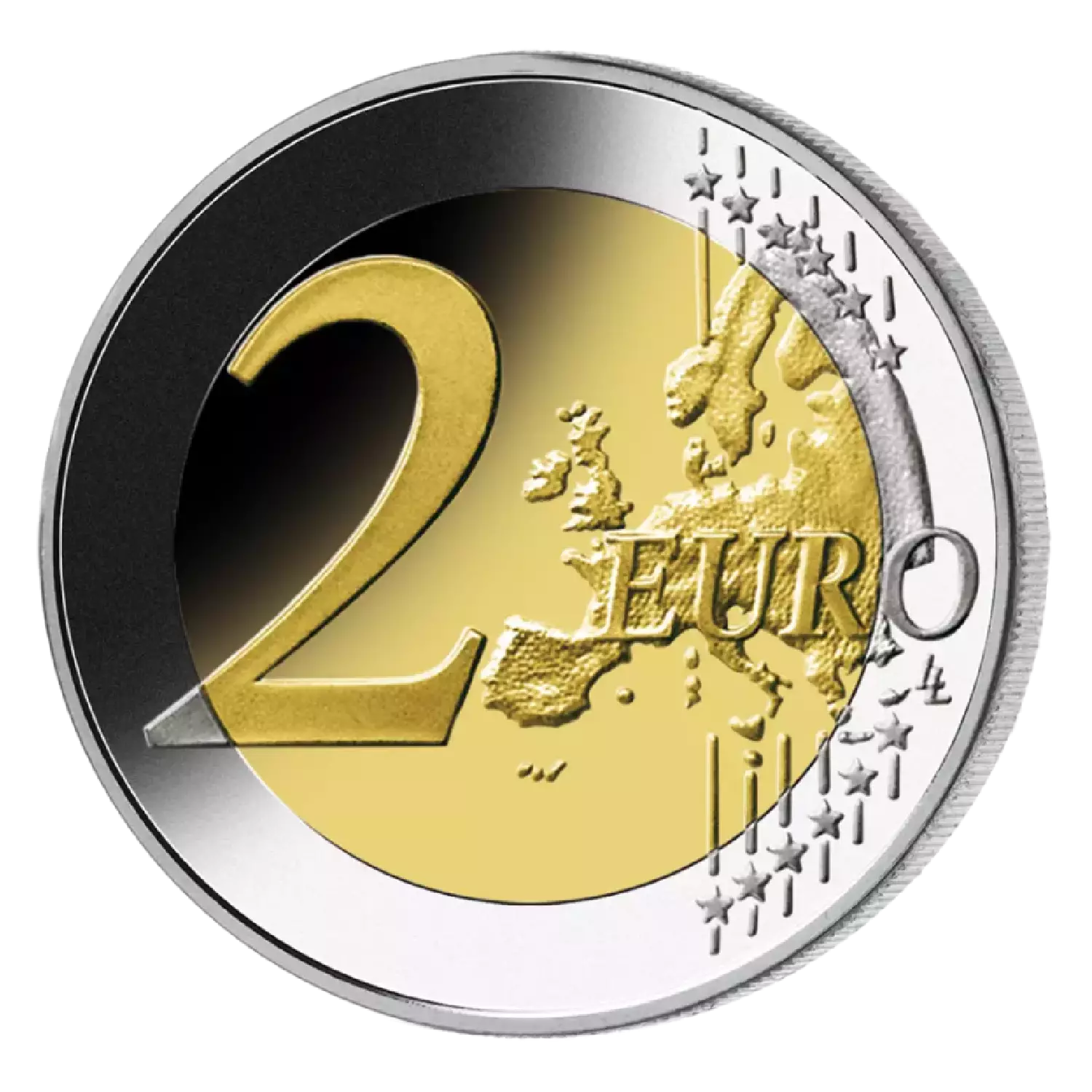
Commemorative coin of 2 euros of Germany, issued on January 22, 2013. Joint issue with France in honor of the 50th anniversary of the Élysée Treaty. It was minted at five German mints. Total circulation of about 11 million copies. Bimetallic, diameter 25.75 mm, weight 8.5 g.
Overse
In the center of the coin is a double portrait of Charles de Gaulle and Konrad Adenauer. In the background are the names of two countries: France (Allemagne) and Germany (France). At the top, in an arc, is "50 Jahre / 50 Ans / Élysée-Vertrag". At the bottom is the mint mark, year and signature of the designer. On the left is "D" (mark of Germany as the issuing country). On the outer ring are the 12 stars of the EU.
Reverse
The reverse is the common side of the 2 euro coins of the second type, designed by Luc Luix (Royal Belgian Mint). It depicts a map of Europe as a single continent without internal borders - a symbol of European unity. On the left is a large denomination "2" and the inscription "EURO", on the right is a map with six thin horizontal lines in the background. On the outer ring are the 12 stars of the European Union. The band is finely fluted and bears the German inscription "EINIGKEIT UND RECHT UND FREIHEIT" (Unity and Law and Freedom - words from the German national anthem).
Historical context
The Élysée Treaty (Élysée-Vertrag, Élysée Treaty) is a bilateral treaty of friendship and cooperation between France and the Federal Republic of Germany, signed on 22 January 1963 at the Élysée Palace in Paris by French President Charles de Gaulle and German Chancellor Konrad Adenauer. The treaty became a symbolic act of reconciliation between traditionally hostile neighbors after centuries of conflict (the wars of 1870, 1914-1918, 1939-1945) and laid the foundation for future European partnership. Under the treaty, France and Germany undertook to: hold regular consultations on all important political issues, coordinate their foreign and defense policies, and develop youth exchanges (Office franco-allemand pour la Jeunesse). The treaty created a long tradition of regular Franco-German summits. In 2019, the Aachen Treaty was signed, renewing the Élysée Treaty. Franco-German friendship is one of the key motivators of European integration.