
Shopping Cart
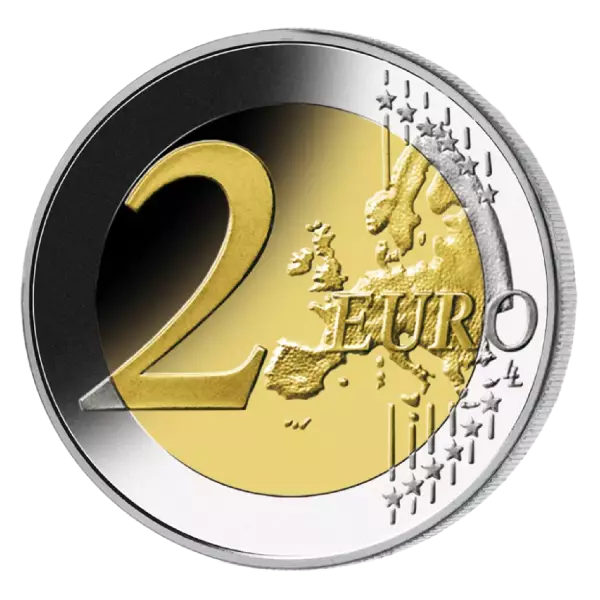

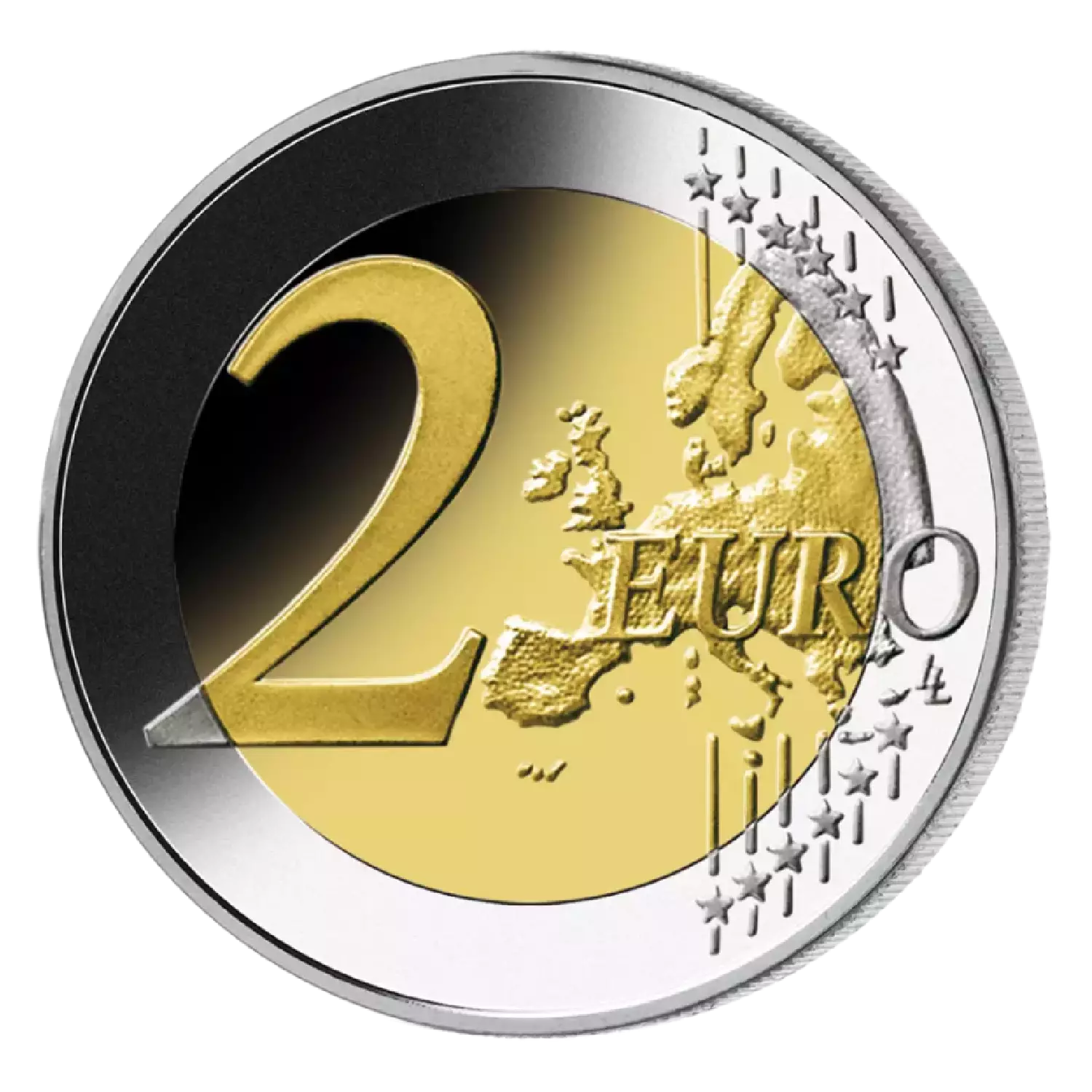
Commemorative coin 2 euros of Germany, issued on January 31, 2014. The ninth in the series "Federal States of Germany". Dedicated to the state of Lower Saxony. Minted at five German mints. Total circulation of about 30 million copies. Bimetallic, diameter 25.75 mm, weight 8.5 g.
Obverse
In the center of the coin, the interior of the Church of St. Michael in Hildesheim is depicted - a characteristic basilica with a flat beamed ceiling, wooden paintings. The exterior of the church may also be depicted - the characteristic two towers on the sides. At the top - "NIEDERSACHSEN". At the bottom - the mint mark, year. On the left - "BUNDESREPUBLIK DEUTSCHLAND". On the outer ring are the 12 stars of the EU.
Reverse
The reverse is the common side of the 2 euro coins of the second type, designed by Luc Luix (Royal Belgian Mint). It depicts a map of Europe as a single continent without internal borders - a symbol of European unity. On the left is a large denomination "2" and the inscription "EURO", on the right is a map with six thin horizontal lines in the background. On the outer ring are the 12 stars of the European Union. The band is finely fluted and has the German inscription "EINIGKEIT UND RECHT UND FREIHEIT" (Unity and Law and Freedom - words from the German anthem).
Historical context
The Church of St. Michael (Michaeliskirche) in Hildesheim is a masterpiece of Ottonian pre-Romanesque architecture, an important monument in the history of Christian architecture in Europe. It was built in 1010-1031 by order of Bishop Bernward of Hildesheim (now a saint) next to his pulpit. The basilica has a characteristic double choir structure (western and eastern apses) and two side towers - typical of the Ottonian style. The most famous feature is the painted wooden ceiling of the 13th century. with an area of 1300 m² (one of the largest in Europe), depicting the genealogy of Christ according to the Gospel of Matthew. The basilica was destroyed during World War II on March 22, 1945, but preserved the ceiling (dismantled beforehand) and part of the walls. Restored in the 1950s and 1960s. In 1985, together with the Hildesheim Cathedral, it was included in the UNESCO list. Lower Saxony is the second largest federal state of Germany, the capital of which is Hanover.