
Shopping Cart
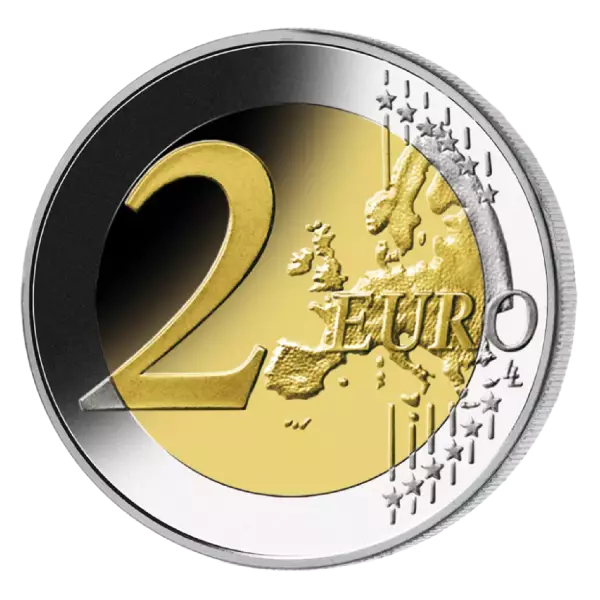

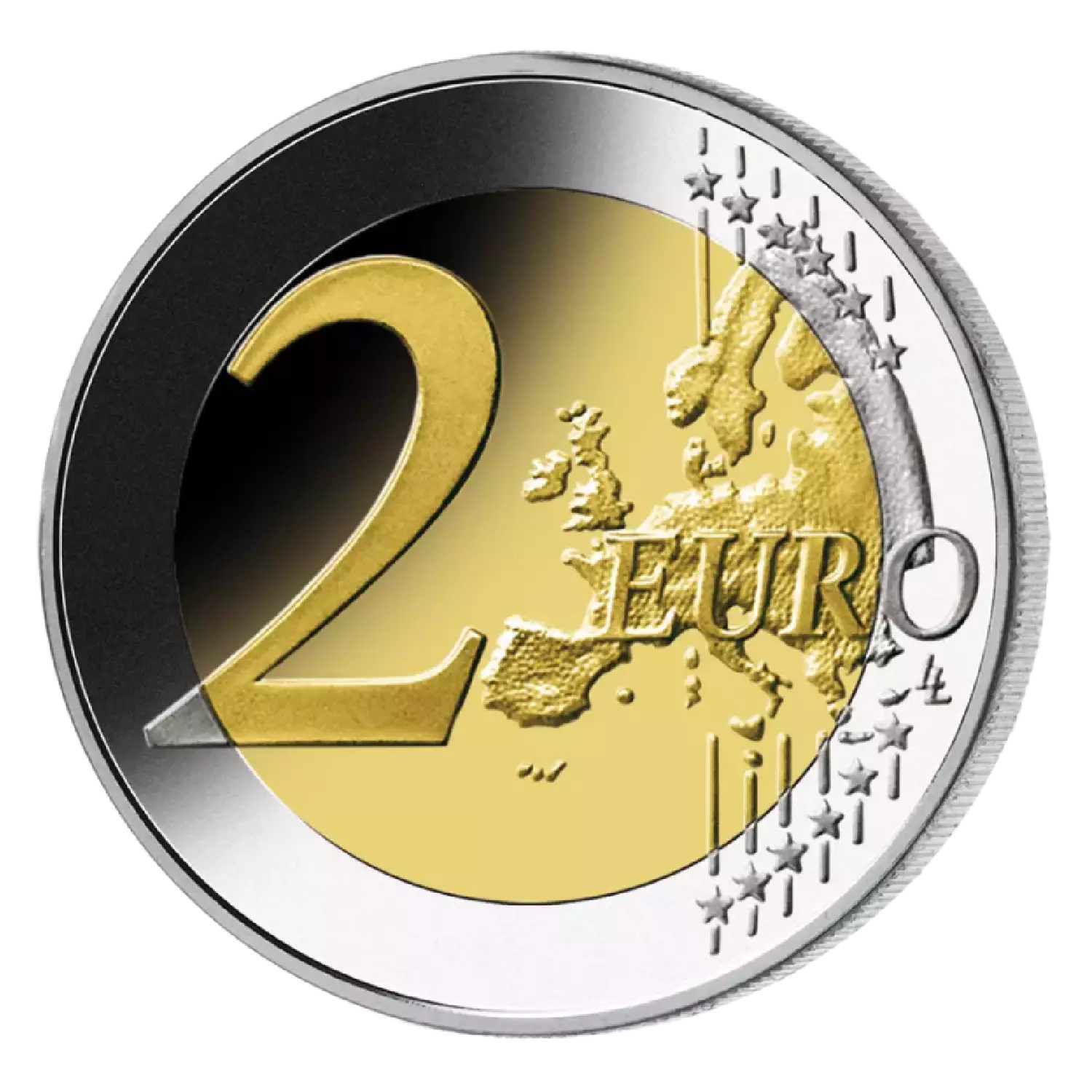
Commemorative coin of 2 euros of Germany, issued on June 16, 2020. Dedicated to the 50th anniversary of the Warsaw Ghetto Uprising. It was minted at five German mints. Total circulation of about 30 million copies. Bimetallic, diameter 25.75 mm, weight 8.5 g.
Obverse
The center of the coin depicts the moment of Uprising of Willy Brandt - the politician is kneeling in front of the monument to the heroes of the Warsaw Ghetto. Above - "WARSCHAUER KNIEFALL". Below - the dates "1970-2020", the mint mark. On the left - "BUNDESREPUBLIK DEUTSCHLAND". On the outer ring are the 12 five-pointed stars of the European Union.
Reverse
The reverse is the common side of the 2 euro coins of the second type, designed by Luc Luix (Royal Belgian Mint). It depicts a map of Europe as a single continent without internal borders - a symbol of European unity. On the left is a large denomination "2" and the inscription "EURO", on the right is a map with six thin horizontal lines in the background. On the outer ring are the 12 stars of the European Union. The band is finely fluted and has the German inscription "EINIGKEIT UND RECHT UND FREIHEIT" (Unity and Law and Freedom).
Historical context
The Warsaw Knead (Warschauer Kniefall) is a spontaneous political gesture by German Chancellor Willy Brandt on December 7, 1970 in Warsaw. Brandt arrived in Poland to sign the Warsaw Pact on the normalization of relations between Germany and Poland (recognition of the post-war borders along the Oder-Neisse). Before the wreath-laying ceremony at the Monument to the Heroes of the Warsaw Ghetto - a monument in honor of the participants of the Warsaw Uprising of 1943 who died during the Nazi destruction of the ghetto - Brandt unexpectedly knelt down. The gesture was not planned; according to Brandt, he did it on the spur of the moment, feeling the burden of German guilt. The bow became one of the most famous symbols of reconciliation in 20th-century Europe. In 1971, Brandt received the Nobel Peace Prize for his "Ostpolitik" - a policy of reconciliation with the Eastern Bloc countries. The event had enormous symbolic significance for Germany's relations with Poland and other countries affected by Nazism.