
Shopping Cart
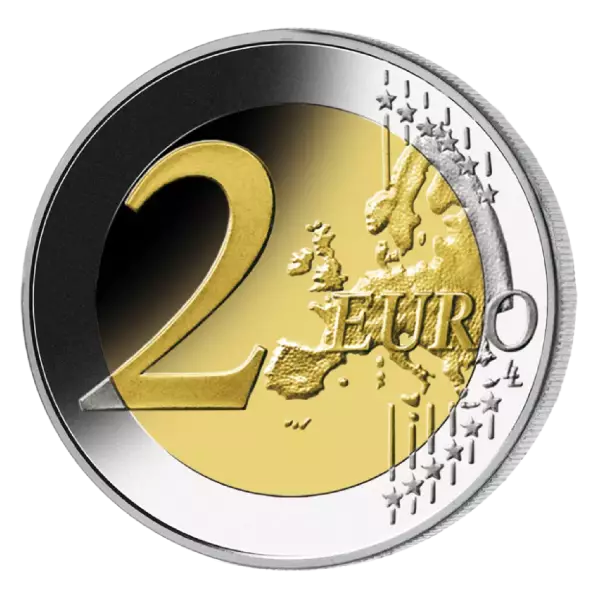

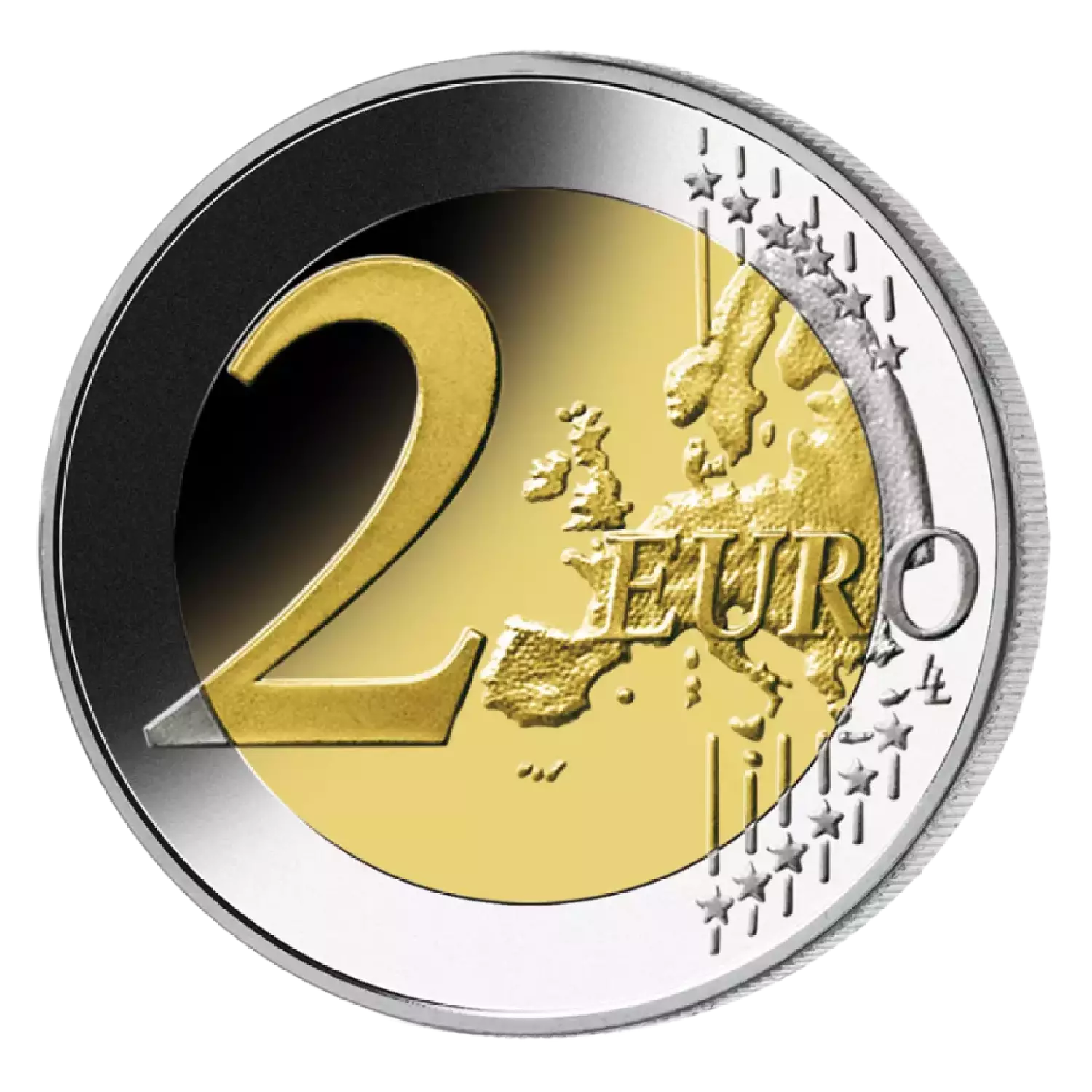
Commemorative coin 2 euros of Germany, issued on January 30, 2023. Dedicated to the 1275th anniversary of the birth of Charlemagne. It was minted at five German mints. Total circulation of about 30 million copies. Bimetallic, diameter 25.75 mm, weight 8.5 g.
Overse
The center of the coin depicts a stylized portrait of Charlemagne - based on historical images from the Carolingian Renaissance: a bust with a characteristic coronation rim, a beard. Above - "1275" (year of birth 748), below - "KARL DER GROSSE". Dates "748-2023". Mint mark. On the left - "BUNDESREPUBLIK DEUTSCHLAND". On the outer ring are the 12 five-pointed stars of the EU.
Reverse
The reverse is the common side of the 2 euro coins of the second type, designed by Luc Luix (Royal Belgian Mint). It depicts a map of Europe as a single continent without internal borders - a symbol of European unity. On the left is a large denomination "2" and the inscription "EURO", on the right is a map with six thin horizontal lines in the background. On the outer ring are the 12 stars of the European Union. The rim is finely fluted and the German inscription "EINIGKEIT UND RECHT UND FREIHEIT" (Unity and Law and Freedom).
Historical context
Charlemagne (Karl der Große, Latin Carolus Magnus, French Charlemagne, c. 2 April 747/748 - 28 January 814) was King of the Franks from 768, of the Lombards from 774, and the first Holy Roman Emperor from 25 December 800. Born the son of Pepin the Short. He united most of Western and Central Europe into the Carolingian Empire - the largest European state since the Roman Empire. On Christmas Day 800, Pope Leo III crowned him emperor in Rome - a symbolic restoration of the Western Empire. Charles carried out administrative, legislative, and educational reforms - the Carolingian Renaissance. He invited scholars from all over Europe to his court (Alcuin of York). He lived in various residences, but he built his most beloved one in Aachen. He died on January 28, 814, and was buried in the Aachen Chapel. Charlemagne is the "Father of Europe" (Pater Europae), a symbol of European unity. The Charlemagne Prize (Karlspreis) is awarded annually in Aachen for his contribution to European integration.