
Shopping Cart
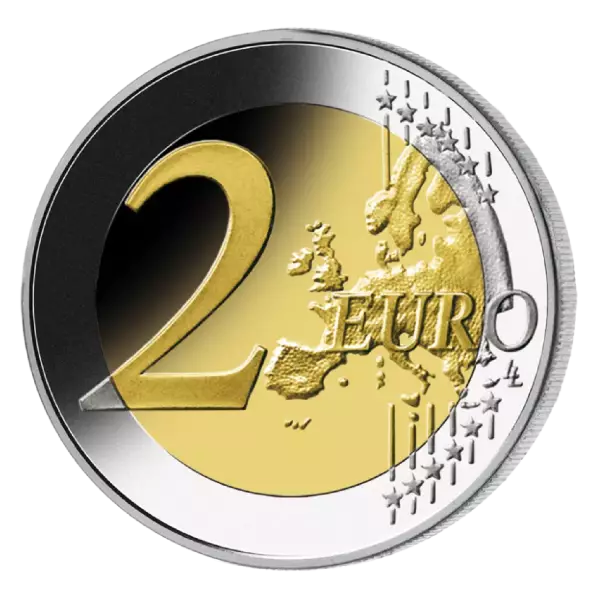

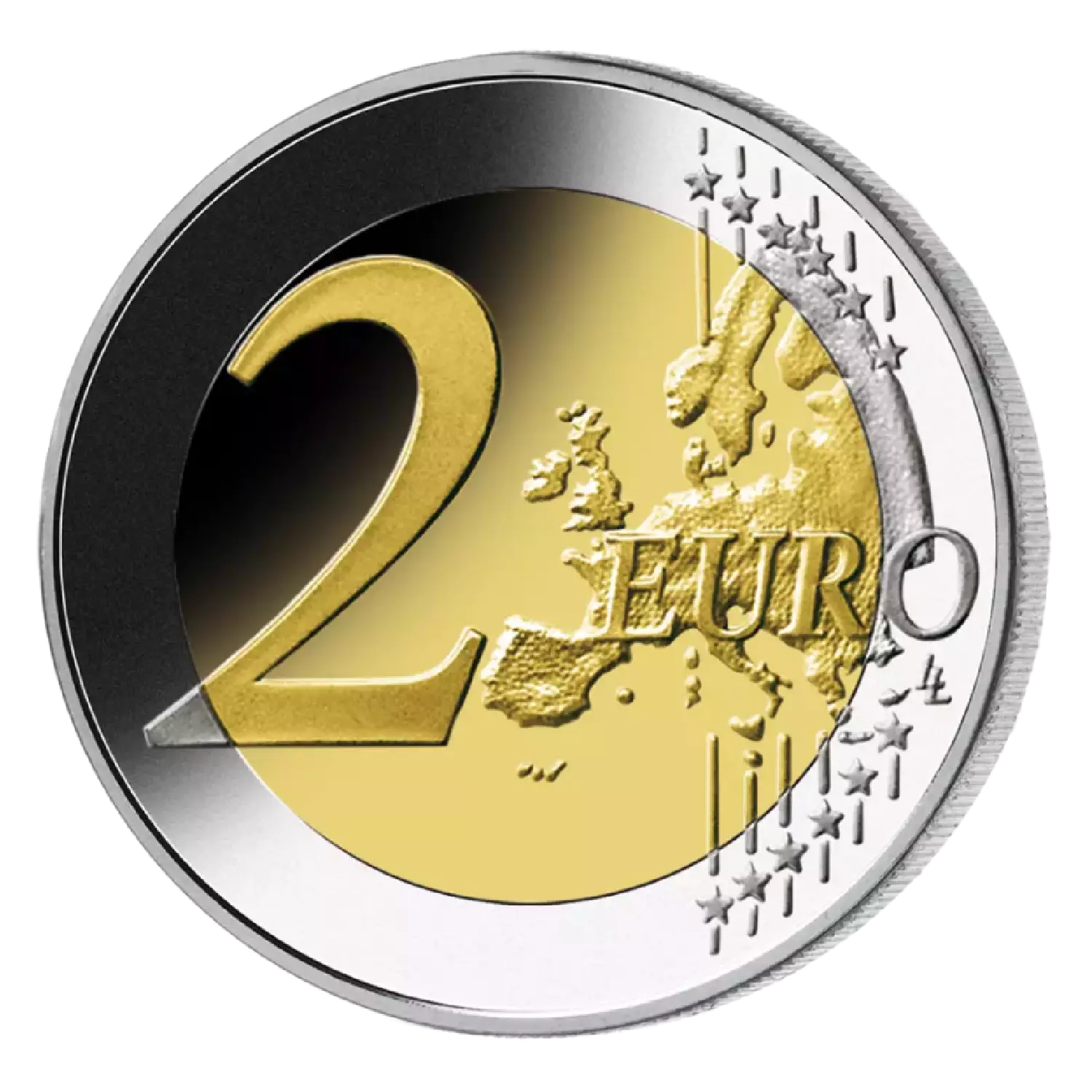
Commemorative coin of 2 euros of Germany, issued in 2025. Dedicated to the 35th anniversary of German unity. It was minted at five German mints. Total circulation of about 30 million copies. Bimetallic, diameter 25.75 mm, weight 8.5 g.
Overse
The center of the coin depicts a stylized composition of reunification - fragments of the Berlin Wall falling, together with the German flag or the Brandenburg Gate. Above - "35 JAHRE DEUTSCHE EINHEIT", below - "1990-2025", mint mark. On the left - "BUNDESREPUBLIK DEUTSCHLAND". On the outer ring are the 12 five-pointed stars of the European Union.
Reverse
The reverse is the common side of the 2 euro coins of the second type, designed by Luc Luix (Royal Belgian Mint). It depicts a map of Europe as a single continent without internal borders - a symbol of European unity. On the left is a large denomination "2" and the inscription "EURO", on the right is a map with six thin horizontal lines in the background. On the outer ring are the 12 stars of the European Union. The band is finely fluted and the German inscription "EINIGKEIT UND RECHT UND FREIHEIT" (Unity and Law and Freedom).
Historical context
German unity (Deutsche Einheit) is a political act of unification of the two German states, the Federal Republic of Germany and the GDR, which took place on October 3, 1990, after the fall of the Berlin Wall on November 9, 1989. The event ended 41 years of division of Germany after World War II. The process was launched by the Peaceful Revolution in the GDR. On May 18, 1990, the Treaty on the Establishment of a Monetary, Economic and Social Union was signed. August 31, 1990 - the Unification Treaty. September 12, 1990 - the 2+4 Treaty (between the two Germanys and the four allies). October 3, 1990 — The GDR officially joined the Federal Republic of Germany. October 3 is the national holiday of Germany (Tag der Deutschen Einheit). In the 35 years since reunification, Germany has come a long way: from post-war division to the largest economy in Europe, the leader of the EU, and the fourth largest economy in the world. The integration of the former GDR with the Federal Republic of Germany lasted for decades and cost trillions of marks/euro. Today, the difference between the west and east of Germany has significantly decreased, but some regional differences remain.