
Shopping Cart
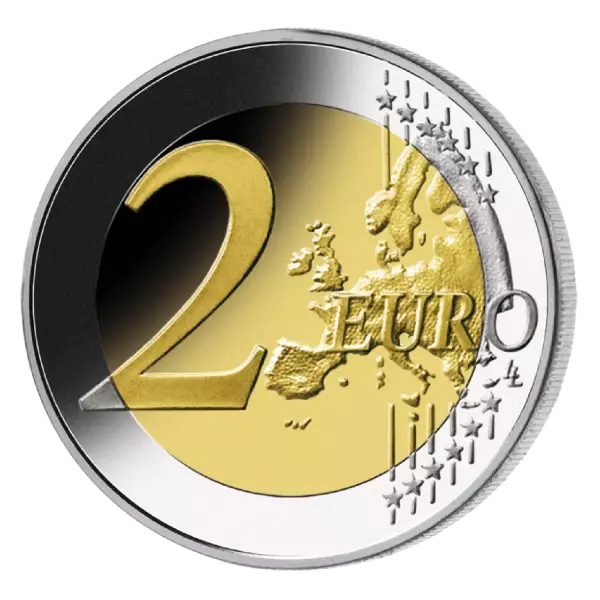

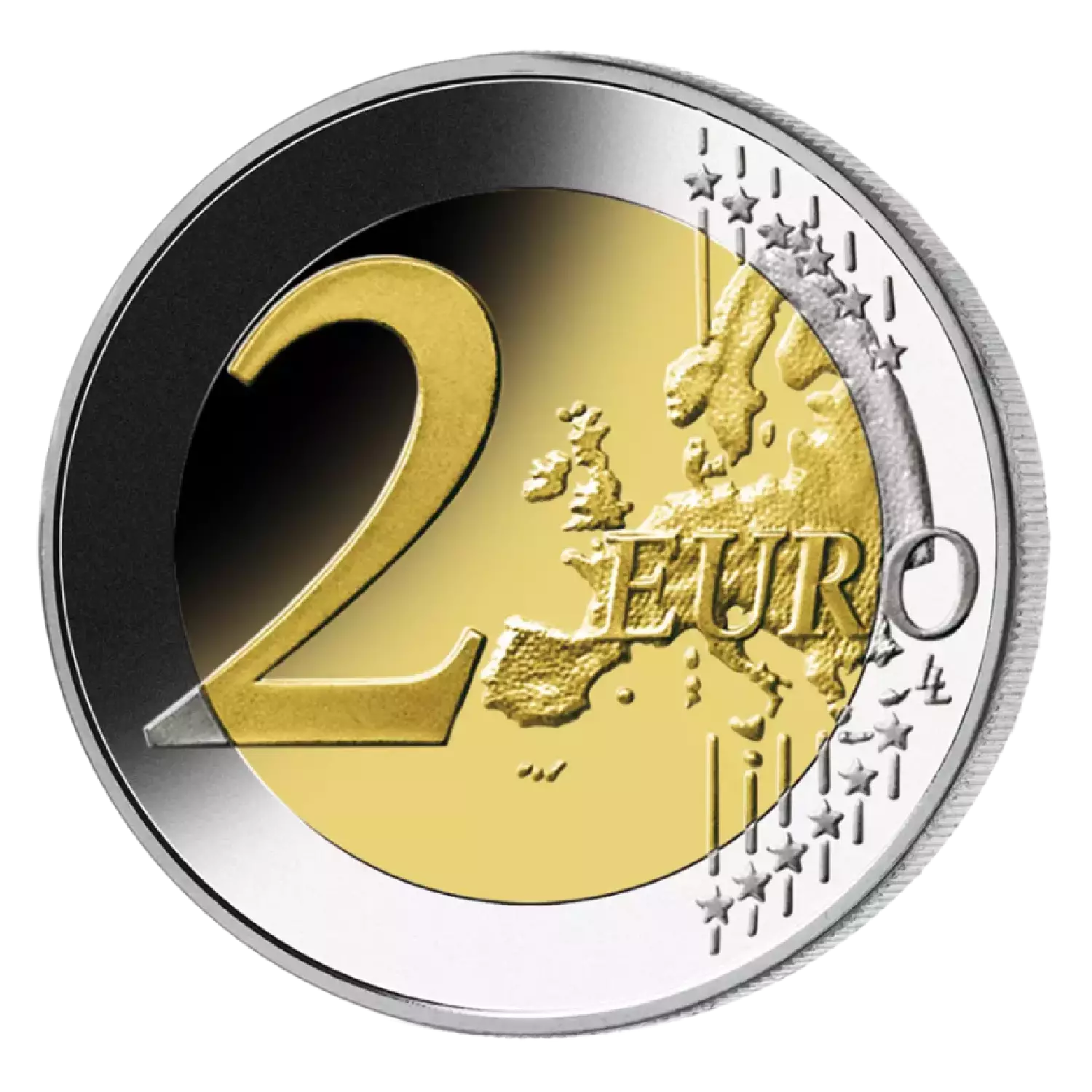
Commemorative coin of 2 euros of Portugal, issued in 2008 with a circulation of 1,005,000 copies. Dedicated to the 60th anniversary of the Universal Declaration of Human Rights. Minted at INCM, Lisbon. Bimetallic, diameter 25.75 mm, weight 8.5 g.
Overse
In the center of the coin are stylized figures of people of different colors and orientations holding hands - a symbol of unity and equality of all people in rights. Above - "Declaração Universal dos Direitos do Homem", below - "60 anos 1948-2008". On the right - "PORTUGAL". Below - the INCM mark. On the outer ring are the 12 five-pointed stars of the European Union.
Reverse
The reverse is the common side of the 2 euro coins of the second type, designed by Luc Luix (Royal Belgian Mint). It depicts a map of Europe as a single continent without internal borders - a symbol of European unity. On the left is a large denomination "2" and the inscription "EURO", on the right is a map with six thin horizontal lines in the background. On the outer ring are the 12 stars of the European Union. The band is finely fluted and inscribed with five shields alternating with seven castles - motifs of the Portuguese coat of arms.
Historical context
The Universal Declaration of Human Rights is an international document proclaimed by the UN General Assembly on December 10, 1948 in Paris by resolution 217 (III). It is the first international document to define the fundamental human rights and freedoms that must be guaranteed everywhere in the world. The declaration was created in response to the horrors of World War II and the Holocaust. The commission for the preparation of the text was headed by Eleanor Roosevelt (USA), the main authors were: John Humphrey (Canada), René Cassin (France), Charles Malik (Lebanon), Peng Chun Chang (China). The declaration consists of 30 articles, proclaiming the following rights: to life, liberty and security; freedom from slavery and torture; equality before the law; freedom of thought, conscience and religion; the right to education and work, etc. Although the Declaration itself is not legally binding, it has become the basis for subsequent international treaties. Portugal joined the UN in 1955.