
Shopping Cart
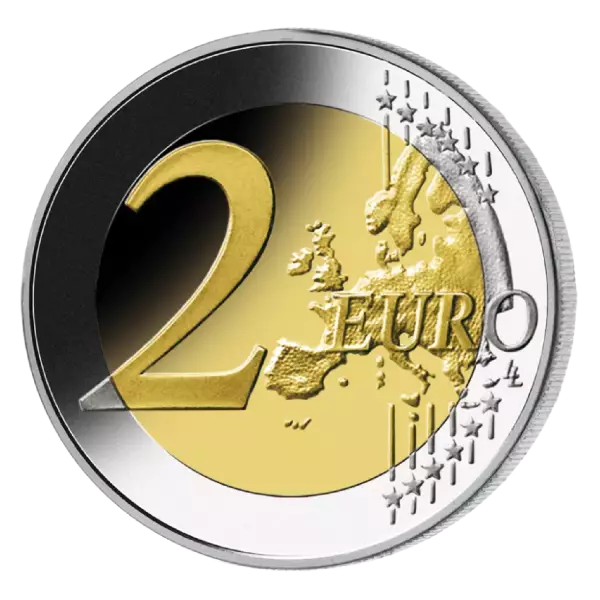

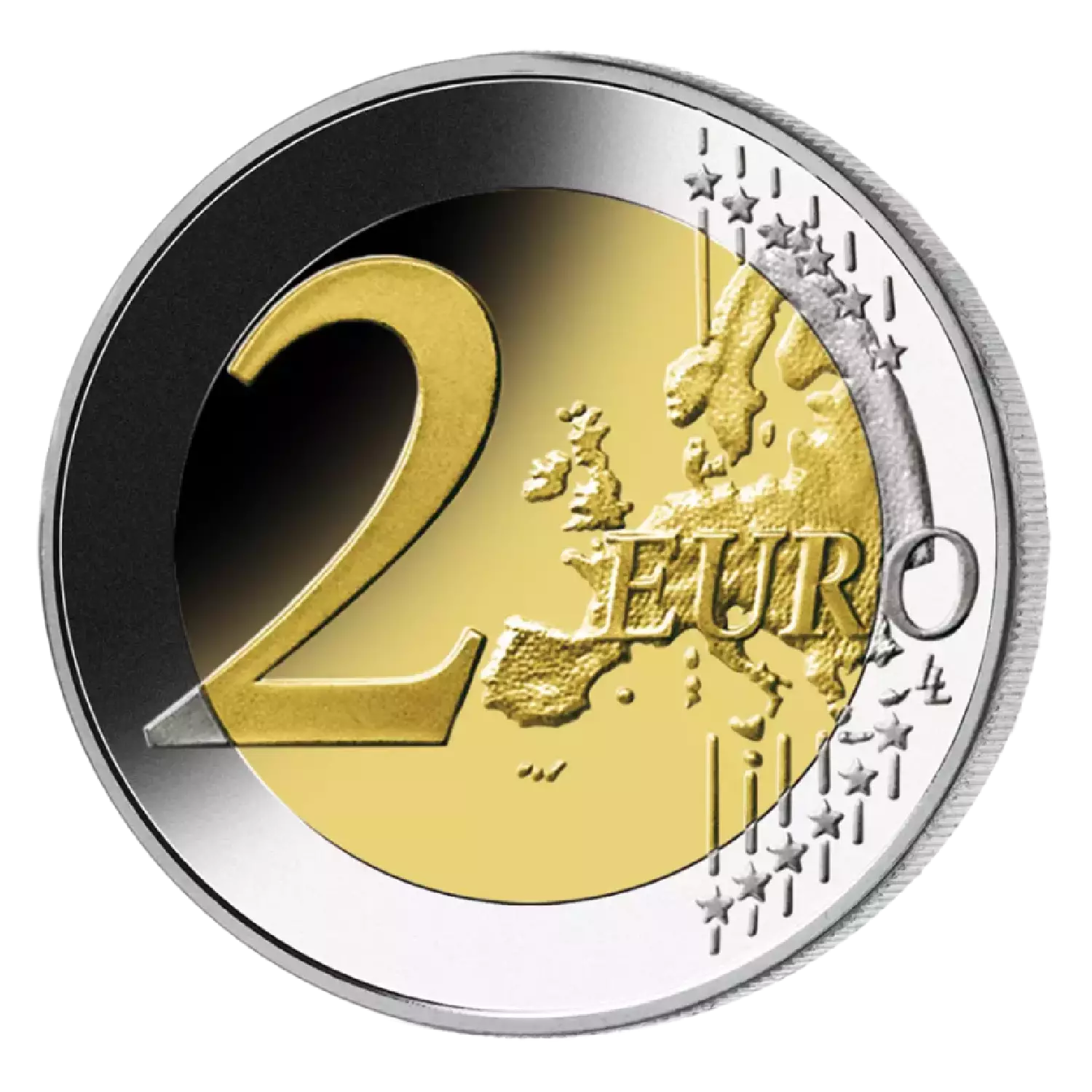
Commemorative coin of 2 euros of Portugal, issued in 2011 with a circulation of 520,000 copies. Dedicated to the 500th anniversary of the birth of Fernão Mendes Pinto. Minted at INCM, Lisbon. Bimetallic, diameter 25.75 mm, weight 8.5 g.
Overse
In the center of the coin is a stylized portrait of Fernão Mendes Pinto or a silhouette of a traveler near a map - a symbol of his Asian travels. Next to it is a ship or oriental motifs. Above - "FERNÃO MENDES PINTO", below - "PORTUGAL 1511-2011". INCM mark. On the outer ring are the 12 five-pointed stars of the EU.
Reverse
The reverse is the common side of the 2 euro coins of the second type, designed by Luc Luix (Royal Belgian Mint). It depicts a map of Europe as a single continent without internal borders - a symbol of European unity. On the left is a large denomination "2" and the inscription "EURO", on the right is a map with six thin horizontal lines in the background. On the outer ring are the 12 stars of the European Union. The band is finely fluted and inscribed with five shields alternating with seven castles - motifs of the Portuguese coat of arms.
Historical context
Fernão Mendes Pinto (c. 1509 - July 8, 1583) was an outstanding Portuguese explorer, traveler, merchant and writer, one of the most famous authors of the colonial era. He was born in Almeida or Montemor-o-Velho to a poor family. In 1537 he went to Portuguese India and spent 21 years in Asia, visiting Arabia, Iran, India, Ceylon, Myanmar, Siam, Malaya, Sumatra, China, Japan. He participated in various events - as a soldier, merchant, diplomat, missionary (became a Jesuit, then left the order). Among his most notable achievements was his description of one of the first European contacts with Japan (1543, when the Portuguese accidentally landed on the island of Tanegashima). He returned to Portugal in 1558. His magnum opus, Peregrinação (The Pilgrimage, or Journey), is an autobiographical account of Asian adventures, written between 1569 and 1578 and published posthumously in 1614. The book is a mixture of fact and fiction, and is a valuable source of information about 16th-century Asia.