
Shopping Cart
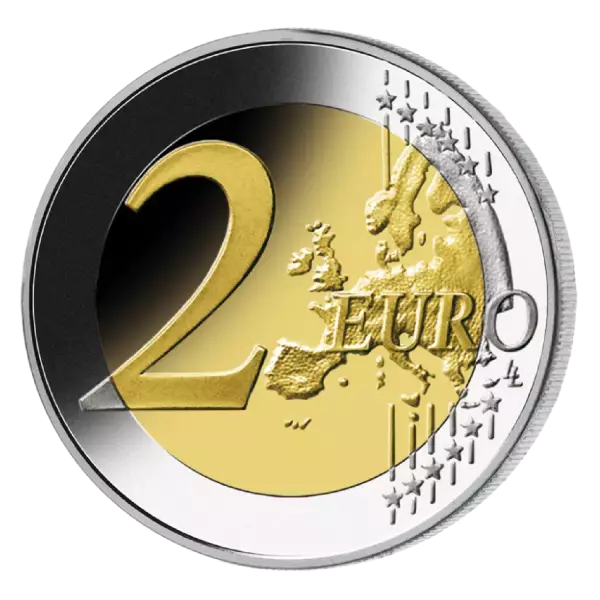

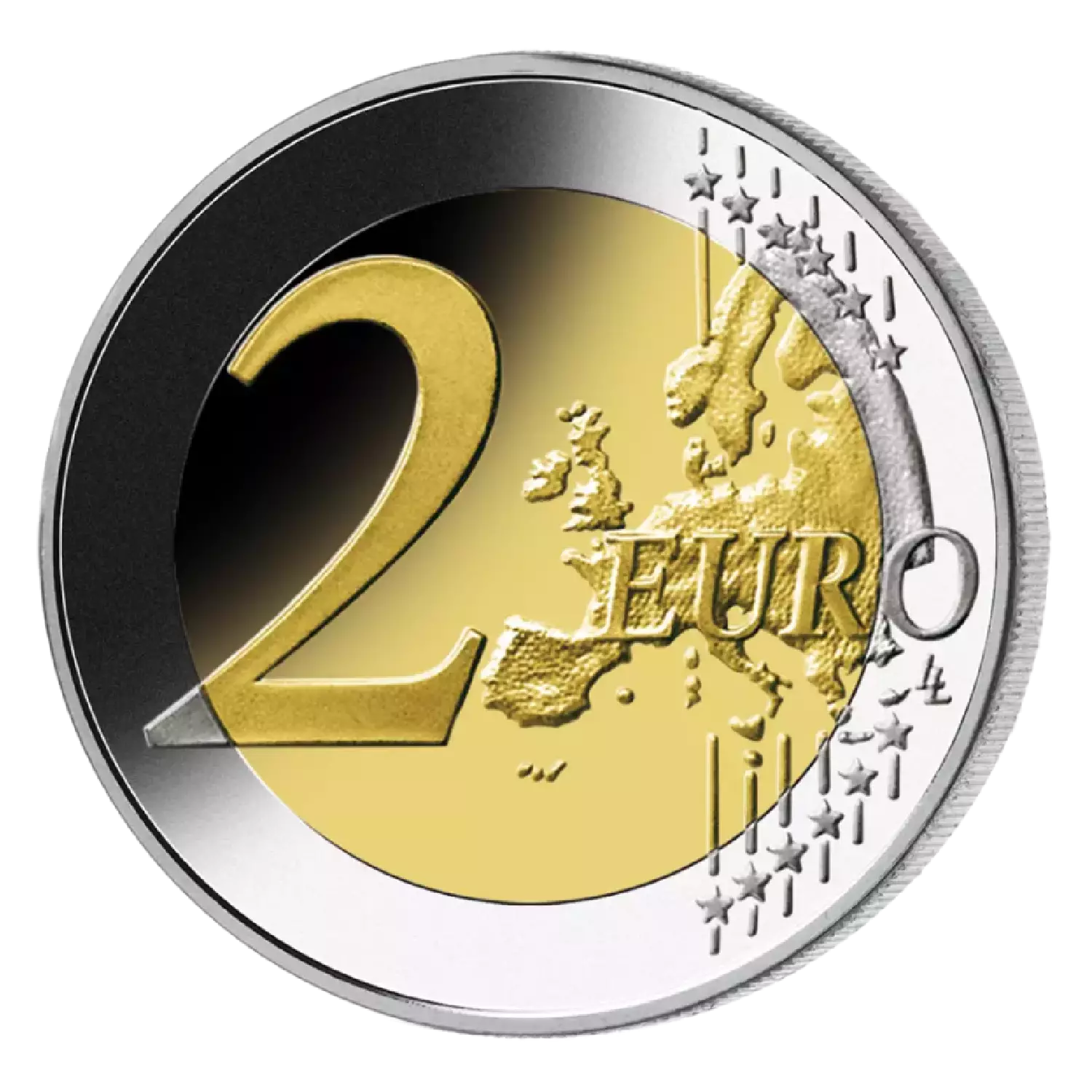
Commemorative coin of 2 euros of Portugal, issued in 2015 with a circulation of 520,000 copies. Dedicated to the 500th anniversary of the first contact with Timor. Minted at INCM, Lisbon. Bimetallic, diameter 25.75 mm, weight 8.5 g.
Obverse
The center of the coin depicts a stylized map of the island of Timor, as well as motifs of historical connection - a ship, a sailing route. Above - "PRIMEIRO CONTATO COM TIMOR", below - "PORTUGAL 1515-2015". INCM mark. On the outer ring - 12 five-pointed stars of the European Union.
Reverse
The reverse is the common side of the 2 euro coins of the second type, designed by Luc Luix (Royal Belgian Mint). Depicts a map of Europe as a single continent without internal borders - a symbol of European unity. On the left - a large denomination "2" and the inscription "EURO", on the right - a map with six thin horizontal lines in the background. On the outer ring - 12 stars of the European Union. The band - with fine ribbing and an inscription of five shields alternating with seven castles - motifs of the Portuguese coat of arms.
Historical context
The first contact of the Portuguese with the island of Timor took place in 1515, when Portuguese navigators, searching for sandalwood and other riches of the Malay Archipelago, arrived in Timor. This was part of the expansion of the Portuguese Empire into Southeast Asia after Vasco da Gama discovered the sea route to India in 1498. In 1556, the first Portuguese mission of Dominican monks was founded on Timor. In 1702, the Portuguese officially declared Timor a colony. In 1859, the Treaty of Lisbon divided the island between Portugal (the eastern part is Portuguese Timor) and the Netherlands (the western part is the current Indonesian province). After the Carnation Revolution of 1974, Portugal decided to grant independence to its colonies. In 1975, Timor-Leste declared independence, but was occupied by Indonesia 9 days later. In 1999, after a referendum, Timor-Leste regained independence. Portuguese remains the official language of the country, along with Tetum.