
Shopping Cart
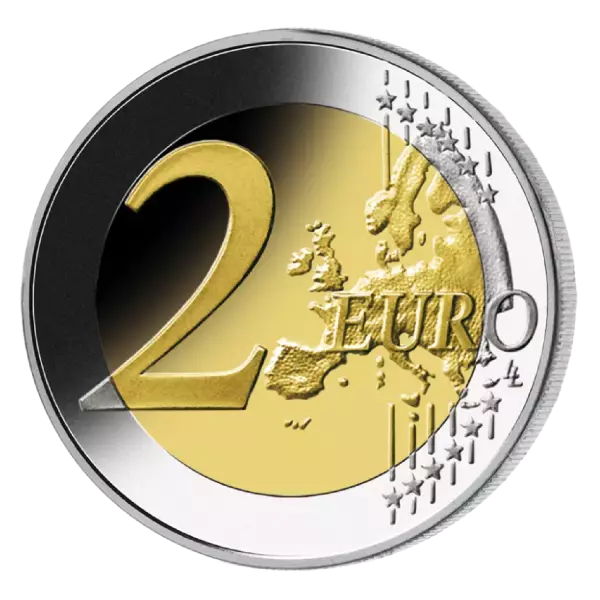


Commemorative coin of 2 euros of Portugal, issued in 2017 with a circulation of 520,000 copies. Dedicated to the 150th anniversary of the birth of Raúl Brandão. Minted at INCM, Lisbon. Bimetallic, diameter 25.75 mm, weight 8.5 g.
Obverse
In the center of the coin is a portrait of Raúl Brandão in profile. Next to it are stylized elements from his works - a marine motif (fishermen), up to inlaid inscriptions. At the top - "RAUL BRANDÃO", at the bottom - "PORTUGAL 1867-2017". INCM mark. On the outer ring are the 12 five-pointed stars of the European Union.
Reverse
The reverse is the common side of the 2 euro coins of the second type, designed by Luc Luix (Royal Belgian Mint). It depicts a map of Europe as a single continent without internal borders - a symbol of European unity. On the left is a large denomination "2" and the inscription "EURO", on the right is a map with six thin horizontal lines in the background. On the outer ring are the 12 stars of the European Union. The band is finely fluted and inscribed with five shields alternating with seven castles - motifs of the Portuguese coat of arms.
Historical context
Raul Germano Brandão (March 12, 1867 - December 5, 1930) was one of the most prominent Portuguese modernist writers of the 20th century, a journalist, and memoirist. He was born in Foz do Douro near Porto into a modest fishing family. He received a military education and served as an army officer (reaching the rank of captain). Along with his military career, he was actively involved in literature. He was friends with modernist writers of the Renascença Portuguesa group. His style is a mixture of realism, symbolism, and expressionism. Among the main works: "As Ilhas Desconhecidas" (Unknown Islands, 1926, a travelogue about the Azores), "Os Pescadores" (Fishermen, 1923 - about the life of Portuguese fishermen), "Húmus" (Humor, 1917, an experimental novel), "Os Pobres" (The Poor, 1906), "A Conspiração de 1817" (The Conspiracy of 1817), "El-Rei Junot" (King Junot). Brandão was a keen observer of human suffering and social injustice, his works are permeated with humanism and a poetic perception of life.