
Shopping Cart
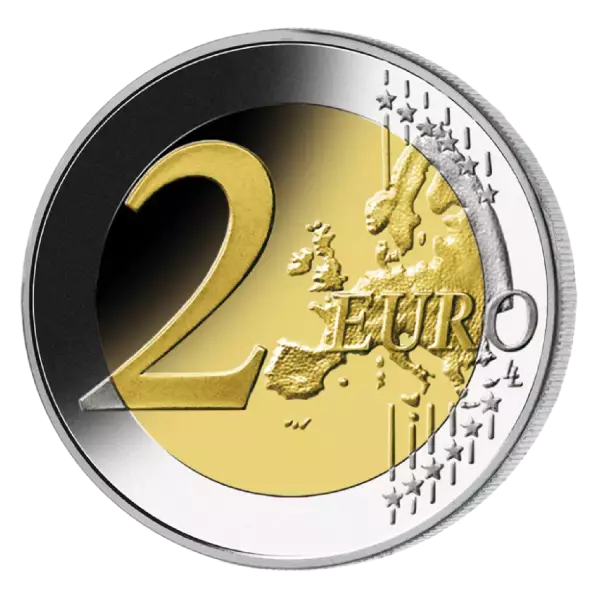

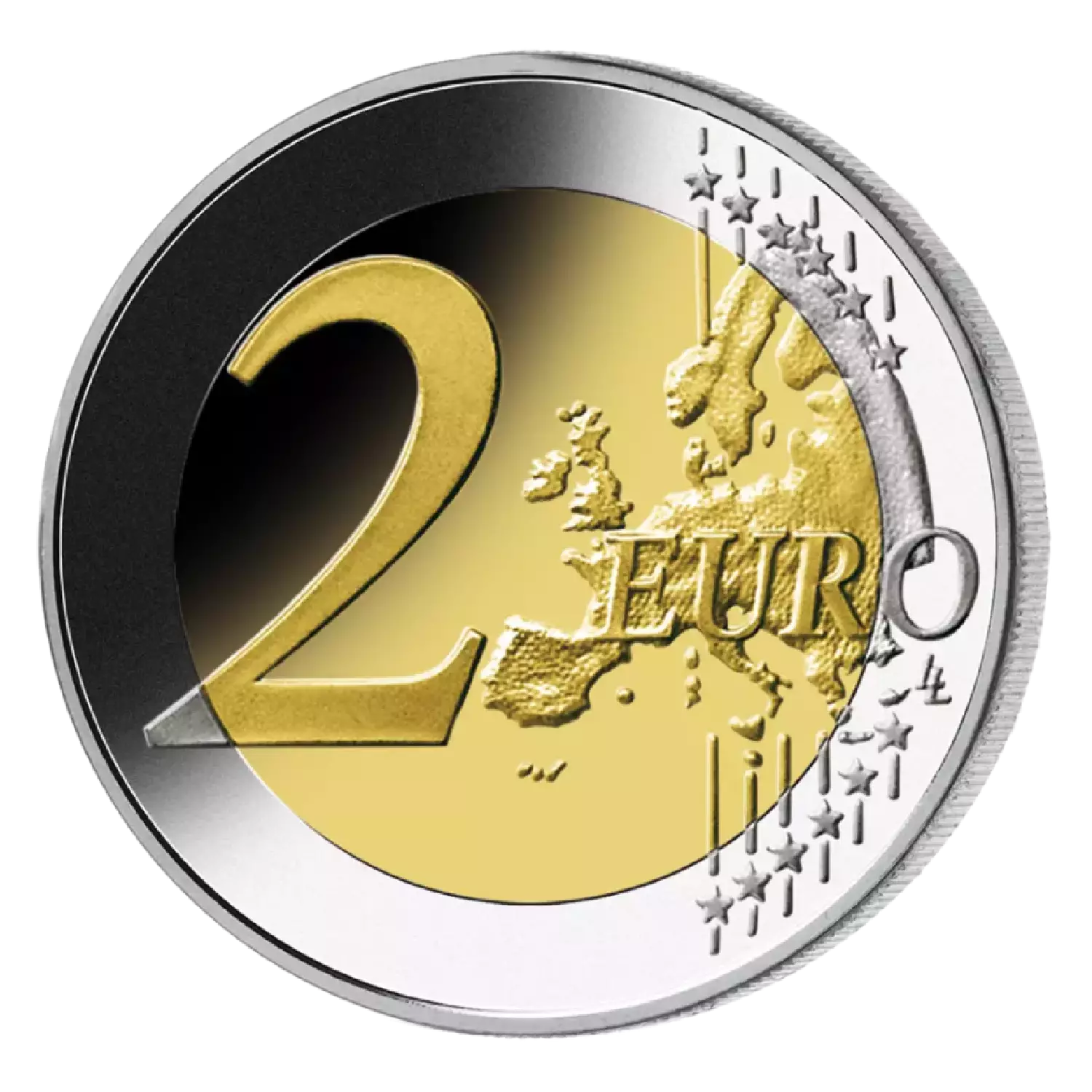
Commemorative coin of 2 euros of Portugal, issued in 2023 with a circulation of 520,000 copies. Dedicated to the 200th anniversary of Brazilian-Portuguese friendship. Minted at INCM, Lisbon. Bimetallic, diameter 25.75 mm, weight 8.5 g.
Overse
In the center of the coin is a stylized composition of two flags - Portuguese and Brazilian, intertwined as a symbol of friendship. Next to it are maps of the two countries. Above - "200 ANOS DE AMIZADE BRASIL PORTUGAL", below - "PORTUGAL 2023". INCM mark. On the outer ring are 12 five-pointed EU stars.
Reverse
The reverse is the common side of the 2 euro coins of the second type, designed by Luc Luix (Royal Belgian Mint). It depicts a map of Europe as a single continent without internal borders - a symbol of European unity. On the left - a large denomination "2" and the inscription "EURO", on the right - a map with six thin horizontal lines in the background. On the outer ring - 12 stars of the European Union. The band - with thin ribbing and an inscription with five shields alternating with seven castles - motifs of the Portuguese coat of arms.
Historical context
Brazil was a colony of Portugal from 1500, when it was accidentally discovered by Pedro Álvarez Cabral, until 1822. Brazil became the largest and richest colony of the Portuguese Empire, from sugar production to gold and diamond mining, from coffee to rubber. In 1808, fleeing Napoleon's invasion, the Portuguese royal court moved to Rio de Janeiro - an unprecedented transfer of the center of a European monarchy to a colony. In 1815, Brazil was elevated to the status of a kingdom, along with Portugal. After King João VI returned to Lisbon in 1821, his son Prince Pedro remained in Brazil as regent. On September 7, 1822, on the banks of the Ipiranga River near São Paulo, Pedro shouted: "Independence or death!" - thus the independence of the Brazilian Empire was proclaimed. In 1823, the Portuguese crown officially recognized the independence of Brazil - the date of the birth of friendly relations. Today, Brazil and Portugal are part of the Community of Portuguese-Speaking Countries (CPLP).