
Shopping Cart
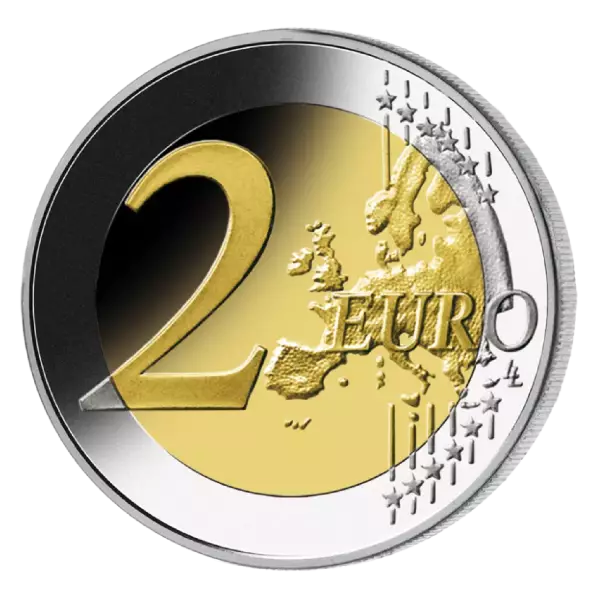

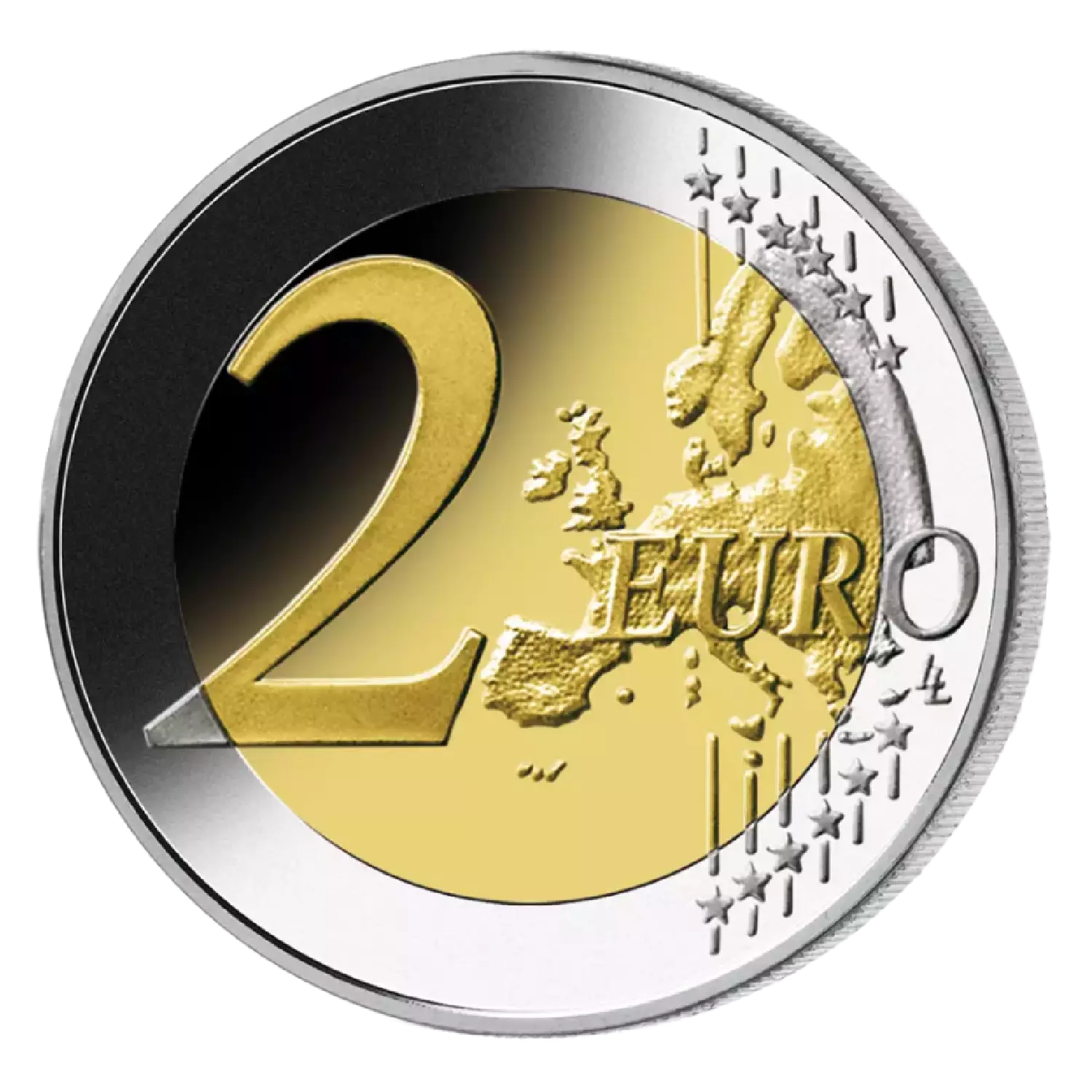
Commemorative coin of 2 euros of Portugal, issued in 2024 with a circulation of 520,000 copies. Dedicated to the 50th anniversary of the Carnation Revolution. Minted at INCM, Lisbon. Bimetallic, diameter 25.75 mm, weight 8.5 g.
Obverse
In the center of the coin is a stylized red carnation - a symbol of the revolution of April 25, 1974 - next to the silhouettes of the celebrating people. A soldier with a carnation in the barrel of a machine gun (a characteristic image of the revolution) may be depicted. At the top - "50 ANOS DA REVOLUÇÃO 25 DE ABRIL", at the bottom - "1974-2024 PORTUGAL". INCM mark. On the outer ring are the 12 five-pointed stars of the EU.
Reverse
The reverse is the common side of the 2 euro coins of the second type, designed by Luc Luix (Royal Belgian Mint). It depicts a map of Europe as a single continent without internal borders - a symbol of European unity. On the left is a large denomination "2" and the inscription "EURO", on the right is a map with six thin horizontal lines in the background. On the outer ring are the 12 stars of the European Union. The band is finely fluted and features five shields alternating with seven castles, motifs from the Portuguese coat of arms.
Historical context
The Carnation Revolution (Revolução dos Cravos, or Revolution of 25 April) was a peaceful military coup in Portugal on 25 April 1974, which ended the 41-year authoritarian dictatorship of the Estado Novo (New State), founded by António de Oliveira Salazar and continued since 1968 by Marcelo Caetano. The revolution was led by the Armed Forces Movement (Movimento das Forças Armadas, MFA). The signal was the song "Grândola, Vila Morena" by Zeca Afonso, which was played at 0:25 on 25 April. A few hours later, troops seized key objects in Lisbon. Caetano surrendered; the government fell. The name "Carnation Revolution" comes from the fact that resident Celeste Caeiro distributed carnations to soldiers, which they inserted into the barrels of their guns. After the revolution, Portugal transitioned to democracy: free elections were held (1976), a democratic Constitution of 1976 was adopted, and independence was granted to African colonies (Angola, Mozambique, Cape Verde, Guinea-Bissau, São Tomé and Príncipe). April 25 is the national holiday of Freedom Day. The 50th anniversary in 2024 is an important anniversary.