
Shopping Cart
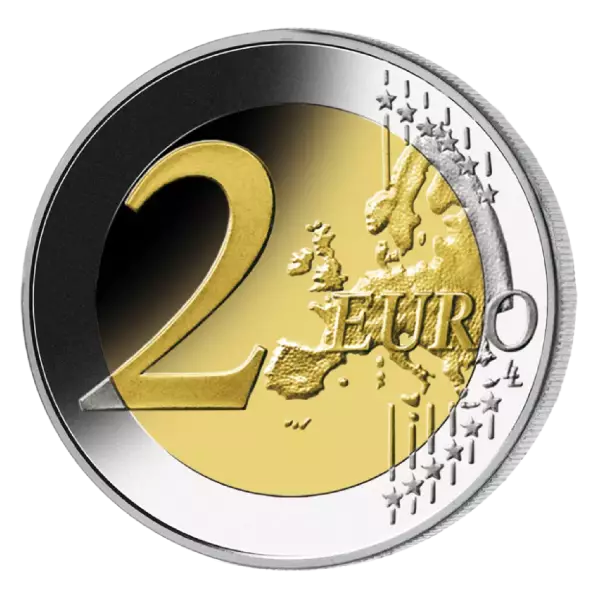

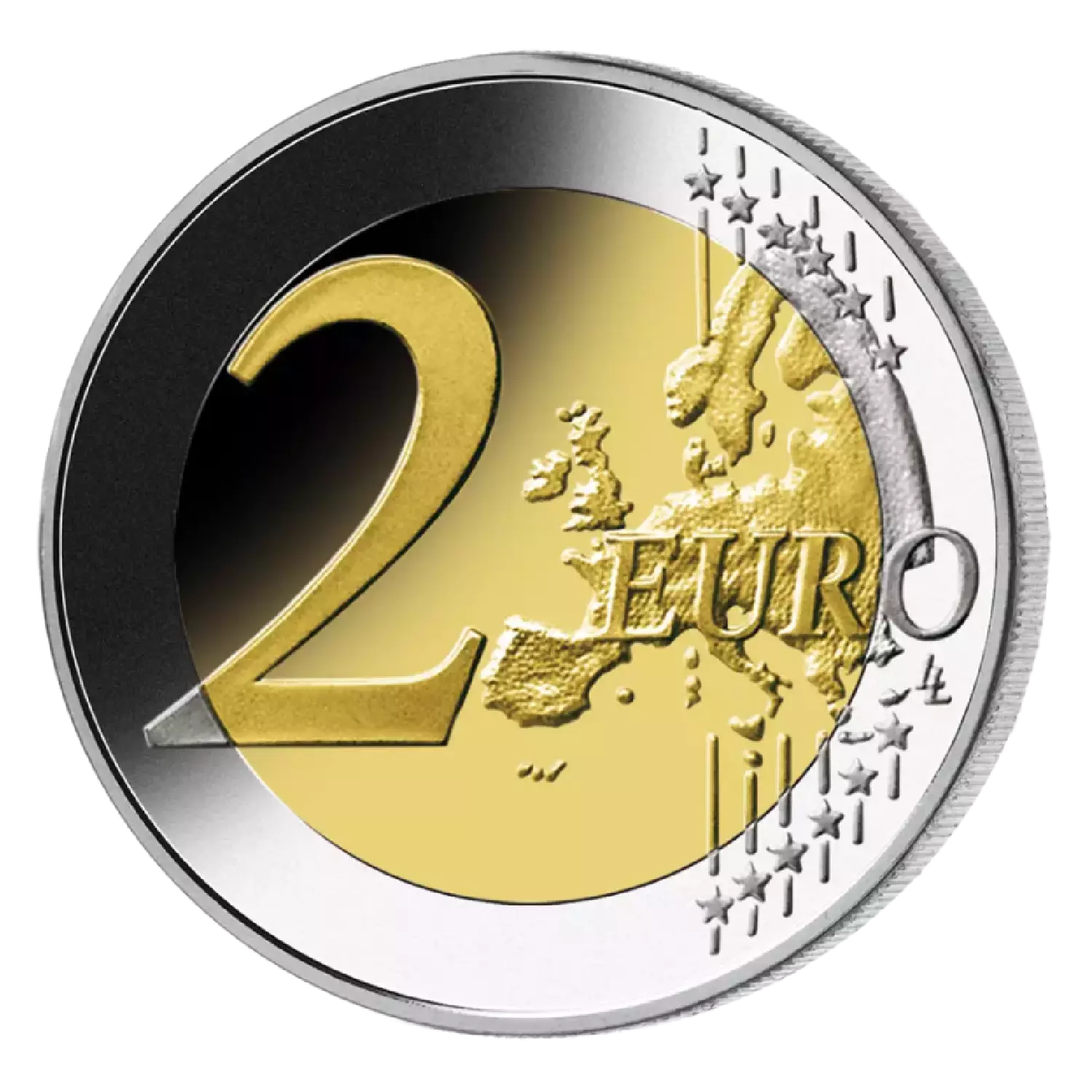
The first commemorative 2 euro coin of the Republic of San Marino, issued in 2004 in a circulation of 110,000 copies. It was minted at the Istituto Poligrafico e Zecca dello Stato (IPZS) in Rome (Italy). Bimetallic, diameter 25.75 mm, weight 8.5 g.
Obverse
The obverse depicts a stylized portrait of Bartolomeo Borghese, turned to the right. At the top is the inscription "San Marino". On the right is the year "2004". At the bottom is the signature of the designer Antonio Bregna. On the right is the mint mark "R" (Rome). On the outer ring - 12 five-pointed EU stars.
Reverse
The reverse is the common side of the 2 euro coins of the first type, designed by Luc Luix (Royal Belgian Mint). It depicts a map of the enlarged European Union with stylized lines below the map. On the left - a large denomination "2" and the inscription "EURO". On the outer ring - 12 five-pointed EU stars. The edge - with fine ribbing and the inscription "2 ★", repeated 6 times.
Historical context
Count Bartolomeo Borghesi (July 11, 1781 - April 16, 1860) was an outstanding Italian numismatist, epigrapher, historian of Ancient Rome. Born in Savignano sul Rubicon (Emilia-Romagna) into a noble family. From a young age he showed an interest in antiquity - he studied coins and inscriptions. In 1815 he moved to Rome, but due to political circumstances in 1821 he settled in San Marino, where he received citizenship and later became consul of the republic. He became famous as one of the greatest experts in Roman numismatics and epigraphy of his time. He published numerous works on Roman consular fasts, coins, and inscriptions. Among his students and correspondents was Theodor Mommsen, who considered Borghese a great predecessor in epigraphy. He died on April 16, 1860 in San Marino. His archives were purchased by the King of Italy, Victor Emmanuel II, and published in Paris. San Marino reverently preserves the memory of the great scientist.