
Shopping Cart
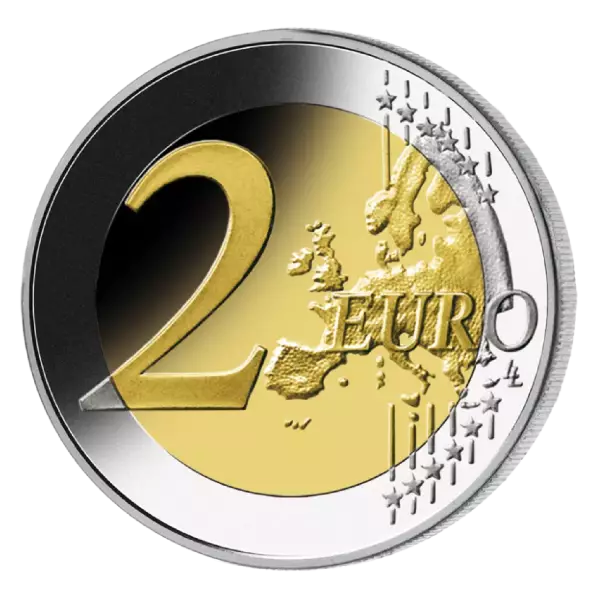

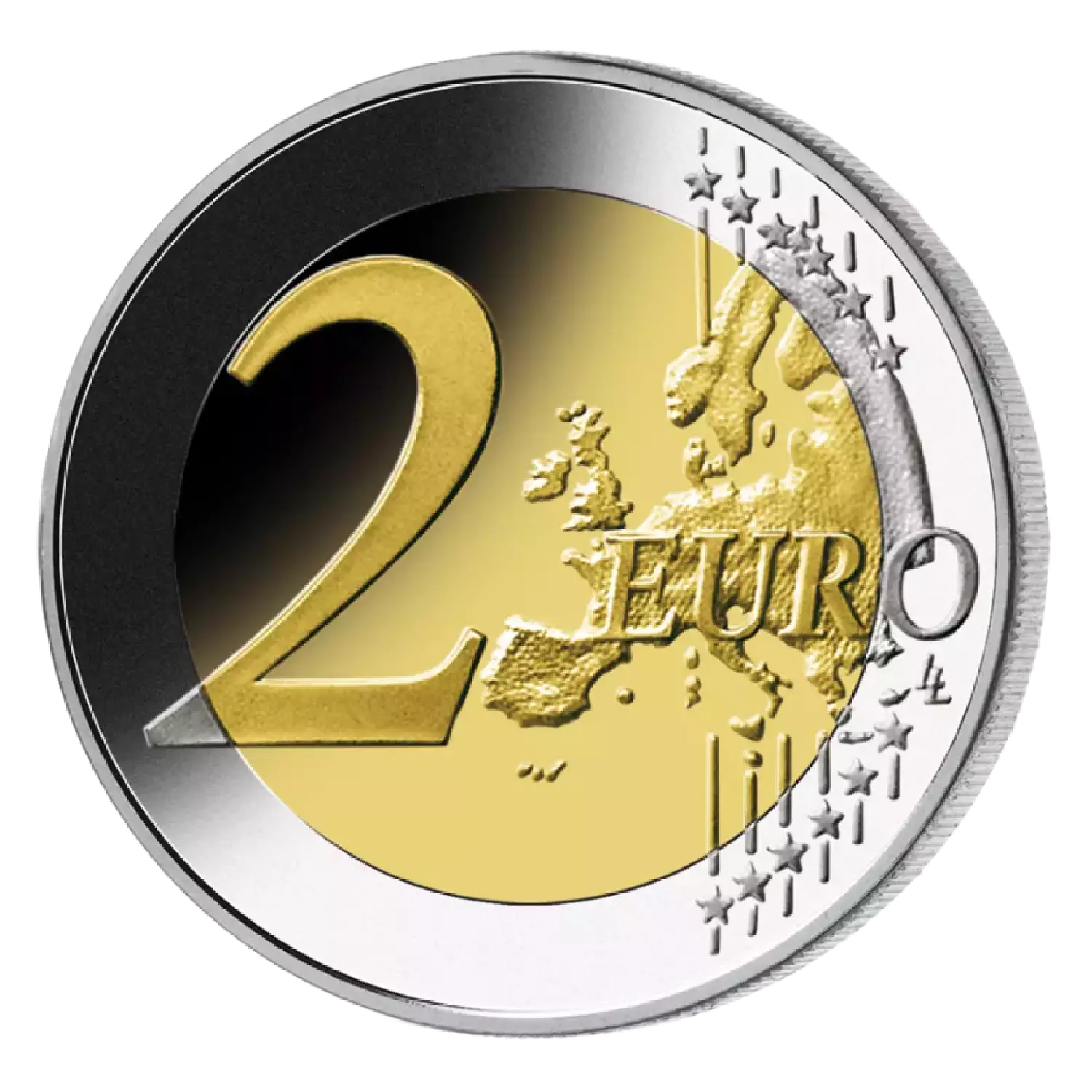
Commemorative 2 euro coin of the Republic of San Marino, issued in 2007 in a circulation of 130,000 copies. Dedicated to the 200th anniversary of the birth of Giuseppe Garibaldi. Minted at IPZS, Rome. Bimetallic, diameter 25.75 mm, weight 8.5 g.
Obverse
The center of the coin depicts a portrait of Giuseppe Garibaldi in his characteristic appearance - with a thick beard, in a red Garibaldian shirt. Above - "San Marino". Below - the dates "1807-2007" (year of birth and anniversary). Mark "R". On the outer ring are the 12 five-pointed stars of the European Union.
Reverse
The reverse is the common side of the 2 euro coins of the second type, designed by Luc Luix (Royal Belgian Mint). It depicts a map of Europe as a single continent without internal borders - a symbol of European unity. On the left is a large denomination "2" and the inscription "EURO", on the right is a map with six thin horizontal lines in the background. On the outer ring are the 12 stars of the European Union. The band is finely fluted, with the inscription "2 ★" repeated 6 times, alternately upright and inverted.
Historical context
Giuseppe Garibaldi (July 4, 1807 - June 2, 1882) was an Italian general, revolutionary, and national hero of the Unification of Italy (Risorgimento). He was born in Nice (then the Kingdom of Sardinia, now France). In his youth, he was a sailor, then a revolutionary. He took part in various European and South American revolutions (Uruguay, 1843-1848). He returned to Europe in 1848. In 1849, he took part in the defense of the Roman Republic against French troops, and after the defeat, he escaped by fleeing through Italy. In September 1849, with 200 followers, he found refuge in San Marino - the Republic granted him asylum. This event is important for San Marino - a symbol of preserving freedom and neutrality. Later, Garibaldi carried out the famous "March of a Thousand" (Spedizione dei Mille, 1860): with 1,089 "red shirts" (Mille) he landed in Sicily, defeated the Bourbon troops, conquered Sicily and Naples, handing them over to the King of Sardinia, Victor Emmanuel II - this led to the proclamation of the Kingdom of Italy on March 17, 1861.