
Shopping Cart
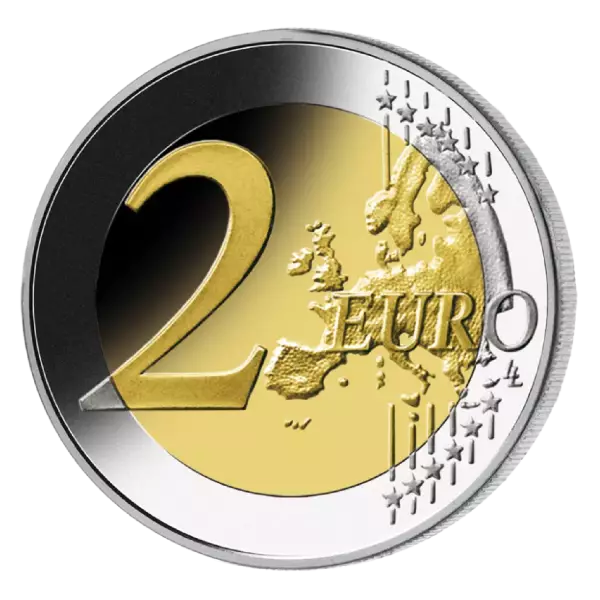

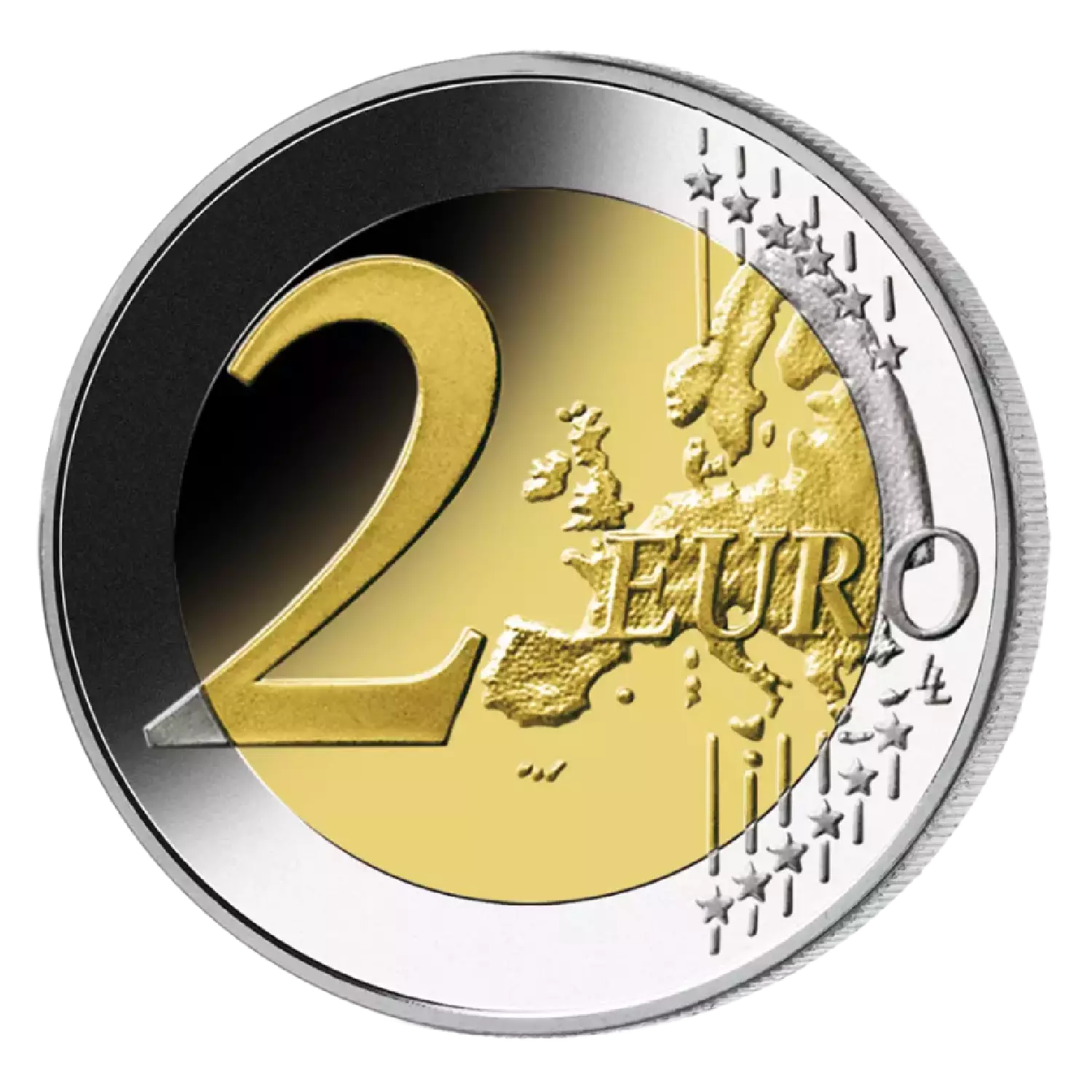
A 2 euro commemorative coin of the Republic of San Marino, issued in 2014 in a circulation of 110,000 copies. Dedicated to the 500th anniversary of the death of Donato Bramante. Minted at IPZS, Rome. Bimetallic, diameter 25.75 mm, weight 8.5 g.
Overse
The center of the coin depicts a stylized portrait of Donato Bramante next to his architectural masterpiece, the Tempietto in the monastery of San Pietro in Montorio in Rome. At the top is "San Marino". At the bottom is "BRAMANTE" and the dates "1514-2014". Mark "R". On the outer ring are the 12 five-pointed stars of the EU.
Reverse
The reverse is the common side of the 2 euro coins of the second type, designed by Luc Luix (Royal Belgian Mint). It depicts a map of Europe as a single continent without internal borders - a symbol of European unity. On the left is a large denomination "2" and the inscription "EURO", on the right is a map with six thin horizontal lines in the background. On the outer ring are the 12 stars of the European Union. The band is finely fluted, with the inscription "2 ★" repeated 6 times, alternately upright and inverted.
Historical context
Donato Bramante (Donato di Pascuccio d'Antonio, known as Donato Bramante, c. 1444 - April 11, 1514) was an outstanding Italian architect of the High Renaissance, the founder of the classical style of the era. Born in Fermi (Marche), he worked in Milan for about 30 years, where he created numerous works: the apse of the church of Santa Maria presso San Satiro (1486), the reconstruction of Santa Maria delle Grazie (1492-1497) - the church where Leonardo da Vinci painted The Last Supper. In 1499, when the French captured Milan, Bramante moved to Rome, where he became the chief architect of Pope Julius II. The famous Tempietto (1502) in the monastery of San Pietro in Montorio - a small rotunda church - is considered one of the masterpieces of Renaissance architecture. In 1506, Bramante began construction of a new St. Peter's Basilica in the Vatican according to a grandiose plan - the largest Christian church in the world. He died on April 11, 1514 in Rome. Buried in the Vatican. His students were Raphael and Peruzzi.