
Shopping Cart
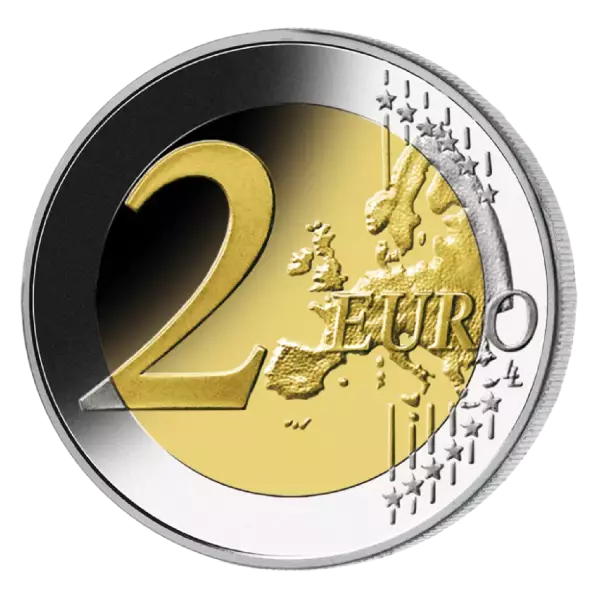

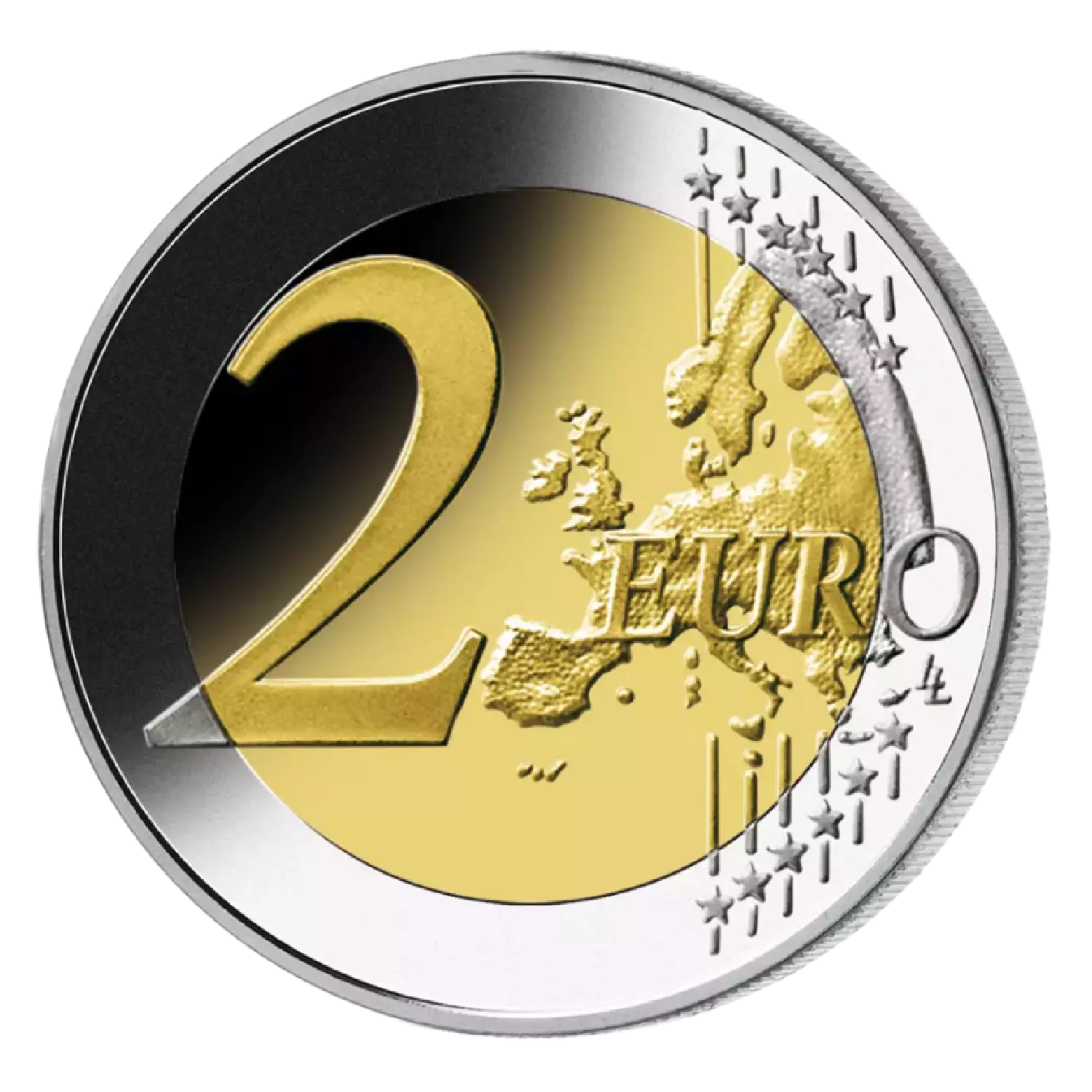
2 euro commemorative coin of the Republic of San Marino, issued in 2015 with a circulation of 79,250 copies. Dedicated to the 750th anniversary of the birth of Dante Alighieri. Minted at IPZS, Rome. Bimetallic, diameter 25.75 mm, weight 8.5 g.
Overse
In the center of the coin is the profile of Dante Alighieri in his characteristic form - with a laurel wreath, an eagle profile (known from Raphael's fresco and Botticelli's portrait). Next to it is the book "La Divina Commedia". Above - "San Marino". Below - "DANTE 1265-2015". Mark "R". On the outer ring are the 12 five-pointed stars of the European Union.
Reverse
The reverse is the common side of the 2 euro coins of the second type, designed by Luc Luix (Royal Belgian Mint). It depicts a map of Europe as a single continent without internal borders - a symbol of European unity. On the left is a large denomination "2" and the inscription "EURO", on the right is a map with six thin horizontal lines in the background. On the outer ring are the 12 stars of the European Union. The rim is finely fluted, with the inscription "2 ★" repeated 6 times, alternately upright and inverted.
Historical context
Dante Alighieri (Dante Alighieri, full name Durante degli Alighieri, c. 1265 - September 14, 1321) is the most prominent Italian poet of the Middle Ages, one of the greatest poets of all time, "the father of the Italian literary language". He was born in Florence into a family of petty nobility. He studied in Bologna and Florence. At the age of 12 he met Beatrice Portinari - the love who became the muse of his work. He was actively involved in Florentine politics, was a prior in 1300. In 1302, due to the political struggle between the "white" and "black" Guelphs, he was sentenced to exile, and never returned to Florence. He lived in various cities in Italy: Verona, Ravenna. Among his works: "Vita Nova" (New Life, c. 1294, about his love for Beatrice), "De Vulgari Eloquentia" (about the vernacular), "Convivio" (Banquet, a philosophical treatise), "De Monarchia" (about the need for a universal monarchy). His magnum opus is "La Divina Commedia" (The Divine Comedy, c. 1308-1320) - an epic poem about the author's journey through Hell, Purgatory, and Paradise. He died on September 14, 1321 in Ravenna from malaria.