
Shopping Cart
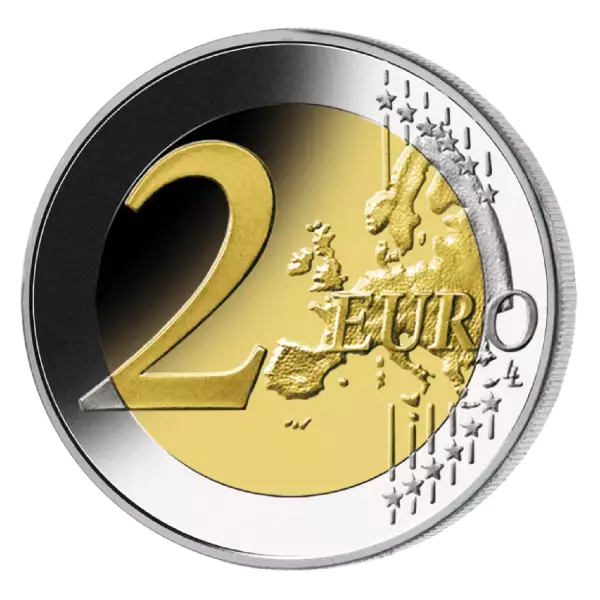

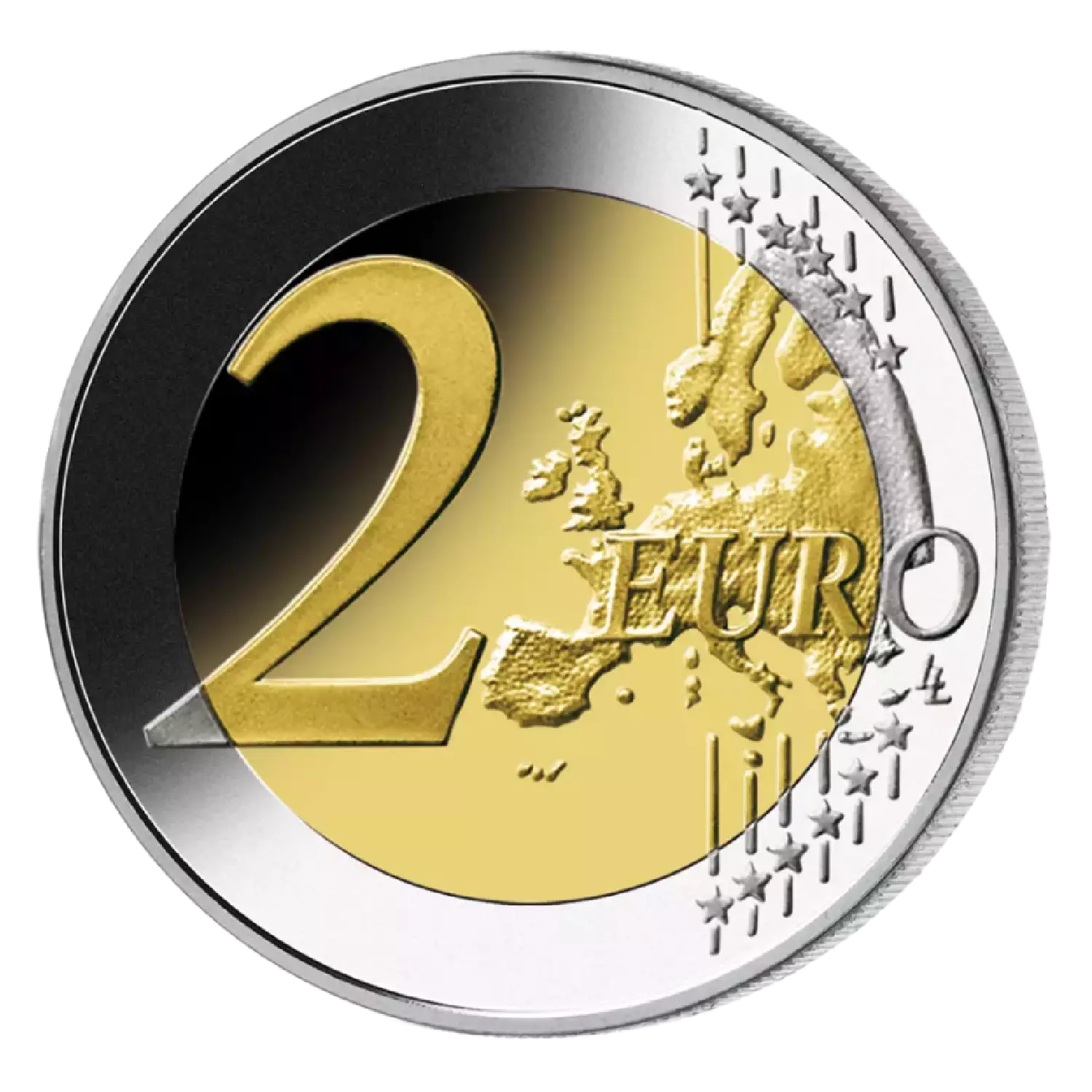
2 euro commemorative coin of the Republic of San Marino, issued in 2016 in a circulation of 65,000 copies. Dedicated to the 400th anniversary of the death of William Shakespeare. Minted at IPZS, Rome. Bimetallic, diameter 25.75 mm, weight 8.5 g.
Obverse
The center of the coin depicts a stylized portrait of William Shakespeare in his characteristic appearance - with a bald forehead, a narrow beard, and a high forehead (based on an engraving by Drewchot in 1623). At the top - "San Marino". At the bottom - "SHAKESPEARE" and the dates "1616-2016". Mark "R". On the outer ring are the 12 five-pointed stars of the European Union.
Reverse
The reverse is the common side of the 2 euro coins of the second type, designed by Luc Luix (Royal Belgian Mint). It depicts a map of Europe as a single continent without internal borders - a symbol of European unity. On the left is a large denomination "2" and the inscription "EURO", on the right is a map with six thin horizontal lines in the background. On the outer ring are the 12 stars of the European Union. The rim is finely fluted, with the inscription "2 ★" repeated 6 times, alternately upright and inverted.
Historical context
William Shakespeare (c. 23/26 April 1564 - 23 April 1616) was an English playwright, poet, actor, national poet of England, the most famous English-language writer in history, whose work had a huge influence on world literature. He was born in Stratford-upon-Avon, the son of a glover. Little is known about his early life. Around 1592 he appeared in London as a playwright and actor in the Lord Chamberlain's Men (later King's Men). Co-owner of the Globe (1599) and Blackfriars theatres. His work includes about 39 plays (comedies, historical dramas, tragedies, romances), 154 sonnets, 2 poems. Among the masterpieces: "Hamlet" (c. 1601), "Romeo and Juliet" (1594-1596), "Macbeth" (1606), "King Lear" (1605-1606), "Othello" (1603), "A Midsummer Night's Dream", "The Merchant of Venice", "As You Like It", "Twelfth Night", "The Tempest" (his last play). Around 1613 he returned to Stratford. He died on April 23, 1616 (according to tradition on his 52nd birthday). He was buried in the Church of the Holy Trinity in Stratford.