
Shopping Cart
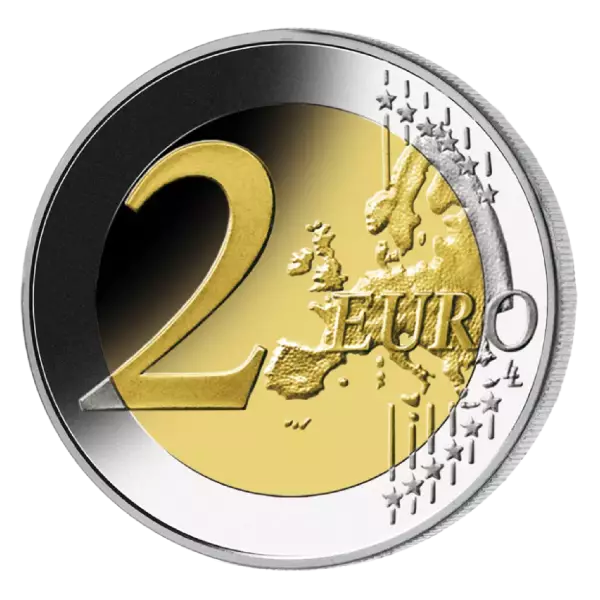

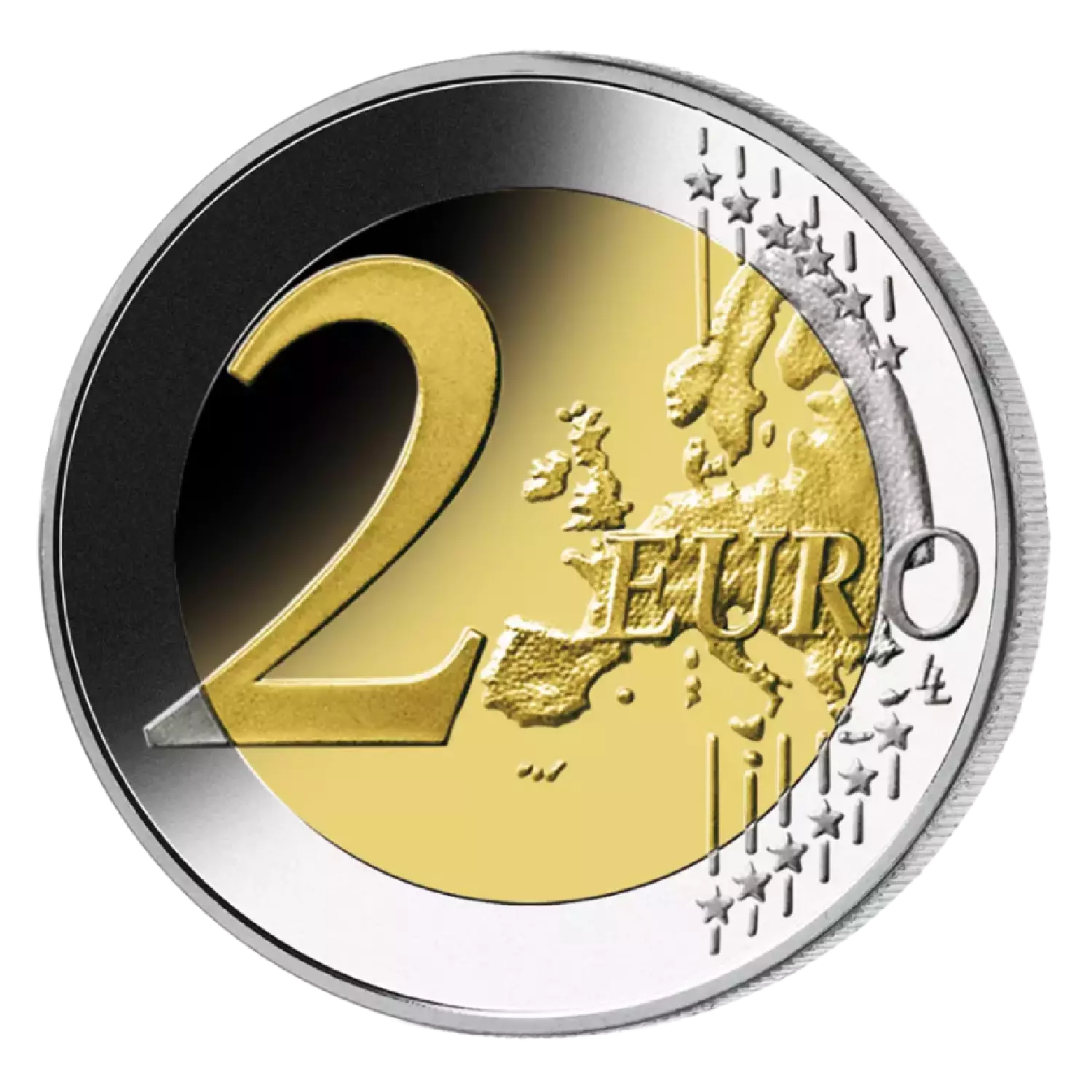
2 euro commemorative coin of the Republic of San Marino, issued in 2022 with a circulation of 54,000 copies. Dedicated to the 550th anniversary of the death of Piero della Francesca. Minted at IPZS, Rome. Bimetallic, diameter 25.75 mm, weight 8.5 g.
Obverse
The center of the coin depicts a fragment of Piero della Francesca's famous frescoes "The Legend of the Cross" (1452-1466) from the church of San Francesco in Arezzo or a profile from his diptych of the Dukes of Urbino. At the top is "San Marino". At the bottom is "PIERO DELLA FRANCESCA" and the dates "1492-2022". Mark "R". On the ring - 12 EU stars.
Reverse
The reverse is the common side of the 2 euro coins of the second type, designed by Luc Luix (Royal Belgian Mint). It depicts a map of Europe as a single continent without internal borders - a symbol of European unity. On the left - a large denomination "2" and the inscription "EURO", on the right - a map with six thin horizontal lines. On the outer ring - 12 stars of the European Union. The band - with thin grooves, with the inscription "2 ★" repeated 6 times.
Historical context
Piero della Francesca (c. 1415 - October 12, 1492) - an outstanding Italian artist of the early Renaissance, mathematician, theorist of perspective. Born in Borgo Sansepolcro (Tuscany). A pupil of Domenico Veneziano. He worked in Florence, Ferrara, Urbino, Rome, but mainly in his native Sansepolcro and Arezzo. Piero's style is distinguished by geometric clarity, monumental calm, and a remarkable knowledge of perspective and light. Among the most famous works: the frescoes "The Legend of the Cross" (Storie della Vera Croce, 1452-1466) in the church of San Francesco in Arezzo; "The Baptism of Christ" (c. 1450, in London); "The Resurrection of Christ" (c. 1463-1465) in Sansepolcro; "Double-sided Portrait of the Dukes of Urbino" by Federico da Montefeltro and Battista Sforza (c. 1472, in the Uffizi). Piero was also a mathematician: he wrote treatises "On the Abacus", "On Regular Solids", "On Perspective in Painting". In old age he went blind. Died October 12, 1492.