
Shopping Cart
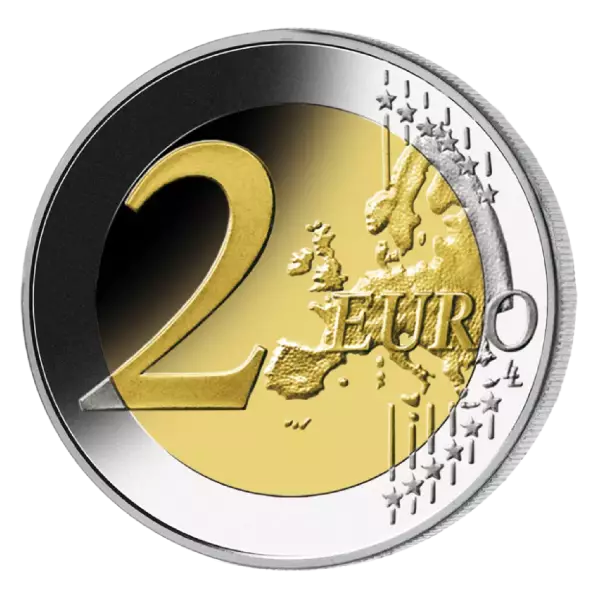

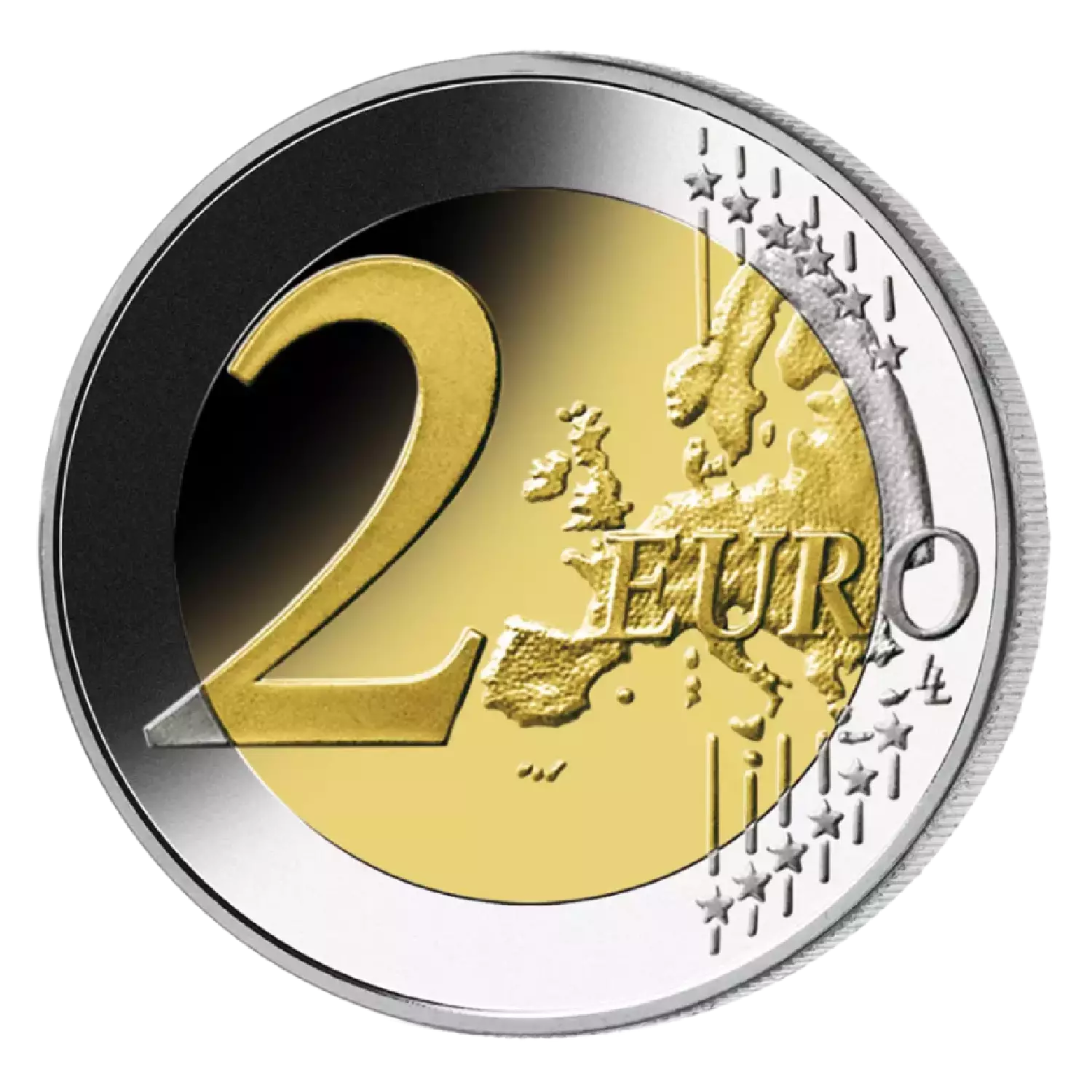
A 2 euro commemorative coin of the Slovak Republic, issued on February 15, 2011 in a circulation of 1,000,000 copies. Dedicated to the 20th anniversary of the Visegrad Group. Minted at Mincovňa Kremnica. Bimetallic, diameter 25.75 mm, weight 8.5 g.
Obverse
The center of the coin depicts stylized outlines of the four V4 countries — the Czech Republic, Poland, Slovakia and Hungary, intertwined in a single compositional pattern. At the top — "VYŠEHRADSKÁ SKUPINA", at the bottom — "SLOVENSKO 2011" and the dates "1991-2011". Mark of the Kremnica Mint. On the outer ring - 12 EU stars.
Reverse
The reverse is the common side of the 2 euro coins of the second type, designed by Luc Luix (Royal Belgian Mint). It depicts a map of Europe as a single continent without internal borders - a symbol of European unity. On the left - a large denomination "2" and the inscription "EURO", on the right - a map with six thin horizontal lines. On the outer ring - 12 stars of the European Union. The band - with thin ribbing and the inscription "SLOVENSKÁ REPUBLIKA" with two linden leaves.
Historical context
The Visegrad Group (Visegrádska skupina, or V4) is a regional association of four Central European countries: the Czech Republic, Poland, Slovakia and Hungary. Founded on February 15, 1991 in the Hungarian city of Visegrád, where the presidents of Czechoslovakia Václav Havel, Poland Lech Walesa and Hungarian Prime Minister József Antal met. The name Visegrad has a historical connotation - in 1335 the kings of the Czech Republic, Poland and Hungary met there. The goal of the V4 was to coordinate efforts to escape from Soviet influence, integrate into European structures - NATO, the EU. All four countries joined NATO in 1999-2004 and the EU on May 1, 2004. After 2004, the V4 continues to act as a platform for regional cooperation. In 1993, after the split of Czechoslovakia, the V4 expanded to 4 countries. It has a rotating chairmanship.