
Shopping Cart
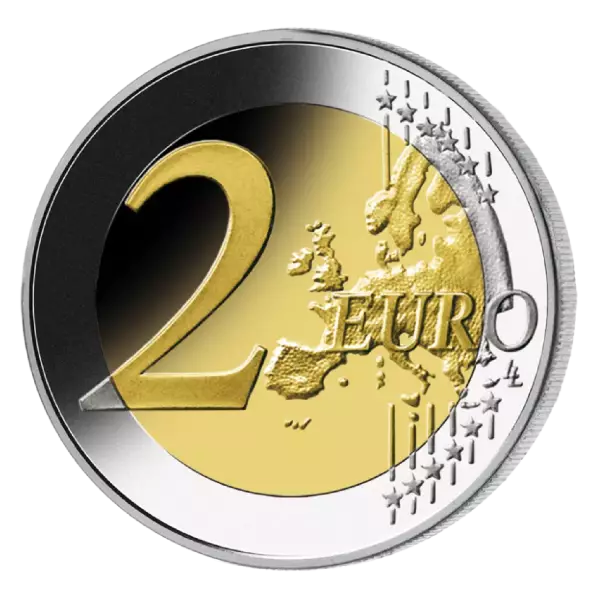

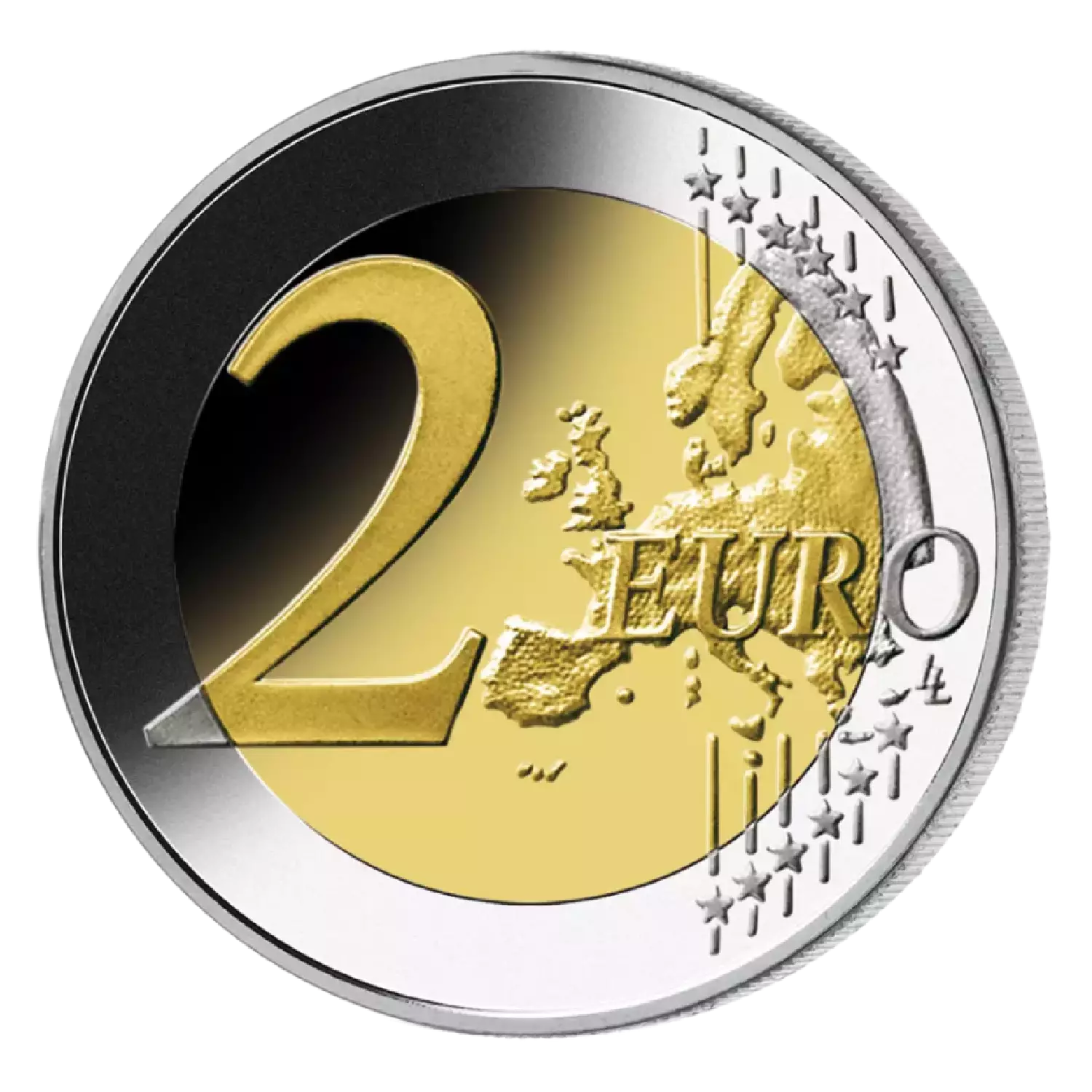
Commemorative coin of the Slovak Republic 2 euros, issued in 2021 in a circulation of 1,000,000 copies. Dedicated to the 100th anniversary of the birth of Alexander Dubček. Minted at Mincovňa Kremnica. Bimetallic, diameter 25.75 mm, weight 8.5 g.
Obverse
The center of the coin depicts a stylized portrait of Alexander Dubček in profile. Above — "ALEXANDER DUBČEK", below — "SLOVENSKO" and the dates "1921-2021". On the right — the mark of the Kremnica Mint. On the outer ring — 12 five-pointed stars of the EU.
Reverse
The reverse is the common side of the 2 euro coins of the second type, designed by Luc Luix (Royal Belgian Mint). Depicts a map of Europe as a single continent without internal borders - a symbol of European unity. On the left - a large denomination "2" and the inscription "EURO", on the right - a map with six thin horizontal lines. On the outer ring - 12 stars of the European Union. The band - with thin grooves and the inscription "SLOVENSKÁ REPUBLIKA" with two linden leaves.
Historical context
Alexander Dubček (November 27, 1921 - November 7, 1992) - Slovak politician, the most famous Slovak of the 20th century. Born in Uhrovka (Slovakia). He spent his childhood in Soviet Kyrgyzstan with his family (his parents were communists). After World War II, he quickly made a career in the Communist Party of Czechoslovakia. In 1963, he was the First Secretary of the Central Committee of the Communist Party of the Czechoslovak Socialist Republic, and on January 5, 1968, he was the First Secretary of the Central Committee of the Communist Party of the Czechoslovak Socialist Republic. He led the reform movement "Prague Spring" in 1968 - an attempt to build "socialism with a human face" with democratic reforms and freedom of speech. On August 21, 1968, the Warsaw Pact troops (USSR, Poland, East Germany, Hungary, Bulgaria) invaded Czechoslovakia, suppressing the reforms. Dubček was dismissed from office in 1969, expelled from the party in 1970, and worked in working positions for 20 years. He returned to politics after the Gentle Revolution of 1989 - Chairman of the Federal Assembly from 1989 to 1992. He died in a car accident on September 1, 1992, and died on November 7.