
Shopping Cart
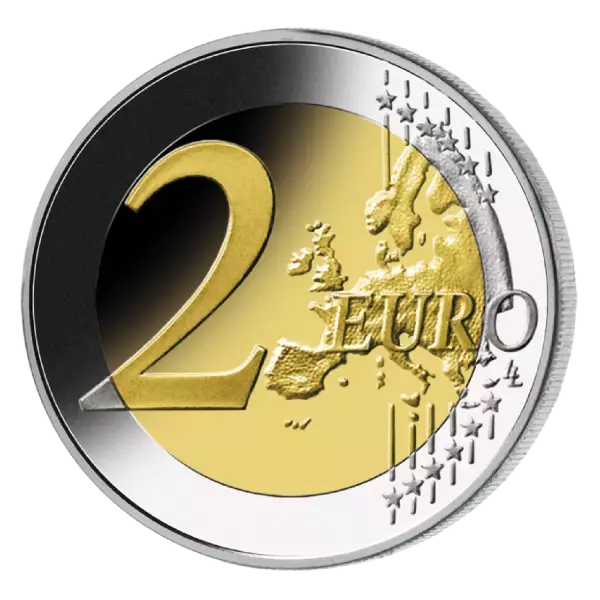

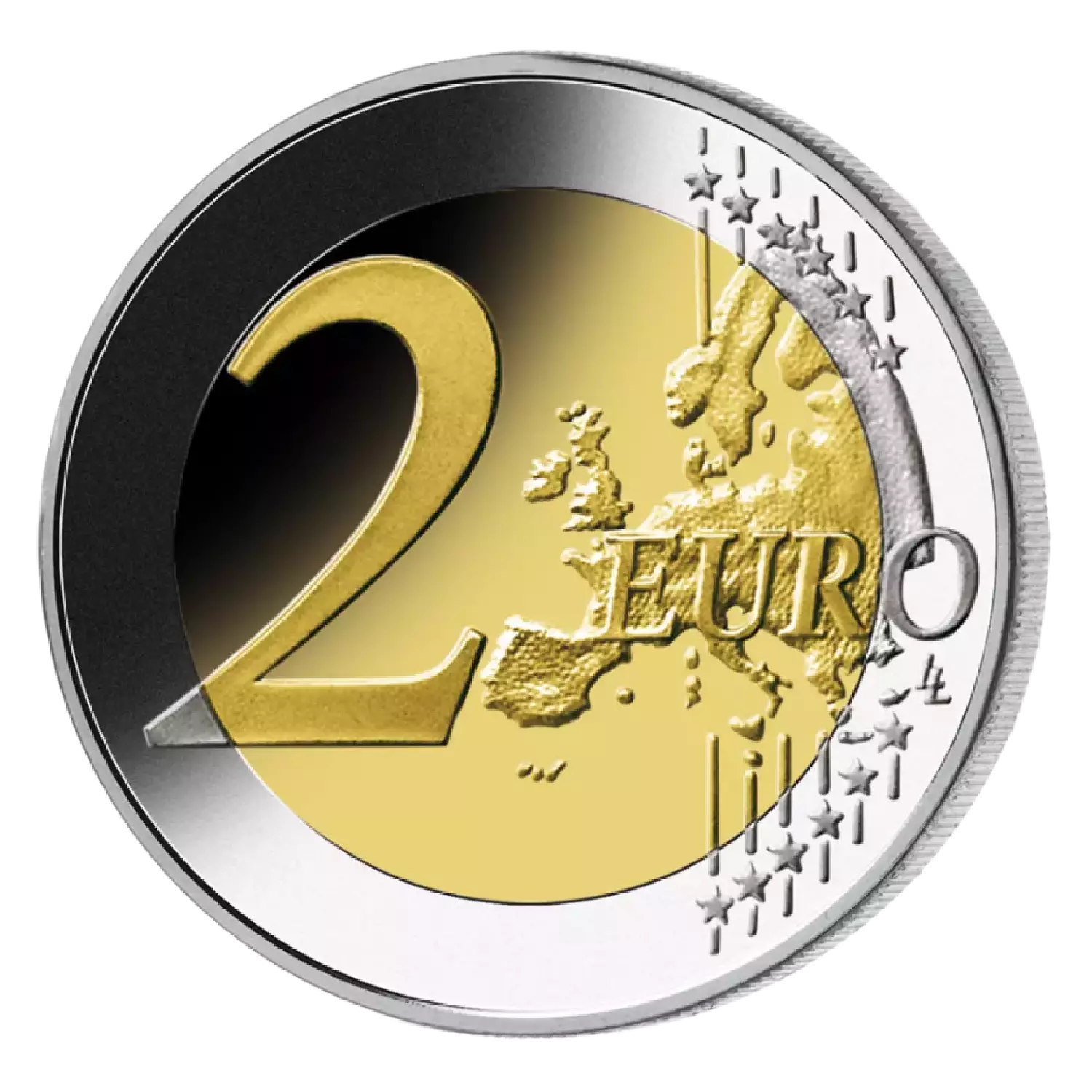
2 euro commemorative coin of the Republic of Slovenia, issued in 2016 in a circulation of 1,000,000 copies. Dedicated to the 25th anniversary of independence. Minted at the Royal Netherlands Mint. Bimetallic, diameter 25.75 mm, weight 8.5 g.
Obverse
The center of the coin depicts a stylized sculpture "Republic" from the monument on Republic Square in Ljubljana - a symbol of the country's independence. Above - "25 LET REPUBLIKE", below - "SLOVENIJA" with the dates "1991-2016". Utrecht Mint mark. On the outer ring are the 12 five-pointed stars of the EU.
Reverse
The reverse is the common side of the 2 euro coins of the second type, designed by Luc Luix (Royal Belgian Mint). It depicts a map of Europe as a single continent without internal borders - a symbol of European unity. On the left is a large denomination "2" and the inscription "EURO", on the right is a map with six thin horizontal lines. On the outer ring are the 12 stars of the European Union. The band is finely fluted and the inscription "SLOVENIJA ★", repeated.
Historical context
The Republic of Slovenia is a sovereign state in Southeastern Europe, proclaimed on 25 June 1991 as a result of a referendum on 23 December 1990, where 88.5% of Slovenes voted for independence from the Socialist Federal Republic of Yugoslavia. The Yugoslav People's Army attempted to take back the republic by force - this led to a short 10-day war (27 June - 7 July 1991), in which the Slovenian Territorial Defence under the command of Janez Janša stopped the JNA tanks. The war ended with the Brijuni Agreement on 7 July 1991, brokered by the EU, after which the JNA withdrew its troops. The first president of Slovenia was Milan Kučan (1991-2002), and the prime minister was Loise Peterle. Slovenia was admitted to the UN on May 22, 1992. In 2004, it joined the EU and NATO, and in 2007, it joined the eurozone. In 2016, it celebrated the 25th anniversary of independence, an important anniversary.