
Shopping Cart
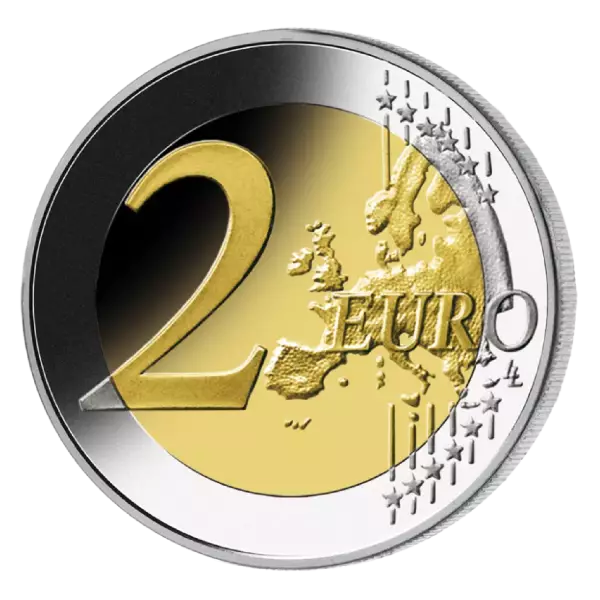

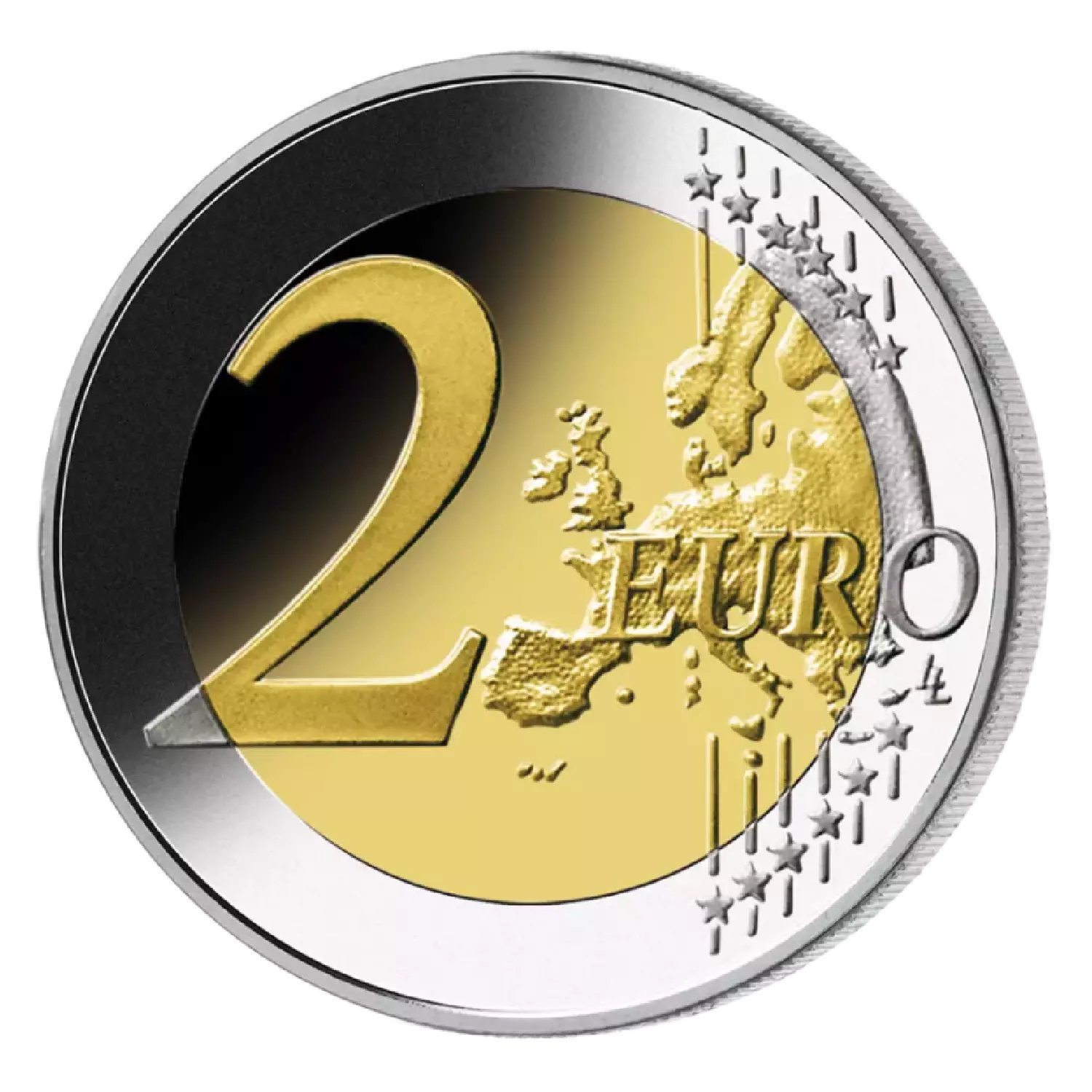
2 euro commemorative coin of the Republic of Slovenia, issued in 2021 in a circulation of 1,000,000 copies. Dedicated to the 200th anniversary of the Carniola Museum. Minted at the Royal Netherlands Mint. Bimetallic, diameter 25.75 mm, weight 8.5 g.
Obverse
The center of the coin depicts a stylized archaeological artifact - the most famous exhibit of the National Museum of Slovenia: the Vače situla - a bronze vessel from the 5th century BC with characteristic reliefs. At the top - "MUZEJ DEŽELNI ZA KRANJSKO", at the bottom - "SLOVENIJA" with the dates "1821-2021". Mintmark. On the ring - 12 EU stars.
Reverse
The reverse is the common side of the 2 euro coins of the second type, designed by Luc Luix (Royal Belgian Mint). It depicts a map of Europe as a single continent without internal borders - a symbol of European unity. On the left - a large denomination "2" and the inscription "EURO", on the right - a map with six thin horizontal lines. On the outer ring - 12 stars of the European Union. The rim - with thin ribbing and the inscription "SLOVENIJA ★", repeated.
Historical context
The Carniola Provincial Museum (Muzej deželni za Kranjsko, German: Krainisches Landesmuseum) is the predecessor of the modern National Museum of Slovenia (Narodni muzej Slovenije), the oldest museum in Slovenia. Founded on October 15, 1821 in Ljubljana by the Kranj County Assembly as the first public museum in the Slovenian lands. At that time, Carniola (German: Krain) was an Austrian province, the capital of which was Ljubljana. The initial collection consisted of archaeological finds, natural history exhibits, mineralogical specimens, numismatics, and library books. In 1888, the museum moved to a specially built building on Preširnova Street in Ljubljana (architects Wilhelm Resch and Camillo Langer). After World War I and the formation of Yugoslavia, it was renamed the National Museum. In 1923, it was enriched with new collections. Today, the National Museum of Slovenia includes archaeological, historical, numismatic, and applied art departments. Famous exhibits: the situla from Váči, the flute from Divče Babi.