
Shopping Cart


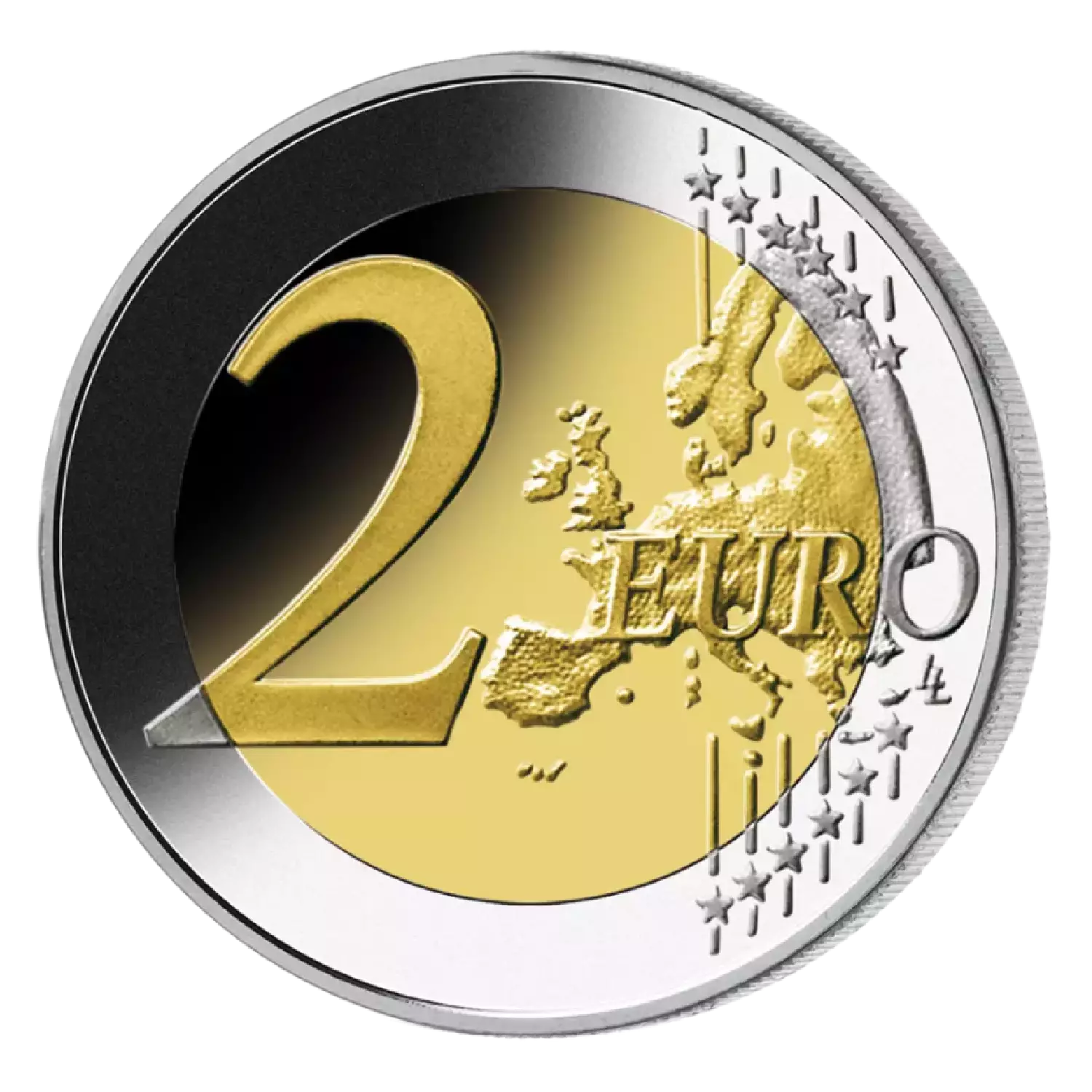
A 2 euro commemorative coin of the Vatican State, issued in 2006 in a circulation of 100,000 copies. Dedicated to the 500th anniversary of the Papal Swiss Guard. Bimetallic, diameter 25.75 mm, weight 8.5 g. Minted at IPZS in Rome. Design by O. Rossi, engraver by MCC inc.
Overse
The center of the coin depicts a Swiss Guard in a traditional Renaissance uniform (striped red-blue-yellow), taking the oath on the day of an official ceremony - with a raised hand and three fingers (as a sign of the Holy Trinity). Next to the guard is the flag (standard) of the Swiss Guard. Below — the inscription "CITTÀ DEL VATICANO", the mark "R" (Rome) on the right and the dates "1506" and "2006" on both sides. On the left above the flag of the Guard — the name of the author "O. Rossi", on the right under the year "2006" — the initials of the engraver "MCC inc". On the outer ring — the 12 stars of the European Union.
Reverse
The reverse is the common side of the 2 euro coins of the first type, designed by Luc Luix. On the left — the denomination "2" and the inscription "EURO", on the right — a map of the European Union. On the outer ring — the 12 stars of the EU. The band has a groove with the inscription "2 ★ ★", repeated six times.
Historical context
The Pontifical Swiss Guard (Guardia Svizzera Pontificia / Cohors Helvetica) was founded on 22 January 1506 by Pope Julius II. The first group of 150 Swiss mercenaries arrived in Rome on that day. The Swiss of the time were considered some of the best soldiers in Europe due to their military discipline and equipment. The Guard's tragic test was the "Sack of Rome" on 6 May 1527, when 147 of the 189 guardsmen died defending Pope Clement VII - this day is celebrated annually as the Day of the Oath of New Recruits. Today, the Guard has about 135 soldiers, all Catholic men from Switzerland, aged 19–30, unmarried, at least 174 cm tall, with a clean criminal record and previous service in the Swiss Army. The Guard's uniform, often mistakenly attributed to Michelangelo, was created by Commander Jules Repond in 1914.