
Shopping Cart
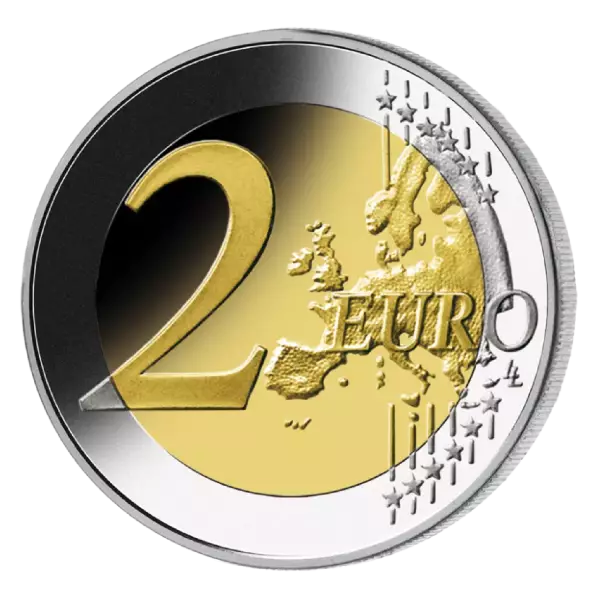

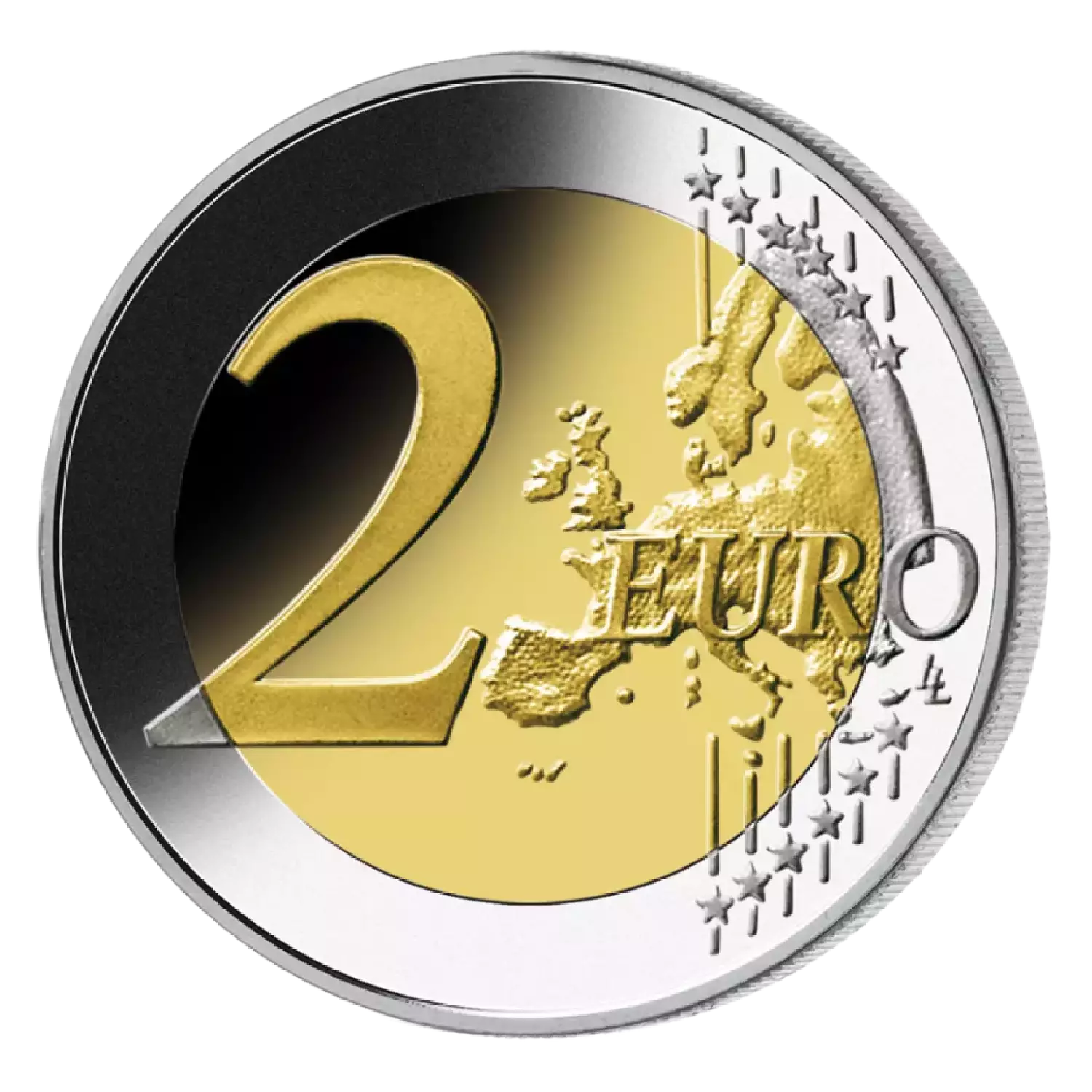
A 2 euro commemorative coin of the Vatican City State, issued in 2014 in a circulation of 103,000 copies. Dedicated to the 25th anniversary of the fall of the Berlin Wall. The author of the design is Guido Titotto (G. Titotto), the engraver is C. Momoni (C.M.). Bimetallic (copper-nickel ring, three-layer core - nickel brass/nickel/nickel brass), diameter 25.75 mm, weight 8.5 g. Minted at IPZS in Rome.
Obverse
The foreground depicts a fragment of the destroyed Berlin Wall - a brick with the inscription "XXV ANNIVERSARIO DEL CROLLO DEL MURO DI BERLINO 1989 2014" (XXV ANNIVERSARIO DEL CROLLO DEL MURO DI BERLINO 1989 2014) inscribed in the masonry. In the center, in the gap between the bricks and a piece of barbed wire, an olive branch is visible - a symbol of peace. In the background - the Brandenburg Gate. At the top, in a semicircle, is the inscription "CITTA' DEL VATICANO" (Vatican City), at the bottom - the mint mark "R", the name of the author "G. TITOTTO" and the initials of the engraver "C.M. inc". On the outer ring - the 12 stars of the European Union.
Reverse
The reverse is the common side of the 2 euro coins of the second type, designed by Luc Luix. It depicts a map of Europe as a single continent without internal borders. On the left - a large denomination "2" and the inscription "EURO", on the right - a map. On the outer ring - the 12 stars of the EU. The band is finely fluted and has the inscription "2 ★", repeated six times, alternately upright and inverted.
Historical context
The Berlin Wall is a concrete barbed-wire fortification erected by the German Democratic Republic on August 13, 1961, which divided West and East Berlin for 28 years, becoming the most powerful symbol of the "Iron Curtain" and the Cold War. On November 9, 1989, as a result of peaceful revolutions in Eastern Europe and reforms in the USSR, the East German government announced the opening of the border. That same evening, thousands of Berliners from both sides began to tear down the wall by hand. The fall of the wall was a key event that led to the reunification of Germany on October 3, 1990 and accelerated the end of the Cold War. Pope John Paul II played an important role in spiritually supporting the peoples of Eastern Europe during these years.